

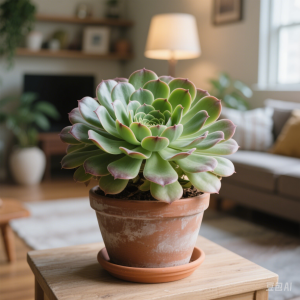
For years I grew Sukkulenten in whatever containers I found attractive – ceramic, plastic, even glass terrariums. While these looked nice initially, I constantly battled issues like overwatering, root rot, and stunted growth. Everything changed when I reluctantly tried my first terra cotta pot during a desperate attempt to save a dying Echeveria. The transformation in my plants’ health was so dramatic that I gradually converted my entire collection to these porous clay containers. Here’s why terra cotta outperforms all other materials for succulent growing and how to use it effectively.

Aeonium Alchemy
The science behind terra cotta’s benefits lies in its breathability. Unlike glazed ceramic or plastic, unglazed terra cotta allows air and moisture to pass through its walls. This creates an ideal microenvironment for succulent roots by preventing water from being trapped in the soil. I noticed the difference immediately – soil in terra cotta pots dried out completely between waterings, while the same mix in glazed containers stayed damp for days longer. My plants responded with stronger root systems, more compact growth, and significantly fewer cases of rot.
Water management becomes remarkably easier with terra cotta. The clay’s porosity acts as a natural moisture regulator, wicking away excess water through evaporation. This built-in safety net prevents overwatering disasters common with non-porous pots. I can now water my collection more generously during hot spells without fear, knowing the terra cotta will remove any surplus moisture. The pots even “tell” you when they’re dry – the clay lightens in color as it dries out, providing a visual moisture indicator.
Temperature regulation is another underappreciated benefit. During summer heatwaves, terra cotta helps keep roots cooler than plastic pots that can overheat. In winter, the clay provides insulation against cold snaps. I confirmed this by taking infrared temperature readings of different pot materials in various conditions – terra cotta consistently maintained the most stable root zone temperatures. This stability reduces stress on plants, leading to healthier growth year-round.
The aesthetic advantages surprised me. While I initially thought terra cotta looked boring compared to colorful glazed pots, I’ve come to appreciate how the natural material complements succulents beautifully. The earthy tones make plant colors pop, and the pots develop a lovely patina over time. Uniform terra cotta pots also create a cohesive look when displaying collections. For those wanting more visual interest, the pots take acrylic paints beautifully for customized designs.
Practical considerations make terra cotta ideal for serious collectors. The pots are widely available and inexpensive, especially when purchased in bulk. They’re durable yet lightweight enough to move plants as needed. The standardized sizing makes repotting simple, and their stackability saves storage space. I’ve found them much easier to drill for additional drainage holes compared to ceramic. When a pot breaks (as clay eventually does), the pieces can be used as drainage material in new pots.
Some growers worry about terra cotta’s tendency to accumulate mineral deposits. While white crust does form from tap water salts, this is easily removed with a vinegar soak and doesn’t harm plants. I actually appreciate these deposits as evidence that the pot is actively removing excess minerals from the soil. For those concerned about appearance, using distilled or rainwater prevents buildup entirely.
The transition to terra cotta required some adjustments to my care routine. I learned to water slightly more frequently since the pots dry out faster, especially in warm weather. Small pots may need watering twice as often as they did in plastic. I also soak new pots before use to prevent them from absorbing too much moisture from the initial planting. Despite these minor changes, the reduction in plant losses made the switch unquestionably worthwhile.
Not all terra cotta is created equal. Through trial and error, I’ve identified the best options for succulents. Italian-made pots tend to have more consistent quality than cheaper imports. Look for pots with thick walls (at least 1/4 inch) for durability. Rimless designs make repotting easier, while pots with built-in saucers reduce mess indoors. For large specimens, I prefer wide, shallow pots that mimic succulents’ natural shallow root systems.
The proof of terra cotta’s superiority shows in my plants’ health. Since converting my collection, I’ve had zero cases of root rot. Plants grow more symmetrically since all sides receive equal aeration. Even notoriously difficult succulents like Lithops thrive in terra cotta’s drying conditions. Propagation success rates improved dramatically as cuttings root faster in the oxygen-rich environment these pots create. The initial investment in new pots paid for itself within a year through reduced plant losses.
For those considering the switch, I recommend starting with a few terra cotta pots for your most problematic plants. Compare growth over several months against the same species in your usual containers. Like me, you’ll likely find the results convincing enough to make a complete transition. While decorative pots still have their place for temporary displays, terra cotta has become my go-to for long-term succulent health.
#SucculentPots #TerraCottaBenefits #BestContainersForSucculents #SucculentCareTips #PlantPotGuide
Have you experimented with different pot materials for your succulents? Share your experiences with terra cotta or other containers in the comments!
 English
  Arabic
  Dutch
Dutch  German
  French
  Portuguese
  Spanish
  Russian
  Japanese
  Korean