

- How to Choose Fake Plants: A Complete 2026 Buying Guide
- Why Choosing the Right Fake Plant Matters
- Step 1: Decide Where You Will Use the Fake Plant
- Step 2: Choose the Right Fake Plant Style
- Artificial Trees: Best for Large Spaces
- Artificial Succulents: Best for Small Decorative Spaces
- Artificial Flowers: Best for Color and Seasonal Decoration
- Step 3: Understand Fake Plant Materials Before Buying
- Plastic Fake Plants
- Fabric and Textile Artificial Plants
- Real-Touch Artificial Plants
- Natural Wood Trunk Artificial Trees
- Step 4: Evaluate Realism Before Buying
- Step 5: Choose the Correct Size
- Step 6: Match Fake Plants With Interior Style
- Step 7: Consider Maintenance Requirements
- Step 8: Consider Price and Long-Term Value
- Step 9: Fake Plants for Different Buyers
- Homeowners
- Office Buyers
- Hotels and Restaurants
- Retail Stores
- Step 10: New Technology Changing Fake Plants in 2026
- Common Mistakes When Choosing Fake Plants
- Final Fake Plant Buying Checklist
- Abschließende Überlegungen
- FAQ
How to Choose Fake Plants: A Complete 2026 Buying Guide
Choosing artificial greenery seems simple until you start comparing hundreds of options.
Today’s market includes small artificial succulents for desks, realistic artificial trees for living rooms, outdoor UV-resistant plants, commercial green walls, artificial flowers, and custom installations for hotels and retail spaces.
The challenge is that not every fake plant is created for the same purpose.
A low-cost decorative plant may look acceptable in an online photo but appear obviously artificial in person. A premium artificial tree may look extremely realistic but be unsuitable for outdoor conditions. A beautiful indoor plant may quickly fade when placed on a sunny patio.
Understanding how to choose fake plants requires more than selecting a style you like. Buyers need to consider realism, materials, location, maintenance, durability, budget, and long-term value.
This complete guide explains everything you need to know before buying fake plants in 2026, including how to evaluate quality, choose the right size, compare materials, avoid common mistakes, and select artificial greenery that looks natural and remains attractive for years.
Why Choosing the Right Fake Plant Matters
Artificial plants have changed significantly over the past decade.
Older generations of artificial greenery were often associated with shiny plastic leaves, unrealistic colors, and obvious artificial textures. Modern manufacturing techniques now allow manufacturers to create more detailed leaf structures, flexible stems, natural color variation, and realistic surfaces.
However, technology alone does not guarantee a good product.
The best fake plants are not simply the most expensive ones. They are the plants that match the environment where they will be used.
For example:
- A small artificial succulent may be perfect for an office desk.
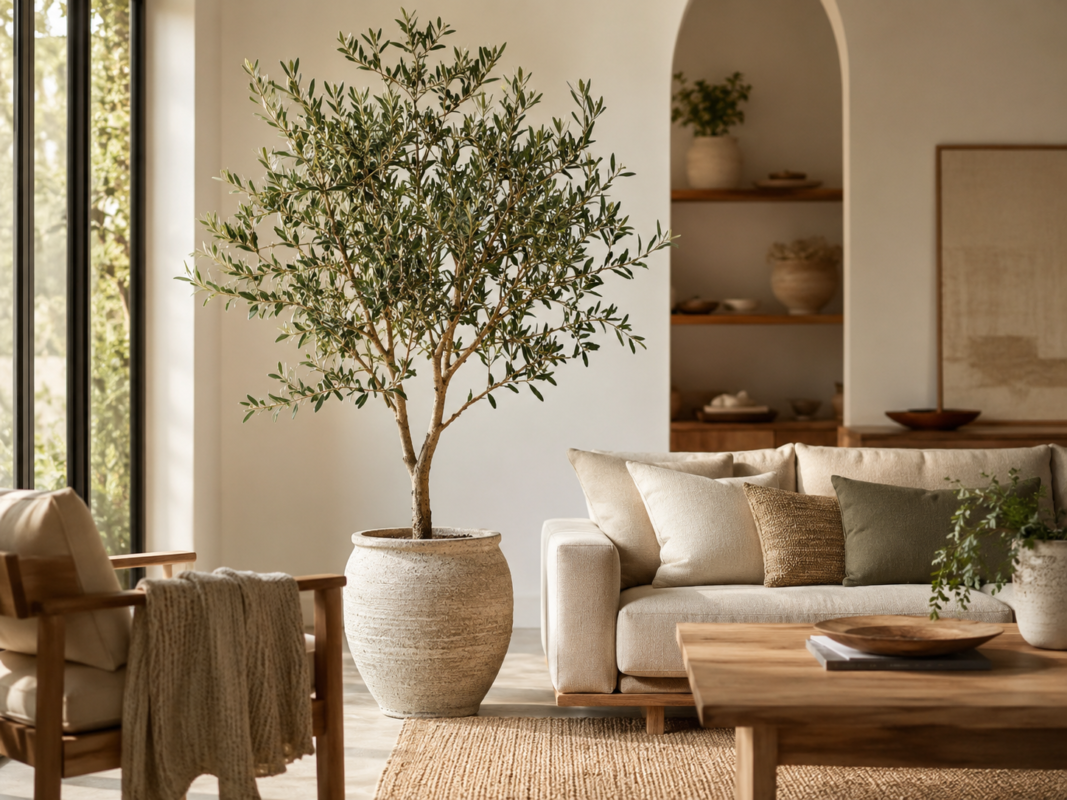
- A large artificial olive tree may work better in a modern living room.
- A UV-resistant hedge may be necessary for an outdoor balcony.
- A modular artificial green wall may be ideal for a commercial reception area.
The first step in learning how to choose fake plants is understanding your actual purpose.
Step 1: Decide Where You Will Use the Fake Plant
The location is the most important factor when choosing artificial greenery.
Before looking at colors or styles, determine whether the plant will be used indoors, outdoors, or in a commercial environment.
Indoor Fake Plants
Indoor artificial plants are the most common category.
They are designed mainly for appearance rather than weather resistance.
Popular indoor options include:
- Artificial olive trees
- Artificial fiddle leaf figs
- Artificial monstera plants
- Artificial ferns
- Artificial pothos
- Artificial succulents
- Artificial orchids
- Artificial eucalyptus
Indoor fake plants are suitable for:
- Living rooms
- Bedrooms
- Offices
- Hotels
- Restaurants
- Retail displays
- Apartments
- Rental properties
When choosing indoor plants, focus mainly on:
- Realistic appearance
- Size proportion
- Leaf texture
- Color variation
- Planter quality
A plant that looks realistic from three feet away may still look cheap when viewed closely.
Outdoor Fake Plants
Outdoor artificial plants require completely different standards.
Sunlight, rain, humidity, temperature changes, and wind can damage materials that are suitable only for indoor use.
For outdoor applications, look for:
- UV-resistant materials
- Weather-resistant construction
- Strong internal support
- Stable planters
- Drainage solutions
- Manufacturer durability information
Common outdoor fake plants include:
- Artificial hedges
- Artificial boxwood
- Outdoor artificial trees
- Artificial palms
- Artificial grasses
- Artificial topiary
- Outdoor green walls
For more information, see:
Internal link:
Outdoor Artificial Plants: Weatherproof Greenery Guide
https://cngarden.com/outdoor-artificial-plants-weatherproof-greenery-redefining-patios-landscapes-and-commercial-spaces/
Commercial Fake Plants
Commercial buyers usually have different priorities compared with homeowners.
Hotels, offices, restaurants, shopping centers, and retail stores often require:
- Consistent appearance
- Large quantities
- Easy maintenance
- Long lifespan
- Professional installation
- Safety documentation
Commercial artificial greenery may include:
- Large artificial trees
- Reception planters
- Artificial green walls
- Ceiling greenery
- Privacy screens
- Custom landscape installations
For public spaces, buyers should also consider applicable fire safety requirements.
The International Code Council’s International Fire Code includes requirements related to decorative materials and artificial vegetation depending on installation conditions and occupancy type.
Source:
International Code Council
https://codes.iccsafe.org/
Step 2: Choose the Right Fake Plant Style
The next step in understanding how to choose fake plants is selecting a style that matches your space.
Different plant shapes create different visual effects.
Artificial Trees: Best for Large Spaces
Artificial trees are one of the most popular premium choices.
They create height and architectural impact.
Popular styles include:
- Olive trees
- Ficus trees
- Palm trees
- Bamboo trees
- Citrus trees
- Banana plants
- Artificial bonsai trees
Artificial trees work well when a room needs:
- Vertical height
- A focal point
- A natural connection between furniture and empty space
However, size matters.
A common mistake is buying a tree that is too small for the room.
A 5-foot artificial tree may disappear in a room with a high ceiling.
Large spaces often require:
- Taller trees
- Larger planters
- Wider branches
- More foliage density
Artificial Succulents: Best for Small Decorative Spaces
Artificial succulents remain popular because their natural appearance already contains structured shapes.
Good choices include:
- Echeveria
- Aloe
- Haworthia
- Agave
- Jade plants
- Cactus varieties
They are ideal for:
- Desks
- Shelves
- Coffee tables
- Bathrooms
- Reception counters
- Small apartments
High-quality artificial succulents usually include:
- Matte surfaces
- Multiple color tones
- Natural leaf thickness
- Realistic soil covering
Cheap versions often look fake because the leaves are too bright and perfectly symmetrical.
Related guide:
Internal link:
Artificial Succulents: The Tiny Design Trend Taking Over Homes and Offices
https://cngarden.com/artificial-succulents-the-tiny-design-trend-taking-over-homes-offices-and-events/
Artificial Flowers: Best for Color and Seasonal Decoration
Artificial flowers are different from foliage plants because viewers naturally inspect flowers more closely.
Popular options include:
- Roses
- Orchids
- Hydrangeas
- Peonies
- Tulips
- Cherry blossoms
When choosing artificial flowers, pay attention to:
- Petal texture
- Color gradients
- Stem flexibility
- Natural arrangement
Premium artificial flowers often use layered materials to imitate real petals.
Low-quality flowers usually have:
- Flat colors
- Plastic-looking surfaces
- Identical flower positions
- Excessive symmetry
Step 3: Understand Fake Plant Materials Before Buying
One of the most important factors in learning how to choose fake plants is understanding the materials used to create them.
The material affects:
- Realism
- Durability
- Flexibility
- Outdoor performance
- Cleaning requirements
- Price
- Lifespan
Two artificial plants may look similar online but perform very differently because of material quality.
Plastic Fake Plants
Plastic is one of the most common materials used in artificial greenery.
Modern plastic manufacturing allows producers to create detailed leaf shapes, realistic veins, flexible structures, and different surface finishes.
High-quality plastic plants may include:
- Matte leaf surfaces
- Multiple green tones
- Textured patterns
- Flexible stems
- Natural-looking imperfections
They are commonly used for:
- Artificial succulents
- Artificial hedges
- Outdoor plants
- Green walls
- Commercial installations
However, cheap plastic plants often have obvious problems:
- Extremely shiny surfaces
- Hard leaves
- Single-color foliage
- Repeated patterns
- Unrealistic shapes
The goal is not to avoid plastic completely. The goal is to choose better-designed plastic products.
Fabric and Textile Artificial Plants
Fabric materials are commonly used for artificial flowers and delicate foliage.
They are especially useful for:
- Roses
- Orchids
- Peonies
- Hydrangeas
- Decorative bouquets
- Event arrangements
Advantages include:
- Soft appearance
- Thin petal edges
- Natural movement
- More realistic flower shapes
Potential disadvantages:
- Dust accumulation
- Lower outdoor durability
- Possible fading under sunlight
Fabric-based plants are usually better suited for indoor decoration.
Real-Touch Artificial Plants
Real-touch technology is one of the biggest improvements in premium artificial plants.
These products are designed to imitate not only appearance but also the texture of living plants.
Common uses include:
- Orchids
- Roses
- Sukkulenten
- Tropical leaves
Real-touch materials may provide:
- Softer surfaces
- More natural flexibility
- Better tactile experience
They are especially useful in locations where people will view or touch plants closely.
Examples:
- Hotel reception desks
- Retail displays
- Dining tables
- Luxury residential interiors
Natural Wood Trunk Artificial Trees
Some premium artificial trees combine synthetic foliage with natural wood trunks.
This approach creates more realistic structures because natural branches have:
- Irregular shapes
- Different textures
- Unique growth patterns
Common examples:
- Artificial olive trees
- Artificial ficus trees
- Artificial bonsai trees
However, natural materials may require more careful consideration for:
- Outdoor use
- Humidity
- Cleaning
- Long-term storage
Step 4: Evaluate Realism Before Buying
The biggest challenge when buying artificial plants is determining whether they actually look realistic.
A good artificial plant should not look perfect.
Real plants naturally have:
- Different leaf sizes
- Uneven growth
- Slight color variation
- Irregular shapes
- Natural imperfections
Artificial plants that look too symmetrical often appear fake.
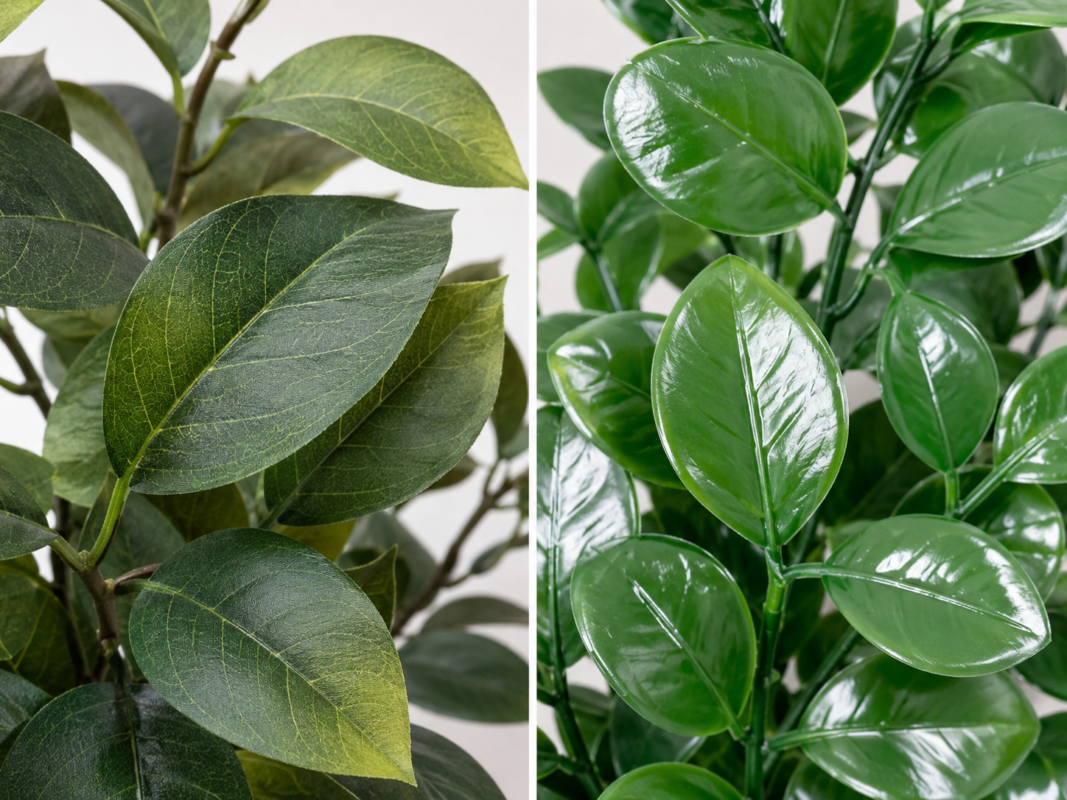
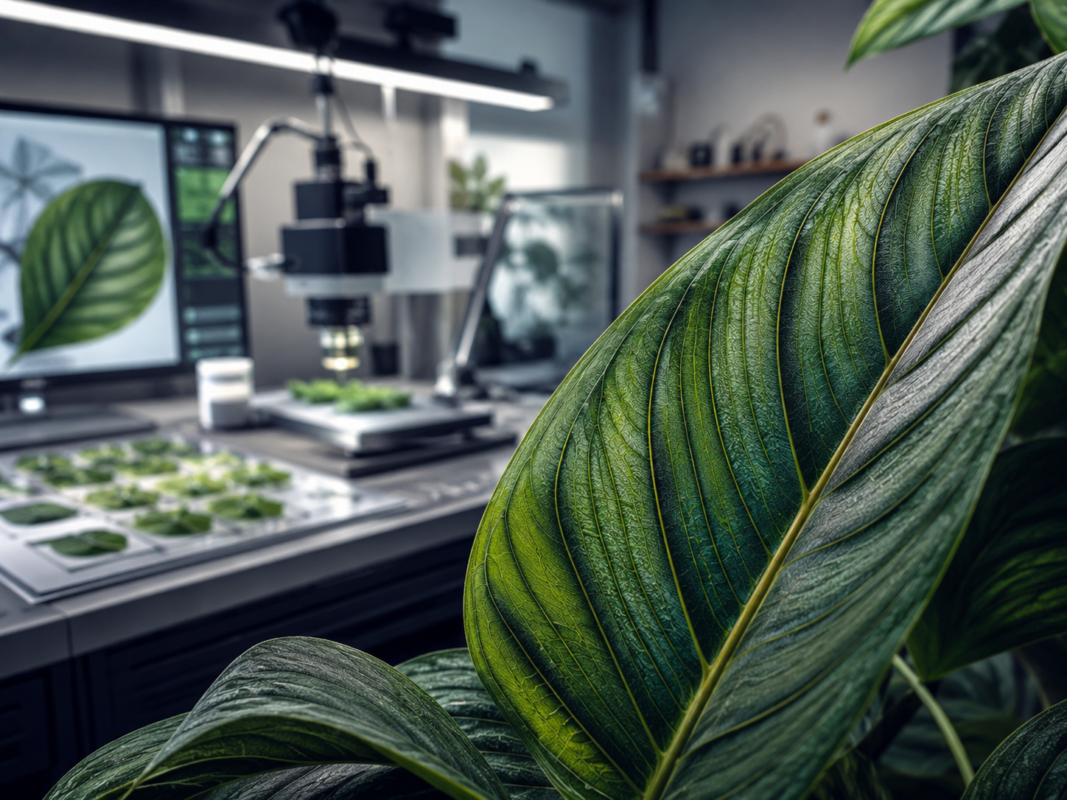
Check Leaf Details
Look closely at:
- Leaf edges
- Veins
- Texture
- Thickness
- Color transitions
High-quality leaves usually include subtle details.
Low-quality leaves often look flat and printed.
Check Color Variation
A realistic plant rarely uses only one shade of green.
Better products may include:
- Darker mature leaves
- Lighter new growth
- Slight yellow or brown variations
- Different shades between upper and lower surfaces
Uniform bright green is one of the fastest ways to identify a cheap artificial plant.
Check Branch Structure
The structure of the plant is just as important as the leaves.
A realistic artificial tree should have:
- Different branch lengths
- Natural spacing
- Flexible positioning
- Balanced but imperfect shape
Avoid plants where every branch follows the same pattern.
Check the Base and Soil Appearance
Many buyers focus only on leaves and forget the bottom part.
The base strongly influences realism.
Look for:
- Natural-looking soil
- Moss coverage
- Decorative stones
- Realistic trunk connection
A high-quality plant with a poor-looking base can still appear inexpensive.
Step 5: Choose the Correct Size
One of the most common fake plant buying mistakes is choosing the wrong size.
A plant that looks attractive online may appear completely different in your room.
Before purchasing, measure:
- Ceiling height
- Available floor space
- Furniture height
- Viewing distance
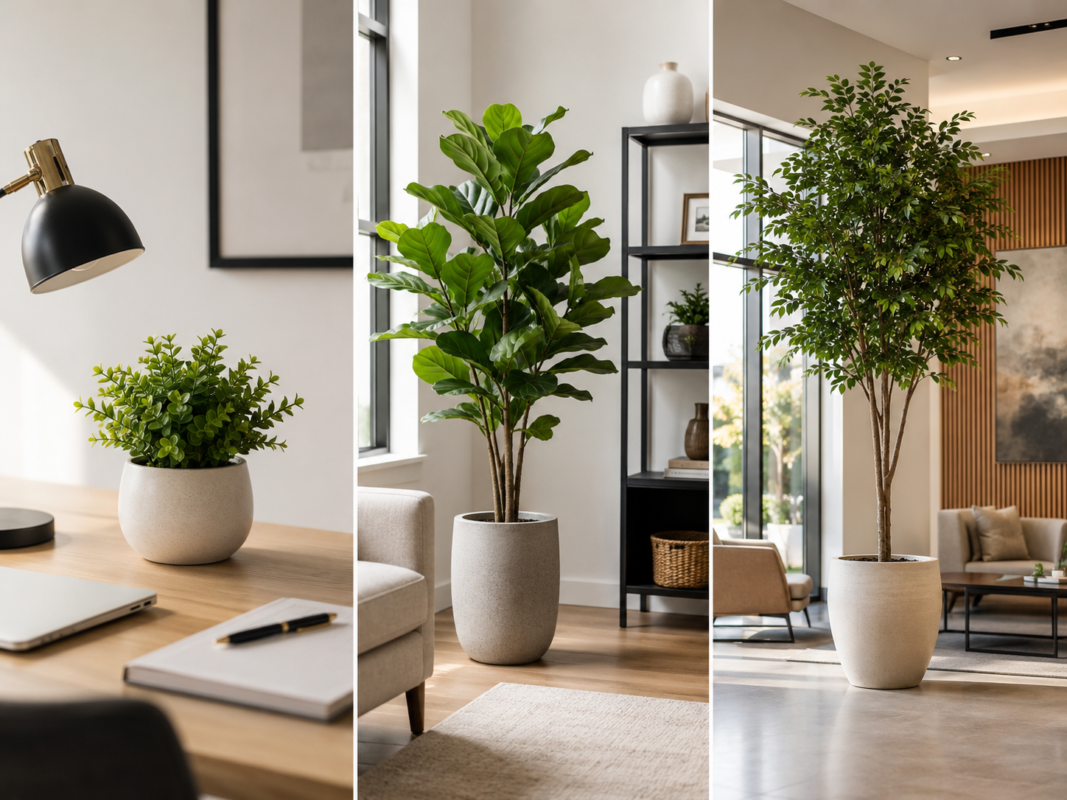
Small Fake Plants
Best for:
- Desks
- Shelves
- Nightstands
- Bathrooms
- Kitchen counters
Typical choices:
- Sukkulenten
- Small ferns
- Mini orchids
- Small potted foliage
Medium Fake Plants
Best for:
- Side tables
- Entry consoles
- Office corners
- Bedroom decoration
Examples:
- Artificial snake plants
- Small palms
- Medium ficus
- Decorative arrangements
Large Fake Plants
Best for:
- Living rooms
- Hotels
- Restaurants
- Offices
- Commercial spaces
Examples:
- Artificial olive trees
- Palm trees
- Large tropical plants
- Artificial green walls
A large room usually benefits more from one impressive artificial tree than many small plants.
Step 6: Match Fake Plants With Interior Style
Choosing the right plant is not only about realism.
It should also match the design language of the space.
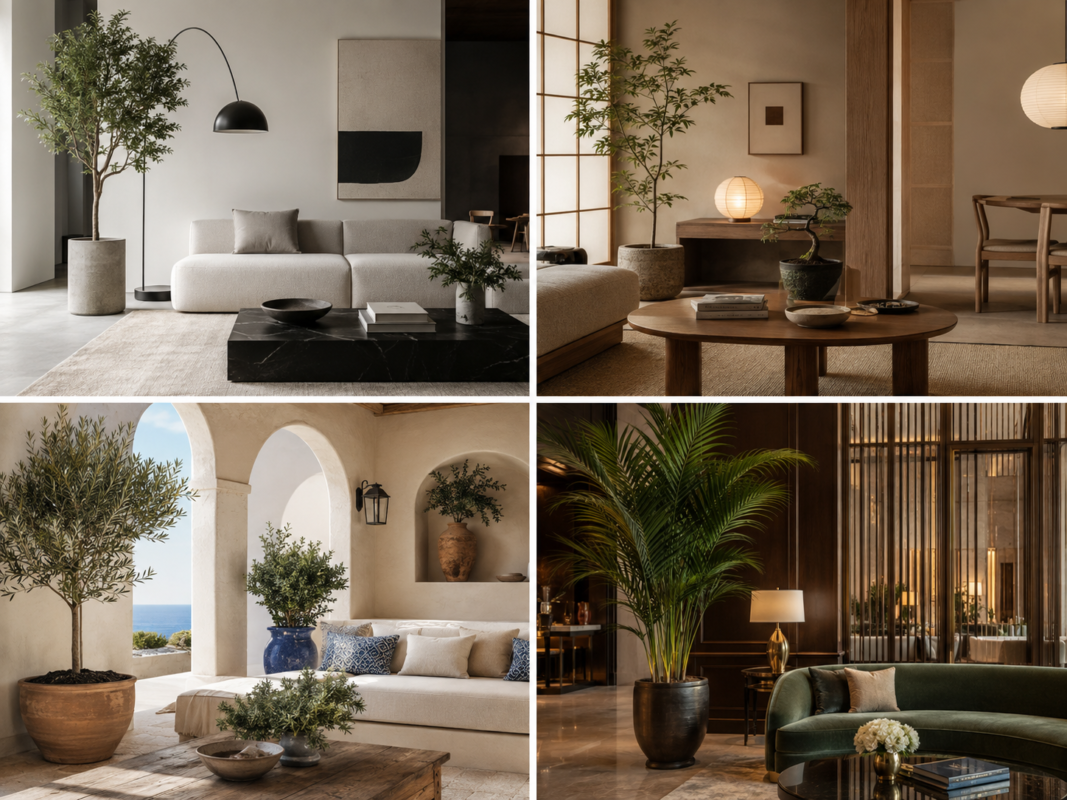
Modern Minimalist Style
Recommended:
- Snake plants
- Olive trees
- Ficus trees
- Simple green walls
Use:
- Concrete planters
- Ceramic pots
- Neutral colors
Avoid excessive decoration.
Japandi Style
Japandi combines Japanese simplicity with Scandinavian warmth.
Suitable artificial plants:
- Olive trees
- Bamboo
- Minimal foliage
- Small natural arrangements
Best materials:
- Wood
- Ceramic
- Linen
- Stone
Mediterranean Style
Recommended:
- Olive trees
- Citrus trees
- Lavender-style plants
- Terracotta arrangements
Use:
- Warm colors
- Clay pots
- Natural textures
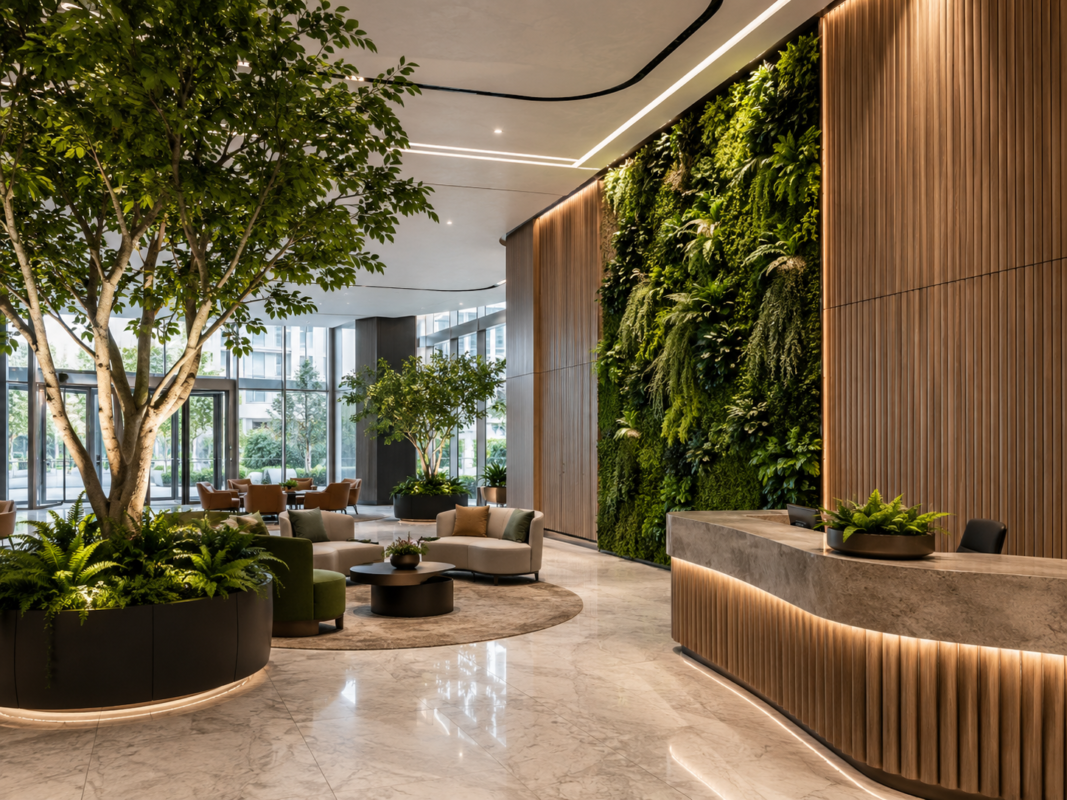
Luxury Hotel Style
Common choices:
- Large palms
- Artificial green walls
- Custom arrangements
- Tall statement trees
Important factors:
- Scale
- Installation quality
- Consistency
- Maintenance
Step 7: Consider Maintenance Requirements
Although fake plants do not require watering, they are not completely maintenance-free.
Maintenance depends on:
- Location
- Material
- Dust exposure
- Indoor/outdoor conditions
Indoor Maintenance
Recommended:
- Dust monthly
- Clean leaves gently
- Remove accumulated dirt
Useful tools:
- Microfiber cloth
- Soft brush
- Air blower
Outdoor Maintenance
Outdoor plants require more attention.
Check:
- Color fading
- UV damage
- Wind movement
- Loose parts
- Water accumulation
Outdoor artificial plants should be inspected regularly.
Step 8: Consider Price and Long-Term Value
Price differences in fake plants can be significant.
A cheap artificial plant may cost less initially but may need replacement sooner.
A higher-quality plant may provide:
- Better appearance
- Longer lifespan
- Better materials
- Easier maintenance
- Higher resale or reuse value
When comparing prices, consider:
Initial Cost
The purchase price.
Replacement Cost
How often the product needs replacement.
Maintenance Cost
Cleaning, repair, installation, and storage.
Visual Value
How much impact the plant creates in the space.
A $300 realistic artificial tree may provide more value than five $60 low-quality plants that quickly look outdated.
Step 9: Fake Plants for Different Buyers
Different users have different priorities.
Homeowners
Main priorities:
- Appearance
- Style matching
- Easy maintenance
- Affordable upgrades
Recommended:
- Artificial olive trees
- Sukkulenten
- Potted plants
- Small decorative arrangements
Office Buyers
Main priorities:
- Professional appearance
- Geringer Wartungsaufwand
- Consistency
Recommended:
- Artificial trees
- Green walls
- Planter dividers
- Reception plants
Hotels and Restaurants
Main priorities:
- Customer experience
- Durability
- Design impact
Recommended:
- Large artificial trees
- Hanging greenery
- Custom installations
- Green walls
Retail Stores
Main priorities:
- Branding
- Seasonal flexibility
- Visual merchandising
Recommended:
- Artificial flowers
- Green walls
- Display plants
- Hanging installations
Step 10: New Technology Changing Fake Plants in 2026
The artificial plant industry continues to improve through manufacturing innovation.
Better Leaf Manufacturing
New production methods allow manufacturers to reproduce:
- Leaf veins
- Natural curves
- Surface texture
- Irregular edges
AI and 3D Design
Interior designers increasingly use:
- 3D visualization
- AI rendering
- Virtual staging
These tools help preview:
- Plant size
- Color matching
- Installation layout
- Commercial designs
before purchasing.
More Sustainable Materials
Some manufacturers are exploring:
- Recycled materials
- Longer-lasting plastics
- More efficient production methods
- Reduced packaging
However, buyers should evaluate specific product information rather than assuming every artificial plant is environmentally friendly.
For more information:
Internal link:
Are Fake Plants Environmentally Friendly?
https://cngarden.com/are-fake-plants-environmentally-friendly-a-closer-look-at-sustainability/
Common Mistakes When Choosing Fake Plants
Buying Only Based on Price
The cheapest option often sacrifices realism.
Choosing the Wrong Size
Always measure before buying.
Ignoring the Planter
The container is part of the design.
Using Indoor Plants Outdoors
Indoor materials may quickly deteriorate outside.
Buying Too Many Different Styles
A space usually looks better with a consistent plant theme.
Not Considering Cleaning
Dust can make even expensive artificial plants look old.
Final Fake Plant Buying Checklist
Before purchasing, ask:
✓ Where will the plant be used?
✓ Indoor or outdoor?
✓ How large should it be?
✓ Does the style match the room?
✓ Are the leaves realistic?
✓ Is the color natural?
✓ Can branches be adjusted?
✓ Is the planter suitable?
✓ Is UV protection needed?
✓ How easy is cleaning?
✓ Does the price match the expected lifespan?
✓ Will the design still look good several years later?
Abschließende Überlegungen
Knowing how to choose fake plants is about understanding that artificial greenery is not simply a decorative replacement for living plants.
The best artificial plants are selected according to location, design style, material quality, and long-term purpose.
In 2026, successful artificial greenery design focuses on realism, simplicity, and thoughtful placement.
A realistic artificial olive tree in the right planter can transform a living room. A well-designed green wall can create a memorable commercial space. A small artificial succulent can add personality to an office desk.
The goal is not to make every plant look real from one inch away.
The goal is to create a space where the greenery feels natural, intentional, and valuable.
For buyers looking for long-lasting artificial greenery, choosing quality over quantity remains the most important rule.
FAQ
How do I choose fake plants that look real?
Choose plants with realistic textures, multiple color variations, flexible stems, natural branch structures, and quality planters. Avoid overly shiny leaves and perfect symmetry.
What are the best fake plants for home decoration?
Popular choices include artificial olive trees, ficus trees, succulents, eucalyptus, orchids, and realistic tropical plants.
Are expensive fake plants worth it?
Higher-quality artificial plants often provide better realism, durability, and long-term value compared with inexpensive alternatives.
Can fake plants be used outdoors?
Yes, but choose products specifically designed for outdoor use with UV-resistant materials and weather protection.
How long do fake plants last?
Lifespan depends on materials, location, sunlight exposure, and maintenance. Indoor premium artificial plants may last many years, while outdoor products usually experience more environmental stress.
Looking for the right artificial greenery for your home, office, or commercial project?
Explore our complete fake plant collection and buying guides to compare styles, materials, applications, and long-term value.
 English
  Arabic
  Dutch
Dutch  German
  French
  Portuguese
  Spanish
  Russian
  Japanese
  Korean