

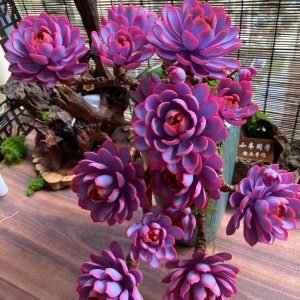
Let me tell you a story about my first succulent. I bought a beautiful echeveria, placed it on my coffee table, watered it every Sunday, and watched in horror as it slowly turned to mush within a month. Sound familiar? That was fifteen years ago. Today, I maintain a collection of over 300 succulents and consult for botanical gardens. Here’s what I’ve learned about cuidados com as suculentas the hard way, so you don’t have to.
Understanding Light: It’s More Than Just “Bright”
When people say succulents need “bright light,” what does that actually mean? Through years of experimentation, I’ve developed a simple classification system that works for any growing situation.
For most suculentas populares like echeverias, sedums, and crassulas, here’s what you need to know:
-
Direct sunlight: 4-6 hours of unfiltered sunlight through a clean window
-
Bright indirect light: What most south-facing windows provide with sheer curtains
-
Medium light: East or west-facing windows without direct afternoon sun
-
Low light: North-facing windows or rooms far from natural light sources
I use a simple trick to test light levels: place your hand about 12 inches above your plant around noon. If you see a crisp, clear shadow, that’s direct light. A fuzzy shadow means indirect light. No shadow? Your plant needs more light immediately.

plantas suculentas
The Watering Revolution: Soil Fingerprinting
Forget everything you’ve heard about watering schedules. The truth about succulent watering is more nuanced. I teach my workshop students what I call “soil fingerprinting” – learning to read your specific plant’s needs through multiple indicators.
Here’s my five-point check system before any watering:
-
Soil check: Use a moisture meter or your finger (go down 2 inches)
-
Weight test: Lift the pot – a dry pot feels surprisingly light
-
Leaf check: Gently squeeze a lower leaf – slight softness means thirsty
-
Seasonal awareness: Plants need less water in winter (dormancy) and during heat waves (stress prevention)
-
Weather factor: I adjust based on humidity levels – higher humidity means longer between waterings
Temperature Management: The Silent Growth Regulator
Most people don’t realize how crucial succulent temperature control is. Here’s what my greenhouse experience has taught me:
The ideal range is 65-80°F (18-27°C) during the day, with a 10-15°F (5-8°C) drop at night. This temperature swing mimics their natural desert habitat and actually encourages better coloring and compact growth. During summer heatwaves above 90°F (32°C), I move sensitive plants to shadier spots and increase air circulation. In winter, anything below 50°F (10°C) requires protection – I use row covers for outdoor plants and move indoor plants away from cold windows.
Soil Science: Building the Perfect Foundation
After years of testing different mixes, I’ve settled on what I call the “universal succulent blend”:
-
3 parts commercial cactus/succulent soil
-
2 parts pumice or perlite
-
1 part coarse sand
-
1 part fine gravel or crushed granite
This creates what I call “structural soil” – it drains instantly but retains just enough moisture around the roots. The key is ensuring particles are different sizes to create air pockets. Every spring, I refresh the top 2 inches of soil for all my plants.
Diagnosing Problems: The Plant Doctor’s Approach
When something goes wrong, I follow this diagnostic flowchart:
-
Problem: Leaves dropping when touched
-
Likely cause: Overwatering
-
Solution: Stop watering immediately, check for root rot
-
-
Problem: Bottom leaves drying from tips inward
-
Likely cause: Underwatering
-
Solution: Deep water immediately, establish consistent schedule
-
-
Problem: Stretched growth with wide spaces between leaves
-
Likely cause: Insufficient light
-
Solution: Gradually increase light exposure
-
-
Problem: Brown crispy spots on leaves
-
Likely cause: Sunburn
-
Solution: Move to shadier location, acclimate slowly
-
Propagation Mastery: Beyond Leaf Cuttings
While leaf propagation works for many species, I’ve found these advanced techniques more reliable:
Stem cuttings method:
-
Use sterile scissors to cut 3-4 inch stem sections
-
Let callus for 5-7 days (longer for thicker stems)
-
Plant in dry soil, wait 2 weeks before misting
-
Roots typically form in 3-4 weeks
Division technique for clustering plants:
-
Remove entire plant from pot during active growth season
-
Gently tease apart root clusters, keeping roots intact
-
Use clean cuts only where necessary
-
Let divisions dry 1-2 days before replanting
Seasonal Calendar: My Year-Round Routine
Spring (March-May): Active growth period. Increase watering frequency by 25%. Begin fertilizing with diluted 5-10-10 formula. Start propagation projects.
Summer (June-August): Heat management phase. Water early morning. Provide afternoon shade for sensitive varieties. Watch for pests.
Fall (September-November): Color development season. Reduce watering gradually. Enjoy stress colors from cooler temperatures. Prepare for dormancy.
Winter (December-February): Dormancy period. Water minimally (once monthly for most). Protect from frost. Good time for soil refreshment and planning.
Essential Tools Every Grower Needs
-
Moisture meter – takes guesswork out of watering
-
Grow lights – essential for winter or low-light spaces
-
Terracotta pots – breathable and forgiving for beginners
-
Long-spout watering can – precise water delivery
-
Bamboo skewers – excellent for testing soil moisture
My Top 5 Beginner-Friendly Varieties
Based on hardiness and forgiveness:
-
Jade Plant (Crassula ovata) – tolerates mistakes
-
Snake Plant (Sansevieria) – thrives on neglect
-
Zebra Haworthia – handles lower light well
-
Sedum morganianum – easy to propagate
-
Echeveria ‘Lola’ – beautiful and relatively hardy
The most important lesson I’ve learned? Observation beats rules every time. Your plants will tell you what they need if you learn to read the signs. Start with one or two varieties, master their care, then expand. Remember that every dead plant teaches you something valuable. Keep notes, take photos, and don’t be afraid to experiment. That’s how we all learn – one succulent at a time.
 English
  Arabic
  Dutch
Dutch  German
  French
  Portuguese
  Spanish
  Russian
  Japanese
  Korean