

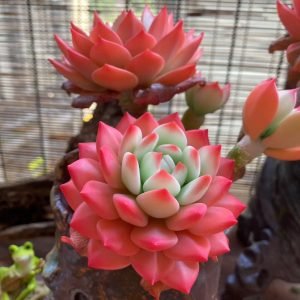
Alright, let’s have a real talk about 즙이 많은 관리. You brought home this perfect little plant that promised to be easy, and now you’re wondering why it’s looking a bit… dramatic. Maybe the leaves are getting soft, or it’s stretching out like it’s trying to escape. Sound familiar? Don’t panic! Keeping your 다육 식물 happy comes down to understanding where they come from and mimicking those conditions. Think dry, sunny, and not too fussy. Ready to become a succulent whisperer? Let’s dive in.

다육 식물
First up: water. This is where most people go wrong. Our instinct is to water our plants regularly, but with succulents, that’s a one-way ticket to 뿌리 썩음 city. These plants store water in their leaves, making them the camels of the plant world. The absolute best method is the “soak and dry” approach. When it’s time to water (and how do you know? We’ll get to that), drench the soil completely until water flows freely out of the 배수구. Then, walk away. Let the soil dry out completely. I mean all the way dry. Stick a chopstick in the soil; if it comes out clean, you’re good. How often is this? There’s no set schedule. It could be every 10 days in the summer and every 4-6 weeks in the winter. Your plant will tell you it’s thirsty when its lower leaves get slightly wrinkled and soft. Remember, it’s always better to underwater than overwater.
Which brings us to the second pillar of how to care for succulents: the right foundation. You can’t just use any old dirt. That dense, moisture-retaining potting soil will hold onto water for far too long. What you need is a special 선인장 및 즙이 많은 토양 mix. This stuff is gritty and airy, designed to let water flow through quickly. For even better results, many people mix in extra perlite or pumice. A great DIY mix is half regular potting soil and half perlite. This creates the perfect home for the roots, allowing them to drink and then breathe, which is the ultimate defense against 뿌리 썩음.
Now, let’s talk about their happy place: the sun. Most 인기 다육식물, like the gorgeous Echeveria, are sun-seekers. They need bright, direct light for at least 4-6 hours a day to keep their beautiful, compact shape and intense colors. What happens if they don’t get enough? They’ll start to “stretch” or etiolate. The stem grows tall and leggy, and the leaves space out, as the plant desperately reaches for more light. It’s a clear cry for help! So, find that sunny south-facing window. If you only have a north-facing one, you might need to consider a grow light. But a word of caution: if your succulent has been in lower light, introduce it to direct sun gradually to prevent sunburn.
One of the coolest things about these plants is how you can make more of them. Succulent propagation feels like a superpower. The easiest way is with leaves. Gently wiggle a healthy, plump leaf from the stem until it snaps off cleanly. Let it sit on a dry paper towel for a few days until the end forms a dry “callus.” Then, just place it on top of some dry soil. In a few weeks, you’ll be amazed to see tiny new roots and a baby plant emerging! You can also propagate by taking stem cuttings or dividing “pups” (the little offshoots that grow at the base). Before you know it, you’ll have a whole family from one original plant.
When you’re just starting out, it’s smart to choose from the tough 즙이 많은 품종. Some of the most forgiving 인기 다육식물 for beginners are the Jade Plant, the virtually indestructible Snake Plant, and Haworthias. These guys can handle a bit of beginner neglect. Once you’ve got the hang of it, you can explore the vast and wonderful world of other varieties, from the fuzzy Kalanchoe tomentosa (Panda Plant) to the elegant String of Pearls.
Finally, don’t forget about their home. That adorable, tiny succulent planter without a hole might be cute, but it’s dangerous. A 배수구 is absolutely essential. It’s your safety net, allowing excess water to escape so it’s not trapped at the bottom. As for food, succulents are light eaters. A little diluted fertilizer during their spring and summer growing season is plenty. Honestly, if you repot them every couple of years with fresh soil, that often provides enough nutrients on its own.
So, there you have it. 다육 식물 관리 isn’t about constant attention; it’s about setting up the right conditions and then mostly leaving them alone. Master the “soak and dry” watering, provide plenty of sun, use gritty soil, and always use a pot with a drainage hole. Watch your plants—they’ll give you all the signs you need. You’ve got this! Before long, you’ll not only be keeping your succulents alive, but you’ll also be propagating them and sharing the joy with your friends.
 English
  Arabic
  Dutch
Dutch  German
  French
  Portuguese
  Spanish
  Russian
  Japanese
  Korean