

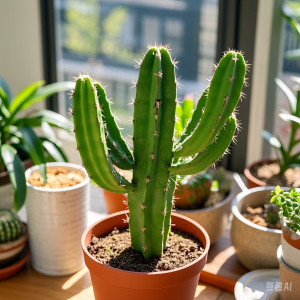
So you’ve jumped on the 즙이 많은 관리 bandwagon. Who can blame you? These little guys are everywhere, from trendy coffee shops to your friend’s sunny windowsill. They promise to be easy, low-maintenance buddies. But then you got one home, and now you’re staring at it, wondering, “Is it thirsty? Is it getting too much sun? Why does it look a little… sad?” Don’t worry, we’ve all been there. Keeping your 다육 식물 happy isn’t rocket science, but it does require understanding a few key things. Let’s break it down into simple, actionable tips.

다육 식물
First things first, let’s talk about the single biggest killer of succulents: love. Yeah, you heard me. We love them a little too much, especially with water. The golden rule of how to care for succulents is to master the “soak and dry” method. What does that mean? It means you should completely drench the soil until water runs out of the 배수구—this is non-negotiable—and then you let the soil dry out completely before you even think about watering again. I mean bone-dry. Stick your finger in the soil; if it feels damp, walk away from the watering can! How often should you water? There’s no set schedule. It depends on your home’s humidity, the season, and the type of succulent variety you have. In the summer, it might be every 1-2 weeks. In the winter, it could be once a month or even less. Your succulent will tell you when it’s thirsty by having slightly wrinkled, soft leaves. It’s better to be a little underwater than to drown the poor thing in soggy soil, which leads to the dreaded 뿌리 썩음.
Ah, 뿌리 썩음. The nightmare of every succulent owner. This is what happens when the roots sit in moisture for too long. The roots essentially suffocate and decay, and by the time you see the signs above the soil—like black, mushy stems or leaves that turn yellow and translucent—it’s often too late. Prevention is your best weapon here. How do you prevent it? It all starts with the right setup. Which brings me to my next crucial point: the best soil for succulents. You cannot use regular potting soil from your garden center. It holds way too much moisture. Succulents need a gritty, well-draining mix. You can buy a pre-made 선인장 및 즙이 많은 토양, but I like to take it a step further and mix in some perlite or pumice to make it even grittier. A good rule of thumb is a 50/50 mix of potting soil and perlite. This creates an environment where water flows through quickly, and the roots get the air they need.
Now, let’s talk about light. These plants are sun-worshippers. Most 인기 다육식물 like Echeverias and Sedums need several hours of bright, direct sunlight every day to maintain their compact shape and vibrant colors. If they don’t get enough, they’ll start to “stretch” or etiolate. This is when the stem gets long and leggy as it reaches for more light, and the leaves space out. It’s not particularly attractive, and it weakens the plant. So, find the sunniest spot in your house, usually a south or east-facing window. If you notice your succulent stretching, it’s crying out for more rays! But be careful when introducing them to direct sun; do it gradually to avoid sunburn, which shows up as brown or white scorched marks on the leaves. Can you fix a stretched succulent? Not really, but you can behead it, which is a fun form of succulent propagation we’ll get to.
One of the most rewarding parts of this hobby is making more plants! Succulent propagation is like magic. There are a few ways to do it. The easiest is through leaf propagation. Gently twist a healthy leaf from the stem, making sure you get the entire base. Let it sit out for a few days until the end callouses over. Then, just place it on top of some dry soil and mist it occasionally. Don’t bury it! After a few weeks, you’ll see tiny pink roots and a little baby plant emerging. It’s incredibly satisfying. You can also propagate by stem cuttings or, with some 즙이 많은 품종, by separating the “pups” or offshoots that grow at the base of the mother plant.
Speaking of varieties, choosing the right one matters. If you’re a beginner, start with some hardy 인기 다육식물 that are forgiving. Some great starter plants are the Jade Plant (크라술라 오바타), Aloe Vera, Haworthia, and Snake Plant (산세비에리아—which is technically a succulent!). These are tougher and more tolerant of the occasional mistake. As you get more confident, you can explore the stunning world of colorful Echeverias, the intricate patterns of Lithops (living stones), or the trailing beauty of a String of Pearls.
Finally, let’s touch on containers and long-term care. Always, and I mean always, use a pot with a 배수구. It is the simplest way to avoid overwatering issues. A succulent planter without a hole is a death trap, no matter how cute it is. As for food, succulents aren’t heavy feeders. You can fertilize them lightly during their active growing season (spring and summer) with a diluted, balanced fertilizer. But honestly, if you repot them every couple of years with fresh soil, they often get all the nutrients they need from that.
So, there you have it. The secrets to successful 즙이 많은 관리 aren’t secrets at all. It’s about tough love with water, tons of light, the right gritty soil, and a pot that lets it all breathe. Pay attention to your plant—it will tell you what it needs. Is it wrinkly? It’s probably thirsty. Is it stretching? It needs more sun. Is it soft and mushy? You’ve overwatered. Listen to it, and you’ll be rewarded with beautiful, healthy 다육 식물 that do more than just survive; they’ll truly thrive. Now go check on your green friends
 English
  Arabic
  Dutch
Dutch  German
  French
  Portuguese
  Spanish
  Russian
  Japanese
  Korean