

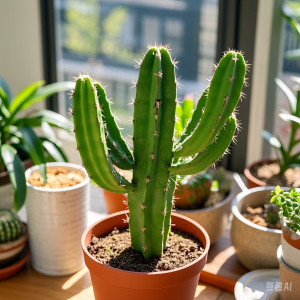
- Tip 1: Give Them Enough Light, or They Will Stretch
- Tip 2: Water Less – When in Doubt, Don't Water
- Tip 3: Use Well-Draining Soil and Pots with Holes
- Tip 4: Watch the Temperature and Keep Air Moving
- Tip 5: Fertilize Sparingly
- Bonus: Propagation Is Easier Than You Think
- Common Problems Quick Reference
- Seasonal Care Guide
- Why Choose CNGarden?
- Conclusion
Have you ever wondered why your friend’s succulents are plump and pink while yours are green and stretched out? Or why your cactus turned soft and mushy for no apparent reason? The truth is, cacti and succulents are easy to grow, but “easy” does not mean “no care.” They have their own preferences. Once you understand them, you will be a succulent pro in no time.

At CNGarden, we have put together 5 core tips to help you figure out what might be going wrong. And for those spaces in your home where living plants just will not survive, CNGarden also offers high-quality artificial plants and fake flowers that bring greenery into your space without any watering or sunlight required.
Tip 1: Give Them Enough Light, or They Will Stretch
There is a term succulent growers use called “etiolation.” That is when a beautiful rosette stretches up into a tall, leggy mess with leaves spaced far apart. This happens when the plant is not getting enough light and is desperately reaching for more.
What to do:
-
A south-facing window or balcony is the best spot, with at least 6 hours of direct sunlight per day.
-
An east-facing balcony works too, with gentle morning sun.
-
North-facing balconies are usually too dark for succulents.
-
If your home lacks natural light, buy a grow light. Full-spectrum LED lights work well. Place them 6 to 12 inches above your plants and run them for 12 to 14 hours per day.
How to tell if the light is right:
-
Good light: Leaves are compact, colorful (pink, purple, orange), and the plant has a tight shape.
-
Not enough light: Leaves stretch out, turn green, and become loose and spaced apart.
-
Too much sudden light: Brown, crispy patches on leaves (sunburn). Always acclimate plants gradually over 1-2 weeks.
If your home really does not have good natural light, consider placing CNGarden’s artificial plants in those dark corners. They look beautiful without needing any light at all.
Tip 2: Water Less – When in Doubt, Don’t Water
Most cacti and succulents are not killed by neglect. They are killed by too much love. Watering too often is the number one cause of death. These plants come from deserts. They are used to drought.
The right method: Soak and dry
-
Do not water on a schedule. Water based on how dry the soil is.
-
Stick your finger or a wooden skewer into the soil. If it feels wet or damp soil sticks to it, wait.
-
When the soil is completely dry, water deeply until it runs out of the drainage holes.
-
Empty the saucer. Never let the plant sit in standing water.
How often?
It depends on your home’s temperature, humidity, and pot size. In spring and fall (growing season), you might water every 7 to 14 days. In winter (dormant season), you might water only once a month or even less. Remember: if the soil is not dry, do not water.
Signs of watering problems:
-
Underwatered: Leaves are wrinkled, soft, and shriveled. A deep watering will plump them back up in 1-2 days.
-
Overwatered: Leaves turn yellow, translucent, and fall off easily. The stem may feel soft or look black. Stop watering immediately. Remove the plant from the pot, cut off any rotten roots, let it dry for a few days, and repot in dry soil.
If watering sounds like too much work for certain areas of your home, CNGarden has a great selection of artificial flowers that never need a single drop of water.
Tip 3: Use Well-Draining Soil and Pots with Holes
Many beginners dig up soil from their garden and plant succulents in it. That soil is too dense and holds too much water. The roots suffocate and rot. Others use beautiful ceramic pots with no drainage holes. Those pots are death traps for succulents.
What to do:
-
Soil mix: Use commercial cactus and succulent soil, then mix in extra perlite, pumice, volcanic rock, or coarse sand. A good ratio is 50% succulent soil and 50% gritty material. More grit means faster drainage.
-
Pots: The pot must have drainage holes. Terracotta or unglazed ceramic pots are the best choice. They are porous and help the soil dry out faster. For beginners, terracotta gives you a much larger margin for error.
-
If you love a decorative pot with no holes, plant your succulent in a plastic nursery pot with holes, then place that inside the decorative pot. Take it out to water, then put it back.
If you do not want to deal with soil and pots at all, CNGarden offers ready-to-display artificial plants that come in a variety of beautiful containers.
Tip 4: Watch the Temperature and Keep Air Moving
Most cacti and succulents cannot handle freezing temperatures. When temperatures drop below 40°F (5°C), bring them indoors. When summer temperatures exceed 95°F (35°C), some varieties go dormant. Provide shade and water less.
Airflow is very important
Stagnant, humid air encourages pests like mealybugs and fungal diseases. Do not crowd your plants together. Let air circulate around them. On hot, humid nights, a small fan can help.
Tip 5: Fertilize Sparingly
Cacti and succulents are not heavy feeders. They grow just fine in poor soil. Too much fertilizer, especially nitrogen, causes weak, leggy growth and makes them more susceptible to pests.
What to do:
-
Use a balanced, water-soluble fertilizer or a specialized cactus and succulent fertilizer. Dilute it to half the recommended strength.
-
Apply once a month in spring and fall (the growing seasons).
-
Do not fertilize in summer (when it is too hot) or winter (when the plant is dormant).
-
Avoid high-nitrogen fertilizers.
Bonus: Propagation Is Easier Than You Think
One leaf can become a whole new plant. That is the magic of succulents.
Leaf propagation steps:
-
Gently twist a healthy leaf from the stem. Wiggle it side to side to get a clean break.
-
Let the leaf sit out for 2-3 days in a dry, shaded spot. The broken end will callus over.
-
Lay the leaf on top of dry succulent soil. Do not bury it.
-
Place it in bright, indirect light. Do not water. In a few weeks, you will see tiny roots and a baby rosette. Then you can mist lightly every few days.
Beheading (stem cuttings):
If your succulent has gotten leggy, cut off the top rosette with 2-3 inches of stem. Let it callus for a few days. Stick the stem into dry soil. Wait a week before watering. The old stem will often grow many new babies.
If propagation sounds fun but you want instant results, CNGarden has a wide variety of fake flowers and artificial plants that look like fully mature succulents with no waiting time.
Common Problems Quick Reference
| Problem | Cause | Solution |
|---|---|---|
| Stretching, leggy growth | Not enough light | Move to brighter spot or add grow light |
| Yellow, translucent leaves that fall off | Overwatering, possible root rot | Stop watering. Remove from pot, cut rotten roots, let dry, repot in dry soil |
| Wrinkled, shriveled leaves | Underwatering | Water deeply. Should plump up in 1-2 days |
| White cottony bugs | Mealybugs | Dab with cotton swab dipped in 70% alcohol. Check every few days |
| Black spots or white powder on leaves | Fungus from too much moisture and poor airflow | Improve airflow, water less, use fungicide |
If dealing with pests and rot sounds exhausting, CNGarden offers a worry-free solution. Our artificial plants never get bugs, rot, or fungus. They stay perfect forever.
Seasonal Care Guide
Spring and Fall (Growing Seasons)
-
Plenty of light
-
Water every 7 to 14 days
-
Fertilize once a month
-
Best time for propagation
-
Can move plants outside gradually
Summer and Winter (Dormant Periods)
-
Water less. In summer, maybe once a month. In winter, maybe once every 1-2 months.
-
Do not fertilize
-
Provide shade when temperatures exceed 95°F (35°C)
-
Bring indoors when temperatures drop below 40°F (5°C)
-
Maintain good airflow
Why Choose CNGarden?
At CNGarden, we understand that every lifestyle is different. Some people enjoy the process of watering, propagating, and tending to living plants. Others just want a beautiful home without an extra chore. Neither is wrong.
For gardening enthusiasts, we offer high-quality living plants, soil, pots, and expert guidance. For those who prefer convenience, we offer stunning artificial plants and fake flowers that require no maintenance at all.
Conclusion
Caring for cacti and succulents is not difficult. Remember the five core tips: plenty of light, less water, well-draining soil, good airflow, and little fertilizer. Master these, and you will be a succulent pro in no time.
But let us be honest. Not every room in your home is suited for living plants. Windowless bathrooms, dark hallways, and north-facing rooms are not good spots for real plants. For those spaces, CNGarden offers the perfect solution. Our artificial plants and fake flowers bring the beauty of nature anywhere you want it.
Visit CNGarden today. Whether you choose living succulents or our high-quality artificial options, we will help you create a home that feels fresh, green, and alive.
 English
  Arabic
  Dutch
Dutch  German
  French
  Portuguese
  Spanish
  Russian
  Japanese
  Korean