

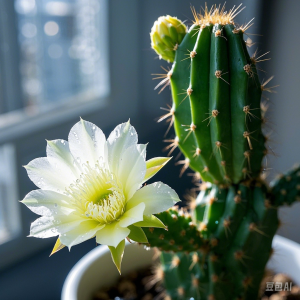
- Step One: Reshaping Perception—The Three Tiers of Artificial Plants
- Step Two: Materials and Craftsmanship—Seeing Through the Intrinsic Quality of Products
- Step Three: Spatial Application—Matching Strategies for Different Scenarios
- Step Four: Industry Trends and Innovation Directions
- Final Thoughts: The Art of Balance Between Real and Artificial
Friend, have you ever walked into a space that looks lush and vibrant, only to realize upon closer inspection that all the plants are fake? The feeling is like stepping onto a meticulously arranged stage—all the greenery is there, but something is missing. I’m Chen Mo, a designer who has worked in the commercial space design field for fifteen years, and one of the earliest practitioners in China to promote high-quality artificial plants. Today, I’ll help you break the stereotypes about artificial plants and share a practical set of methods for selecting, matching, and using them, so your space can have greenery without losing its soul.
Step One: Reshaping Perception—The Three Tiers of Artificial Plants
In the projects I’ve been involved with, artificial plants can generally be divided into three tiers. Understanding this classification is the first step in making an informed choice.
Basic Tier: Functional Decor
This tier includes most artificial greenery priced from a few dozen to a few hundred RMB. Their materials are primarily ordinary plastic and polyester fiber, and their visual effect often looks “obviously fake” at first glance. This type of product is most suitable for scenarios where they will be viewed from a distance or for temporary decoration—such as greenery suspended high in a shopping mall atrium or as background decor for event booths. Last year, when we designed a storefront for a fast-food chain, we used a large quantity of these products on the ceiling. From the customers’ perspective, the effect was quite good, and the cost stayed within budget.
Intermediate Tier: Scene-Setting Tools
Products at this level begin to focus on texture and detail. They often use polyethylene (PE) material for leaves, and some even incorporate real wood for branches. I have collaborated with a professional artificial plant manufacturer whose technicians go to botanical gardens to collect real specimens. They use 3D scanning technology to record the texture and form of every leaf before developing molds. This type of product is suitable for spaces like offices or hotel lobbies that require close contact but are difficult to maintain with live plants. The green wall in the lobby of a boutique hotel we designed in Shanghai used products at this level; guests often needed to touch them to confirm if they were real.
Professional Tier: Carriers of Design Language
The highest tier of artificial plants has transcended the level of “imitation” and has become part of the design language itself. These products are often developed through collaboration between designers and materials engineers, aiming not only for visual realism but also to express specific aesthetic concepts. For example, we once collaborated with a Japanese designer to create a series of “freehand-style plants” based on the artistic conception of traditional ink wash paintings—they don’t completely imitate a specific plant but extract the rhythmic sense from natural forms, presented using special composite materials and dyeing techniques. These products are more like works of art, suitable for high-end commercial spaces and private collections.
Step Two: Materials and Craftsmanship—Seeing Through the Intrinsic Quality of Products
When you’re standing in front of a selection of artificial plants, how can you quickly judge their quality? I’ve summarized a “Four-Step Identification Method.”
First, Look and Feel the Material
Pick up a leaf. First, look at its glossiness with your eyes. Leaves in nature are rarely highly reflective; if what you see is a shiny, plastic-like texture, it’s basically a low-end product. Then, gently stroke the leaf surface and edge with your fingers—high-quality artificial plants will have subtle textural variations, even simulating the fine fuzz unique to real plant leaves. I often carry a real Monstera leaf with me; when I encounter an uncertain artificial product, I take it out for comparison. This method is very practical.
Second, Examine Structural Details
Observe the joints where branches connect, leaf growth points, and root details. Cheap products often reveal problems in these areas—there might be obvious glue marks or unnatural connections. High-quality products will imitate the growth structure of real plants, such as creating natural scars and branching angles on stems. Last year, in a project in Shenzhen, we used simulated olive trees where the direction and angle of every branch were designed based on growth data from real olive trees.
Third, Observe Color Layering
Colors in nature are never uniform. A single leaf has subtle variations from the veins to the edges, from new growth to old leaves. Place the artificial plant under natural light and observe carefully. If the color is dull, uniform, and lacks transitions and layers, it’s a standard product from a factory assembly line. Good products will simulate this natural color variation; some even create slight color spots or fading effects on the leaves—not a quality issue, but an intentional creation of realism.
Fourth, Assess Dynamic Performance
This is a detail few people notice: real plants have a slight sway in the air. When designing high-end spaces, we sometimes incorporate hidden micro-power devices into artificial plants, allowing leaves to sway slightly with air movement. Of course, this isn’t necessary, but it represents a cutting-edge approach in artificial plant design—not just static imitation, but dynamic reproduction.
Step Three: Spatial Application—Matching Strategies for Different Scenarios
With a basic understanding of the products, the next step is applying them to specific spaces. Based on years of project experience, I’ve summarized application strategies for several typical scenarios.
Commercial Office Spaces: Functionality First
In office environments, the primary task of artificial plants is to improve the space’s atmosphere and enhance employees’ psychological comfort. We typically choose medium-height varieties with simple forms, such as simulated Fiddle Leaf Figs, Monsteras, or Areca Palms. Placement is crucial—avoid main traffic flow areas, but create visual focal points in rest areas, meeting rooms, etc. Lighting coordination is also key. We often use 3000-4000K warm white light from the side or above, avoiding the “horror movie effect” of lighting from below.
Hotels and Clubs: Atmosphere Creation
These types of spaces have the highest requirements for artificial plants. Last year, when designing an indoor garden for a resort hotel in Hangzhou, we adopted a “mixed real and fake” strategy—using high-quality artificial plants in locations where real plants struggle to survive (such as completely enclosed corridors, near air conditioning vents) and planting real plants in sunny areas. The treatment at the junction of the two types of plants requires skill; we blurred the boundaries by using planters of the same style and uniform ground cover (like pebbles, bark). Feedback from the hotel after three years of operation shows that guests rarely notice which plants are real or artificial.
Residential Spaces: Personal Expression
The most common mistake when using artificial plants in homes is “wanting everything and covering all.” My suggestion is: choose one or two high-quality focal plants, rather than filling the space with a large number of cheap products. For example, place a carefully selected simulated tree in a corner of the living room, or arrange a set of artificial succulents with strong design sense on the dining table. More importantly, artificial plants in home environments require regular cleaning—our maintenance plan for high-end residential clients includes professional cleaning every quarter and seasonal adjustments (like adding decorative light strings to plants during Christmas).
Step Four: Industry Trends and Innovation Directions
The artificial plant industry is undergoing rapid change. Several noteworthy trends may shape the future of design.
Material Innovation
New-generation bio-based materials are being applied to artificial plant manufacturing. I recently encountered a company that uses degradable “plant-based plastic” derived from corn starch extract to make simulated leaves; the product can naturally degrade at the end of its lifespan. Although the cost is currently high, this represents the industry’s environmental direction.
Smart Integration
Integrating LED light sources, humidity sensors, and even fragrance systems into artificial plants to create multi-sensory experiences. We are currently designing a proposal for a tech company’s headquarters where the artificial plant wall will change leaf color according to indoor CO2 concentration levels, serving both aesthetic and environmental monitoring functions.
Customization Services
More and more clients are no longer satisfied with standard products on the market. Last year, we customized a full set of simulated bamboo for a restaurant with a bamboo forest theme, replicating everything from the internode spacing of the bamboo stalks to the arrangement angle of the leaves based on real bamboo samples provided by the client. This level of customization is gradually moving from the high-end market to the mid-range market.
Final Thoughts: The Art of Balance Between Real and Artificial
After so many years in the industry, I’ve gradually formed a viewpoint: excellent application of artificial plants isn’t about completely replacing real plants but finding a delicate balance between the two. Real plants bring a sense of life and variability to a space, while high-quality artificial plants provide controllability and stability. Good designers know how to use the right elements in the right places.
Recently, we completed a project for a community library. In the children’s reading area, we planted real succulents so children could observe the growth process; in the ancient books reading area, we used simulated Asparagus Ferns and orchids, which suit the space’s character while avoiding humidity effects on the ancient books. This targeted selection is at the core of design thinking.
When choosing artificial plants, you might ask yourself a few questions: What does this space need most? Absolute visual effect, or interactive possibility? How feasible is maintenance? What’s the budget? Thinking through these questions, you’ll find that artificial plants are no longer a last-resort substitute but a design element with unique value.
 English
  Arabic
  Dutch
Dutch  German
  French
  Portuguese
  Spanish
  Russian
  Japanese
  Korean