

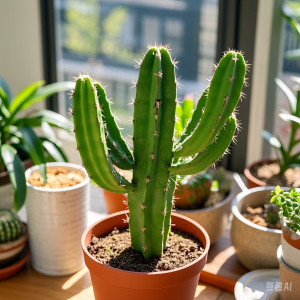
Let me introduce you to one of the most enchanting succulents in the plant world – Haworthia cooperi, a gem that truly lives up to its nickname as “little succulent pearls.” This extraordinary plant captivates with its translucent, balloon-like leaves that form perfect rosettes, creating the appearance of tiny glass beads arranged in nature’s perfect symmetry. Unlike many common succulents that dominate garden centers, this species offers something truly special for collectors seeking unique beauty.
The magic of Haworthia cooperi lies in its leaf windows – specialized translucent areas at the leaf tips that allow light to penetrate deep into the plant’s interior. This adaptation helps the plant maximize photosynthesis in its native South African habitat, where it often grows partially buried in the ground. The effect is nothing short of mesmerizing, particularly when backlit by sunlight, creating a jewel-like appearance that makes it stand out from other Хавортии species like the more common Zebra Plant (Haworthia fasciata).
Light requirements for this delicate beauty differ significantly from sun-loving succulents like Эхеверия or many Crassula species. While many succulents thrive in direct sunlight, Haworthia cooperi prefers bright but indirect light. An east-facing window that provides gentle morning sun is ideal, as intense afternoon sunlight can scorch those precious translucent leaves. This makes it perfect for indoor cultivation where controlled light conditions can be maintained year-round.
Watering practices prove crucial for maintaining the plant’s distinctive plump appearance. Like most succulents, it requires well-draining soil and careful watering, but it’s somewhat less drought-tolerant than desert species like Agave or Cactus. The “soak and dry” method works well, but the soil should not remain bone-dry for extended periods. During active growth in spring and fall, water when the soil is nearly dry, reducing frequency during winter dormancy. Overwatering quickly leads to rot, while underwatering causes the characteristic “pearls” to shrivel and lose their transparency.
The commercial availability of Haworthia cooperi has increased through specialized propagation, though it remains less common than mainstream succulents. While large-scale succulent factory operations in China (often found through search terms like succulent china or succulents china) produce millions of common succulents, this species is typically grown by specialty nurseries that focus on редкий суккулент varieties. During seasonal суккулент в продаже events, you might occasionally find it at larger garden centers, but serious collectors often turn to specialized поставщик суккулентов businesses.
Potting mix composition significantly impacts the health of these delicate plants. A gritty, well-draining mixture is essential – consider combining standard cactus soil with additional perlite, pumice, or coarse sand. The goal is to create an environment where water flows through quickly, preventing moisture from accumulating around the roots. This is particularly important for Haworthia cooperi, whose fleshy roots are susceptible to rot in overly moist conditions.
Temperature preferences align with typical indoor conditions, making it an excellent houseplant. It thrives in temperatures between 65-80°F (18-27°C) and should be protected from extremes. Unlike desert-dwelling succulents that can handle temperature fluctuations, this species prefers stability. During winter, it can tolerate slightly cooler temperatures down to 50°F (10°C), but frost will quickly damage the delicate leaves.
Propagation typically occurs through offsets that slowly emerge around the mother plant. This slow reproduction rate contributes to its status as a somewhat редкий суккулент compared to faster-growing species. When offsets appear, allow them to develop their own root system before carefully separating them for potting. Leaf propagation is possible but challenging with this species, requiring patience and ideal conditions.
For those seeking to acquire this gem, patience may be necessary. While common succulents are often available in суккуленты оптом quantities from суккуленты оптом suppliers, Haworthia cooperi is typically sold as individual specimens. Specialty succulent company businesses that focus on unusual varieties are your best bet, though prices may be higher than for more common succulents.
The plant’s small size – typically under 3 inches in diameter – makes it perfect for мини-суккулент arrangements and terrariums. However, ensure adequate air circulation if growing in enclosed containers, as stagnant humid air can promote fungal issues. It combines beautifully with other small succulents like certain Sedum varieties or Graptopetalum paraguayense (Ghost Plant), creating contrasting textures and forms.
With proper care, Haworthia cooperi will reward you with its unique beauty for years. Its slow growth means it won’t quickly outgrow its space, and its compact size makes it ideal for small living spaces. While it may not be the most простой в выращивании суккулент for absolute beginners, its requirements are straightforward once understood. The key is respecting its need for bright indirect light, careful watering, and excellent drainage – the same principles that apply to most succulents, just with slightly different parameters.
For those willing to provide the specific conditions it needs, Haworthia cooperi offers unparalleled rewards. Its otherworldly appearance never fails to captivate, and its manageable size makes it suitable for any collection. This little gem demonstrates the incredible diversity within the succulent world, proving that sometimes the smallest plants make the biggest impact.
 English
  Arabic
  Dutch
Dutch  German
  French
  Portuguese
  Spanish
  Russian
  Japanese
  Korean