

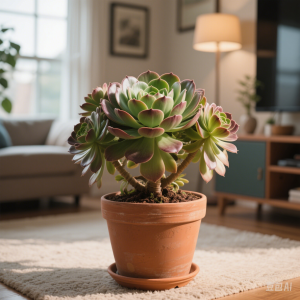
Let me introduce you to one of the most striking and user-friendly succulents available to growers – the Zebra Plant, scientifically known as Haworthia fasciata and Haworthia attenuata. These charming succulents earn their common name from the distinctive white horizontal stripes that pattern their dark green leaves, creating a visual effect reminiscent of a zebra’s coat. Unlike some редкий суккулент varieties that demand exacting conditions, the Zebra Plant ranks among the most простой в выращивании суккулент options for beginners while offering plenty of interest for experienced collectors.
The Zebra Plant forms attractive rosettes of pointed, triangular leaves that typically reach about 4-6 inches in height at maturity. While often confused with Aloe species due to similar growth habits, Хавортии plants belong to the Asphodelaceae family and generally remain more compact than most aloes. Their slow growth rate and manageable size make them excellent candidates for мини-суккулент gardens, terrariums, and windowsill displays where space may be limited.
Light requirements for Zebra Plants differ significantly from many desert-adapted succulents like Эхеверия or Agave. While they appreciate bright conditions, they prefer indirect light rather than the intense direct sun that many other succulents require. An east-facing window that provides morning sun but protects from harsh afternoon rays represents an ideal location. Too much direct sunlight can cause the leaves to turn reddish or brown, indicating stress, while insufficient light may cause the plant to become leggy as it stretches toward the light source.
Watering practices prove crucial for Zebra Plant success. Like most succulents, they require well-draining soil and are susceptible to root rot if overwatered. The “soak and dry” method works well – water thoroughly when the soil is completely dry, then allow it to dry out again before the next watering. During winter months, when the plant enters a semi-dormant period, reduce watering frequency significantly. This approach differs from the care required by rainforest succulents like Christmas Cactus but aligns with practices for other drought-tolerant species.
The commercial availability of Zebra Plants has expanded through large-scale production, particularly from operations in China where search terms like succulent china and succulents china reflect the major production centers supplying global markets. These succulent factory operations propagate these plants in enormous quantities, making them widely available through суккуленты оптом distributors to garden centers worldwide. During seasonal суккулент в продаже events, these plants often appear at very affordable prices, making them accessible to growers on any budget.
Potting mix composition significantly impacts Zebra Plant health. A well-draining formula specifically designed for cacti and succulents works well, or you can create a custom blend using standard potting soil amended with perlite, coarse sand, or pumice to improve drainage. The goal is to create an environment where water flows through quickly rather than pooling around the roots, similar to the needs of other succulents like Crassula or Сансевиерия.
Temperature preferences for Zebra Plants align with typical household conditions. They thrive in temperatures between 65-80°F (18-27°C) during the growing season and can tolerate brief dips to 50°F (10°C) in winter. This adaptability makes them well-suited to indoor cultivation year-round, unlike some succulents that require seasonal outdoor exposure or specific temperature fluctuations to thrive.
Fertilizer requirements are modest for these undemanding plants. A balanced, water-soluble fertilizer diluted to half strength can be applied monthly during the spring and summer growing season. Avoid fertilizing during fall and winter when growth naturally slows. This minimal feeding regimen contrasts with the heavier nutritional needs of fast-growing succulents like some Euphorbia species but matches the requirements of other slow-growing plants like Литопс.
Propagation of Zebra Plants typically occurs through offsets, which the mother plant produces readily. These small “pups” can be carefully separated when they’ve developed their own root systems and potted individually. This reliable propagation method has contributed to the plant’s widespread availability and affordability. Many succulent company businesses that focus on суккуленты оптом production utilize this characteristic to maintain their inventory.
For those seeking to acquire Zebra Plants, numerous options exist beyond local garden centers. Specialty поставщик суккулентов businesses often carry multiple Хавортии varieties, including the less common Haworthia cooperi with its translucent leaf tips. While not typically considered rare, some variegated or unusually formed specimens may command higher prices among collectors.
With proper care, Zebra Plants can live for many years, slowly producing offsets that eventually form attractive clumps. Their architectural form and striking patterning provide year-round interest even when not actively growing. Unlike flowering-focused succulents like Crown of Thorns, the Zebra Plant’s primary appeal lies in its foliage, making it decorative throughout all seasons.
The combination of visual appeal and forgiving nature makes the Zebra Plant an excellent choice for those new to succulent cultivation while still offering satisfaction to experienced growers. Its adaptability to indoor conditions and resistance to common pests further enhance its suitability as a houseplant. For anyone seeking an attractive, low-maintenance succulent that delivers visual impact without demanding constant attention, the Zebra Plant represents an nearly perfect choice that exemplifies the rewards of succulent gardening.
 English
  Arabic
  Dutch
Dutch  German
  French
  Portuguese
  Spanish
  Russian
  Japanese
  Korean