

- What Is a Low-Maintenance Garden?
- Why Low-Maintenance Garden Design Matters More in 2026
- 1. Start by Dividing Your Garden Into Maintenance Zones
- 2. Choose Plants for Your Climate, Not Just Their Appearance
- 3. Use Succulents Where Conditions Are Suitable
- 4. Create a Container Garden Instead of Planting Everything in the Ground
- 5. Reduce Lawn Areas That Require Constant Attention
- 6. Use Mulch or Gravel to Control Weeds and Moisture Loss
- 7. Water Deeply and Efficiently Instead of Watering Frequently
- 8. Add Pollinator-Friendly Plants Without Creating a Wild Maintenance Problem
- 9. Use Artificial Plants Strategically Where Real Plants Struggle
- 10. Choose Pots and Materials for Long-Term Performance
- 11. Design With Mature Plant Size in Mind
- 12. Build a Simple Seasonal Maintenance Schedule
- Real Plants vs. Succulents vs. Artificial Plants
- Common Low-Maintenance Garden Mistakes
- How Much Can a Low-Maintenance Garden Save?
- A Practical Low-Maintenance Garden Plan for Beginners
- 2026 and Beyond: Where Garden Design Is Going
- Final Thoughts: Build a Garden That Works for You
- Frequently Asked Questions
- Recommended External Sources
A beautiful garden should give you a place to relax, not another list of chores. Yet many homeowners start with ambitious planting plans and later discover that constant watering, pruning, weeding, fertilizing, and replacing unhealthy plants can consume more time and money than expected.
That is why the low-maintenance garden has become increasingly relevant. The goal is not to create a garden that requires absolutely no work. Instead, it is to design the space intelligently so plants, containers, irrigation, ground covers, and decorative elements work with your environment rather than against it.
In 2026, sustainable landscaping is also moving toward native planting, pollinator support, reduced lawn areas, water-conscious gardening, and more resilient garden designs. University of Minnesota Extension highlights native plants and living landscapes as important sustainable gardening trends, while the Chicago Botanic Garden identifies native planting, smaller lawns, meadow-style gardens, and biophilic design among notable 2026 directions.
This guide explains how to build a practical low-maintenance garden, which plants and materials make the biggest difference, where succulents fit into the design, when artificial greenery can be useful, and how to reduce long-term watering and maintenance without making your outdoor space look empty.
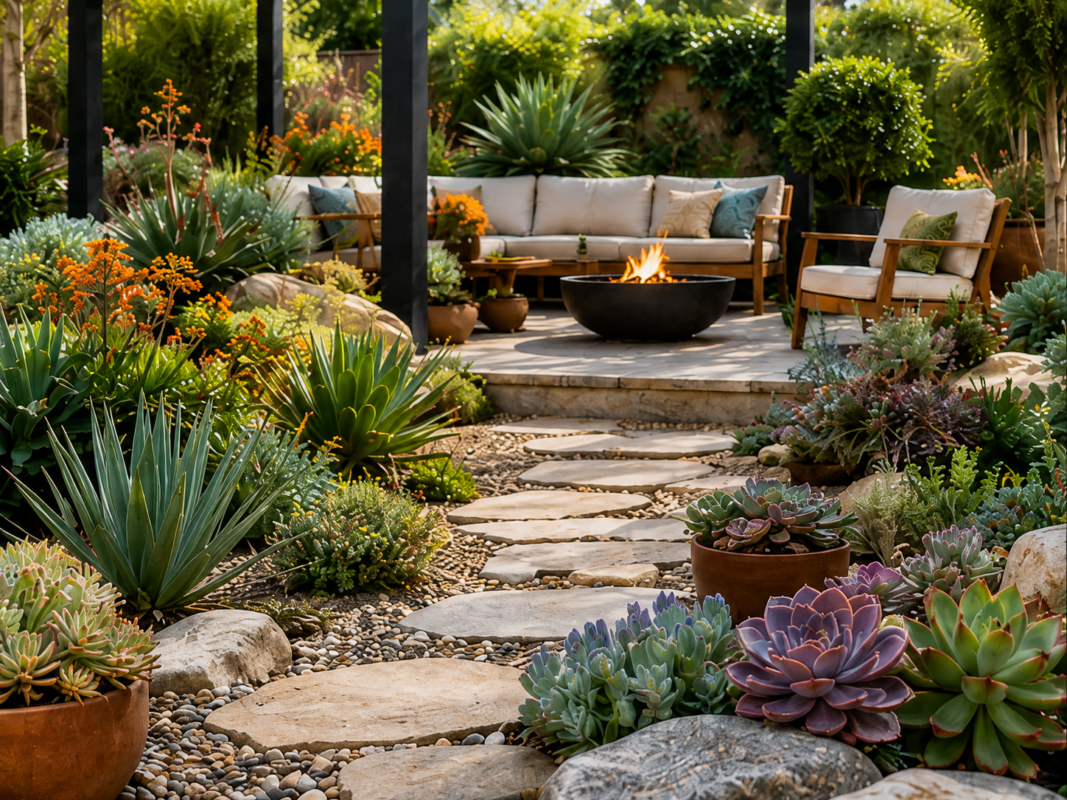
What Is a Low-Maintenance Garden?
A low-maintenance garden is designed to minimize routine work while still providing attractive planting, seasonal interest, and usable outdoor space. The design usually relies on plants that suit the local climate, efficient watering, good soil preparation, durable containers, mulch or gravel, and fewer areas that require weekly attention.
Low maintenance does not necessarily mean minimalist. A garden can still contain rich textures, flowers, greenery, containers, vertical planting, or decorative features. The difference is that each element is selected with long-term maintenance in mind.
One of the most common mistakes is choosing plants purely by appearance. A beautiful plant that constantly struggles with your temperature, rainfall, soil, or sunlight may require more watering, pest control, fertilizer, and replacement than a plant naturally suited to the site.
A better approach is to ask a practical question before buying anything: How much work will this plant or feature require after the first year?
Why Low-Maintenance Garden Design Matters More in 2026
Garden design is increasingly connected to water use, climate resilience, biodiversity, and household operating costs. These considerations make plant selection and irrigation efficiency more important than simply filling every available space with greenery.
The U.S. Environmental Protection Agency’s WaterSense program reports that residential outdoor water use in the United States is nearly 8 billion gallons per day, primarily for landscape irrigation. EPA also estimates that as much as 50% of this outdoor water can be wasted because of overwatering and irrigation inefficiencies.
A well-planned low-maintenance garden can therefore provide several practical benefits:
- Less time spent watering, mowing, pruning, and replacing plants
- Lower demand for irrigation
- Fewer fertilizers and garden chemicals
- Lower replacement costs
- Better resilience during hot or dry periods
- More time to enjoy the garden instead of maintaining it
The best results usually come from reducing several small maintenance demands at the same time rather than searching for one “maintenance-free” plant.
1. Start by Dividing Your Garden Into Maintenance Zones
Before buying plants, divide the garden according to sunlight, water availability, foot traffic, and how often you want to maintain each area.
Areas near a patio, entrance, or outdoor dining space can justify more detailed planting because you see them frequently. Distant corners, side yards, fence lines, and utility areas usually benefit from simpler planting or durable decorative solutions.
This creates a low-maintenance garden in which your effort is concentrated where it produces the greatest visual value.
A Simple Three-Zone System
High-attention zone:
Entrances, tables, patios, and focal points. Use statement plants, attractive containers, flowering plants, or seasonal displays.
Medium-attention zone:
Main beds and borders. Use reliable shrubs, succulents where climate allows, ornamental grasses, and climate-appropriate perennials.
Low-attention zone:
Side passages, hard-to-water corners, walls, or sheltered spaces. Consider gravel, ground covers, durable structural plants, or carefully selected artificial greenery where living plants are impractical.
This approach prevents every square foot of the garden from becoming another maintenance obligation.
2. Choose Plants for Your Climate, Not Just Their Appearance
Plant selection has the greatest long-term effect on maintenance.
Plants growing in conditions similar to their natural preferences normally require less intervention than plants constantly fighting unsuitable heat, cold, soil, humidity, or sunlight. Native and regionally adapted plants are therefore worth investigating before designing a new bed.
The University of Minnesota Extension notes that native plants can support bees, butterflies, birds, and beneficial insects while forming part of more sustainable landscapes.
However, “native” does not automatically mean maintenance-free. You still need to match the plant to your specific soil, drainage, sun exposure, mature size, and local climate.
For the best low-maintenance garden, select plants based on mature performance rather than how they look in a nursery pot.
3. Use Succulents Where Conditions Are Suitable
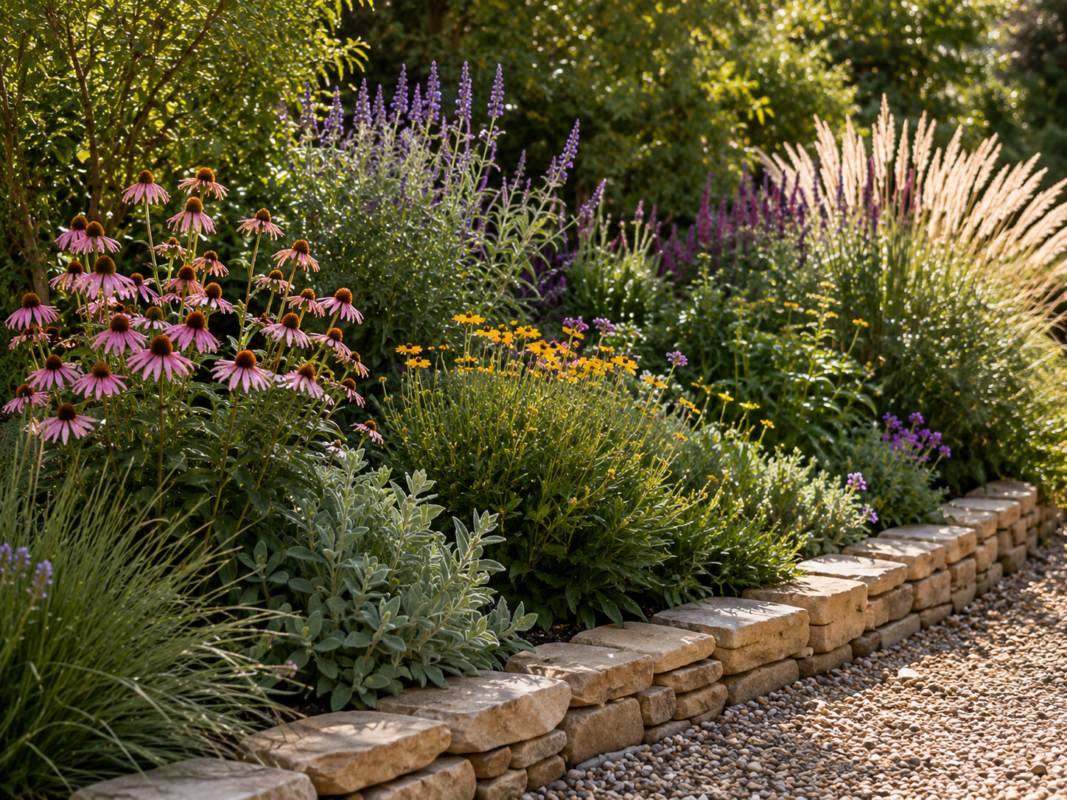
Succulents are popular because many species store water in their leaves, stems, or roots. This adaptation can make them useful in dry garden designs, but the idea that all succulents require no care is misleading.
Drainage is especially important. Soil that remains wet for too long can create more problems than occasional dryness, and different succulent species have different light, temperature, and watering requirements.
For sunny patios, rock gardens, containers, courtyards, and other appropriate climates, succulents can become one of the strongest visual elements in a low-maintenance garden.
Rosette-forming varieties create geometric structure, trailing succulents can soften raised planters, and cacti can provide strong architectural shapes.
If you are choosing plants for a new project, explore the CNGarden succulent collection and review the succulent care guides before deciding which varieties match your environment.
4. Create a Container Garden Instead of Planting Everything in the Ground
Containers are useful when soil conditions are poor, space is limited, or you want greater control over plant placement.
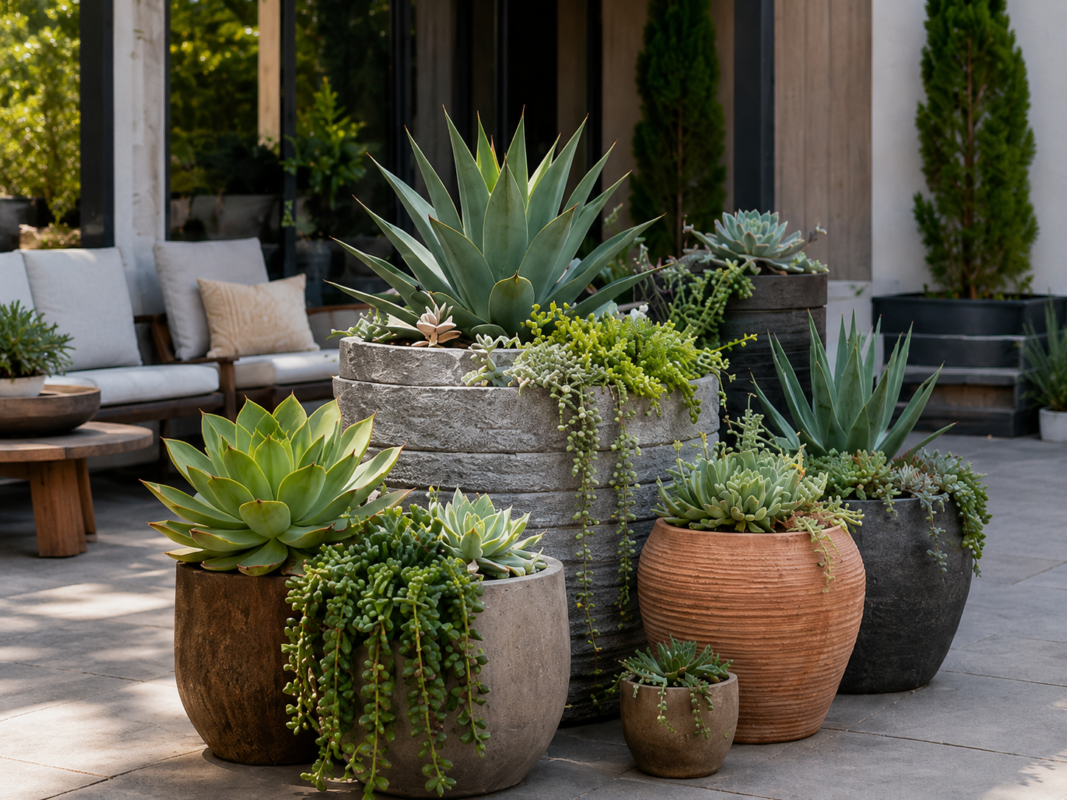
A container-based low-maintenance garden can work especially well on patios, balconies, entrances, decks, and small urban spaces. Pots also allow you to move sensitive plants into better light or shelter when weather conditions change.
The key is choosing the correct container size. Tiny pots may look attractive, but they dry faster and often require more frequent watering. Larger containers generally provide more stable root temperatures and moisture levels.
Always consider drainage before appearance. For most succulents and many outdoor plants, a decorative pot without adequate drainage can turn a supposedly easy-care plant into a maintenance problem.
5. Reduce Lawn Areas That Require Constant Attention
Traditional lawns can create recurring work through mowing, edging, watering, fertilizing, weed control, and seasonal repair.
You do not need to remove every area of grass. Instead, consider whether every existing lawn section actually has a purpose.
A practical low-maintenance garden might retain grass where children play or people walk while converting awkward corners and narrow strips into planting beds, gravel, stepping-stone paths, ground covers, or pollinator planting.
The Chicago Botanic Garden includes “shrink the lawn” among its 2026 garden trends, reflecting wider interest in landscapes that combine different materials and planting types rather than relying on one large grass surface.
Reducing lawn area gradually can also be easier and less expensive than redesigning an entire yard at once.
6. Use Mulch or Gravel to Control Weeds and Moisture Loss
Bare soil rarely stays bare. Wind-blown seeds arrive, weeds emerge, and exposed ground can lose moisture quickly during hot weather.
Organic mulch can suppress weeds, reduce evaporation, and slowly contribute organic material as it breaks down. Gravel is often useful around succulents, Mediterranean-style planting, pathways, and areas where a cleaner architectural appearance is desired.
Neither material eliminates maintenance completely. Organic mulch eventually needs replenishment, while gravel beds may collect debris or allow weeds to establish over time.
The advantage is that both can substantially reduce repeated soil disturbance compared with leaving large areas uncovered.
7. Water Deeply and Efficiently Instead of Watering Frequently
Watering habits can determine whether an easy-care garden actually remains easy.
Frequent shallow watering may encourage shallow root development in many landscape plants. Where appropriate for the species and soil, deeper watering at suitable intervals can support stronger root systems and reduce unnecessary irrigation.
Smart irrigation controllers can also help adjust watering according to weather and plant needs. EPA WaterSense states that labeled irrigation controllers are designed to reduce overwatering by applying water according to actual landscape requirements.
For a low-maintenance garden, separate plants with very different water requirements whenever possible. A drought-tolerant succulent bed should not share the same irrigation schedule as plants that prefer consistently moist soil.
That simple zoning decision can save water and prevent plant problems.
8. Add Pollinator-Friendly Plants Without Creating a Wild Maintenance Problem
Supporting pollinators does not require turning the entire yard into an uncontrolled meadow.
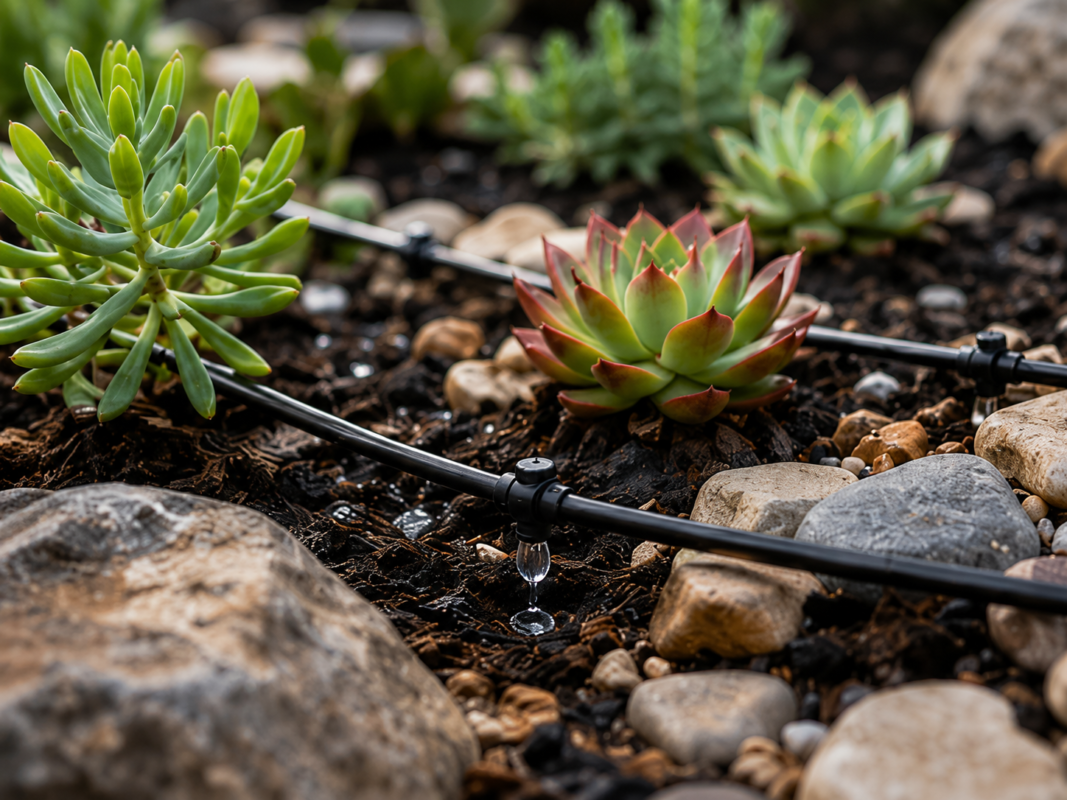
Start with one sunny planting area containing several locally appropriate flowering species. Choose plants with different bloom periods so the space provides flowers across a longer season.
Native flowering plants are increasingly used in sustainable garden design because they can support local insects and wildlife. University of Minnesota Extension specifically highlights pollinator-supporting native species as part of 2026 sustainable gardening trends.
Keep the planting intentional. Repeating the same species in small groups, defining bed edges, and using pathways can make an ecological low-maintenance garden look designed rather than neglected.
9. Use Artificial Plants Strategically Where Real Plants Struggle
Artificial greenery should not replace ecologically valuable living planting throughout a garden. However, it can solve specific design problems in areas where real plants repeatedly fail.
Examples include dark covered patios, interior-exterior transition spaces, sheltered balconies, event areas, hospitality installations, or decorative corners where irrigation is impossible.
A realistic artificial plant can provide consistent color without watering, fertilizer, pruning, or seasonal replacement. For commercial spaces, it can also simplify visual maintenance in areas that are difficult for staff to access.
The strongest design usually combines materials thoughtfully rather than filling every space with artificial greenery.
For these difficult locations, you can compare CNGarden artificial succulent options with living plants and decide which solution is most practical.
When using artificial plants outdoors, confirm that the specific product is suitable for the intended exposure. Sunlight, heat, wind, and moisture can affect materials differently, so indoor decorative products should not automatically be treated as permanent outdoor products.
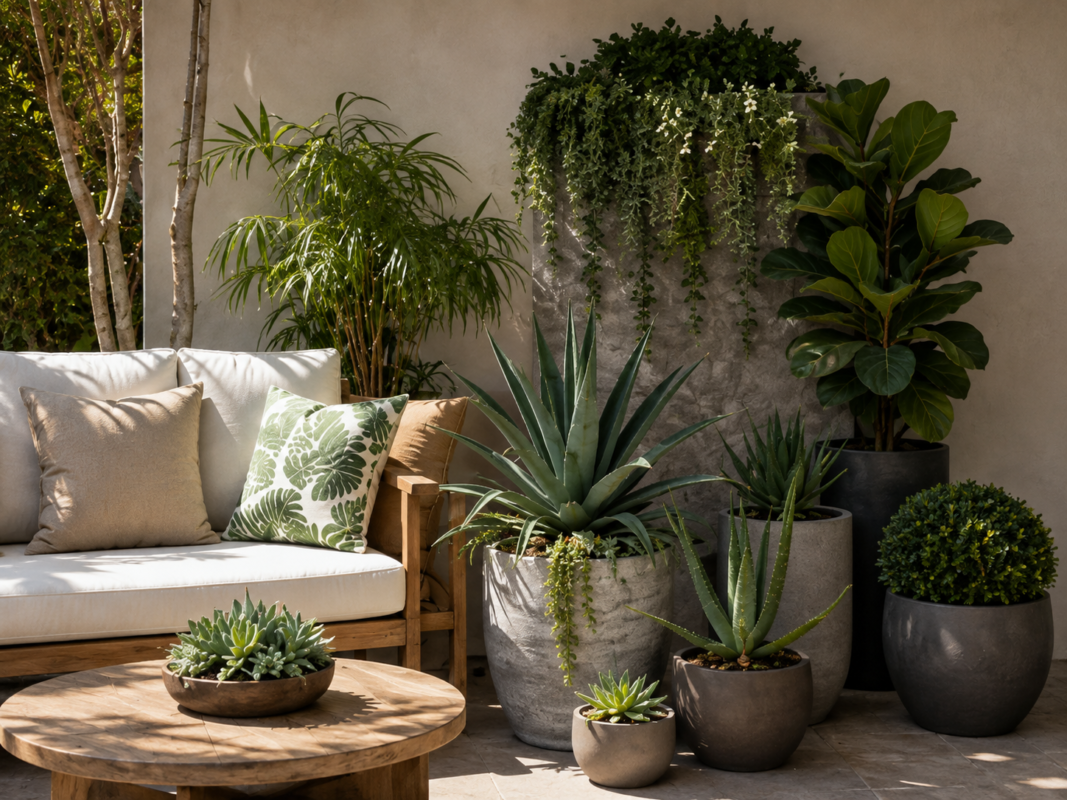
10. Choose Pots and Materials for Long-Term Performance
Garden products are often selected according to first impressions, but long-term durability matters more.
A pot that cracks, fades, tips over, retains too much water, or becomes difficult to move can create additional work. Consider drainage, weight, weather exposure, plant size, and the mature root system before purchasing.
The same principle applies to edging, pathways, raised beds, trellises, and garden furniture.
A successful low-maintenance garden uses fewer materials that need repeated repair or replacement. Paying slightly more for appropriate materials can sometimes reduce long-term labor and replacement costs.
For containers and decorative garden products, browse the current CNGarden shop and compare size, material, drainage, and intended placement before ordering.
11. Design With Mature Plant Size in Mind
Overplanting creates an impressive result immediately, but it often creates unnecessary maintenance later.
Plants that are installed too close together compete for light, nutrients, airflow, and root space. Within a few growing seasons, you may need to prune aggressively, transplant healthy plants, or remove them entirely.
Check mature height and width rather than relying only on the size of the plant when purchased.
Leaving appropriate spacing may make a new garden appear slightly empty at first, but the landscape can become more balanced as plants mature. This is one of the simplest ways to keep a low-maintenance garden manageable for years.
12. Build a Simple Seasonal Maintenance Schedule
Low maintenance works best when small jobs are completed before they become large problems.
Instead of reacting to the garden every weekend, create a short seasonal checklist. Inspect irrigation, remove obvious weeds, clean damaged foliage, check containers, and make minor adjustments at predictable times.
For example:
Spring
Inspect irrigation, clean beds, check drainage, and replace plants that did not survive winter.
Summer
Watch for heat stress, irrigation problems, pests, and containers drying faster than expected.
Fall
Remove unwanted seedlings, clean heavily damaged foliage, and prepare sensitive plants for cooler weather.
Winter
Review which plants performed well and plan changes before the next growing season.
A few planned maintenance sessions can be far more efficient than constant reactive gardening.
Real Plants vs. Succulents vs. Artificial Plants
There is no single plant type that is ideal for every low-maintenance garden.
| Option | Water Needs | Routine Care | Best Uses | Main Limitation |
|---|---|---|---|---|
| Climate-appropriate living plants | Low to moderate | Seasonal | Beds, borders, wildlife gardens | Must match local conditions |
| Succulenten | Often low | Low to moderate | Containers, sunny beds, rock gardens | Sensitive to poor drainage or unsuitable climate |
| Artificial plants | None | Cleaning/inspection | Difficult decorative locations | No ecological benefit |
| Traditional lawn | Moderate to high | Frequent | Play and activity areas | Mowing and irrigation |
| Gravel/hardscape | None | Occasional cleaning | Paths and dry design zones | Can become hot or visually harsh if overused |
The most practical solution is often a hybrid.
Use living plants where they can thrive and provide ecological value. Use succulents in dry, well-drained areas, and reserve artificial plants for decorative spaces where living plants are genuinely impractical.
Common Low-Maintenance Garden Mistakes
Choosing “Easy” Plants Without Checking Climate
A plant described as easy to grow may still fail in the wrong climate. Temperature, humidity, sunlight, frost, rainfall, and drainage all matter.
Overwatering Succulents
Succulents store water, but that does not mean they can remain permanently wet. Good drainage and appropriate watering are fundamental.
For more detailed guidance, read CNGarden’s Succulent Care: A Complete Guide to Growing Healthy Plants.
Buying Containers That Are Too Small
Small containers dry quickly and restrict root growth. Larger pots can often reduce watering frequency and create more stable growing conditions.
Planting Too Densely
Crowded planting may look finished immediately but often increases pruning and transplanting later.
Assuming Artificial Plants Work Everywhere
Some artificial plants are designed primarily for indoor use. Always check material suitability before placing them in direct sun, rain, or exposed outdoor locations.
Trying to Eliminate All Maintenance
Every outdoor space changes. Plants grow, leaves fall, weather damages materials, and weeds arrive.
The goal is not zero maintenance. The goal is less unnecessary maintenance.
How Much Can a Low-Maintenance Garden Save?
The answer depends on the original garden.
A large irrigated lawn may have more potential for water and labor savings than a small patio. A poorly designed garden filled with thirsty plants may benefit dramatically from replanting, while an established native landscape may already operate efficiently.
Instead of focusing only on the initial installation price, consider the total cost of ownership over several years:
Initial cost + water + fertilizer + replacement plants + maintenance time + professional services = long-term garden cost
This is why an inexpensive plant is not always the cheapest option.
If a plant repeatedly dies and needs replacement, or requires constant irrigation to survive, a more expensive but well-adapted plant may provide better long-term value.
A Practical Low-Maintenance Garden Plan for Beginners
You do not need to redesign everything at once.
Start with the part of the garden creating the most work.
Step 1: Identify the area requiring the most watering, mowing, pruning, or plant replacement.
Step 2: Record the amount of sun it receives.
Step 3: Check soil drainage and irrigation.
Step 4: Decide whether the area needs living plants, containers, hardscape, or a combination.
Step 5: Choose climate-appropriate plants with compatible water needs.
Step 6: Add mulch or gravel where appropriate.
Step 7: Install or adjust efficient irrigation.
Step 8: Observe the area for one growing season before redesigning another section.
This gradual method reduces financial risk and allows you to learn which solutions actually perform well in your conditions.
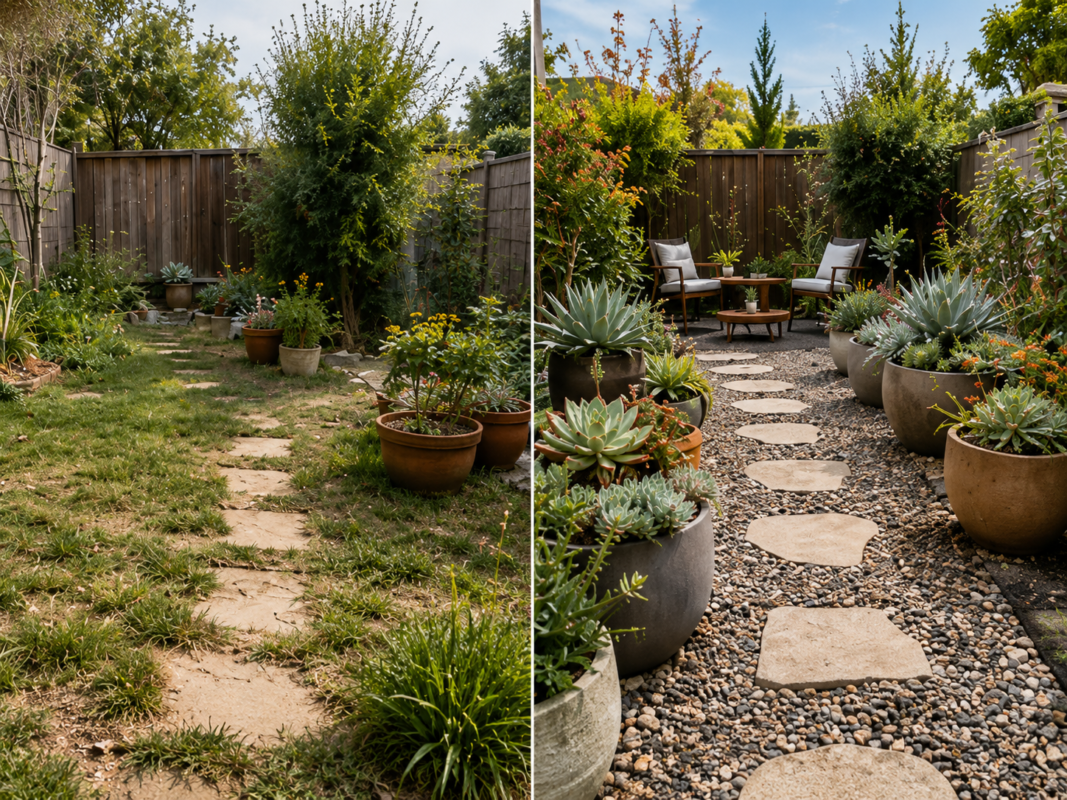
2026 and Beyond: Where Garden Design Is Going
The direction of modern garden design is becoming clearer: use resources more intelligently while creating outdoor spaces that remain attractive and useful.
Native planting, pollinator habitats, reduced lawn areas, water efficiency, container gardening, drought-tolerant planting, and more naturalistic landscapes are all contributing to this shift. Current 2026 guidance from university and botanical-garden sources reflects increasing interest in resilient and ecologically useful gardens rather than landscapes maintained primarily through intensive watering and mowing.
Technology will also play a larger role. Weather-responsive irrigation controllers, soil sensors, improved LED growing systems, automated monitoring, and data-assisted garden planning can help people make more precise decisions.
However, technology cannot compensate for poor basic design.
The easiest low-maintenance garden will still begin with the right plant in the right place.
Final Thoughts: Build a Garden That Works for You
A successful low-maintenance garden is not created by buying one drought-tolerant plant or replacing every living plant with artificial greenery.
It comes from a series of practical decisions: choosing climate-appropriate plants, reducing unnecessary lawn, improving irrigation, using well-drained containers, grouping plants by water needs, covering bare soil, allowing enough space for mature growth, and concentrating maintenance where it delivers the most value.
Succulents can be an excellent part of that strategy when climate, light, and drainage are suitable. Artificial plants can also solve specific decorative problems where living plants cannot realistically thrive.
Most importantly, redesign gradually.
Start with the area creating the most work, improve it, observe the results, and then apply what you learned to the next part of the garden. Over time, the result can be a more attractive, water-conscious, and genuinely manageable outdoor space.
Ready to plan your next garden project?
Explore CNGarden succulents, review our succulent care resources, browse artificial succulent options, or contact CNGarden for product and sourcing inquiries.
Frequently Asked Questions
What is the easiest type of garden to maintain?
The easiest garden is usually one built around plants suited to the local climate, efficient irrigation, covered soil, and limited lawn. A container or drought-tolerant garden can also be relatively easy to manage when plants share similar light and water requirements.
Are succulents good for a low-maintenance garden?
Yes, when the site provides appropriate light, temperature, and drainage. Succulents can reduce watering requirements, but they are not completely maintenance-free and can suffer from overwatering or unsuitable weather.
How can I reduce garden watering?
Group plants by water needs, reduce unnecessary lawn, improve soil where appropriate, use mulch, repair irrigation leaks, and consider weather-responsive irrigation controls. Always adjust watering according to the species, season, and local conditions.
Can I mix artificial plants with real plants?
Yes. Artificial plants can work effectively in hard-to-grow decorative areas while real plants provide seasonal growth and ecological benefits elsewhere. Using matching containers and similar foliage tones can help the two types blend naturally.
What should I change first in a high-maintenance garden?
Identify the area consuming the most water or labor. Common starting points include oversized lawns, plants repeatedly failing in unsuitable conditions, inefficient irrigation, very small containers, or bare soil with constant weed growth.
 English
  Arabic
  Dutch
Dutch  German
  French
  Portuguese
  Spanish
  Russian
  Japanese
  Korean