

- Popular Aeonium Types and Design Personalities
- Aeonium as Living Fashion
- Styling Aeonium in Different Spaces
- Understanding Aeonium’s Seasonal Rhythm
- Essential Aeonium Care
- Pruning and Shaping Aeonium
- Propagating Aeonium
- Flowering and the Aeonium Life Cycle
- Common Aeonium Problems
- How New Technology Is Transforming Aeonium Cultivation
- Aeonium and Sustainable Design
- How to Choose a Healthy Aeonium
- Merchandising Aeonium as a Modern Plant Category
- The Future of Aeonium
- 최종 생각
A Succulent With the Presence of a Sculpture
Some plants quietly blend into a room. Aeonium does the opposite.
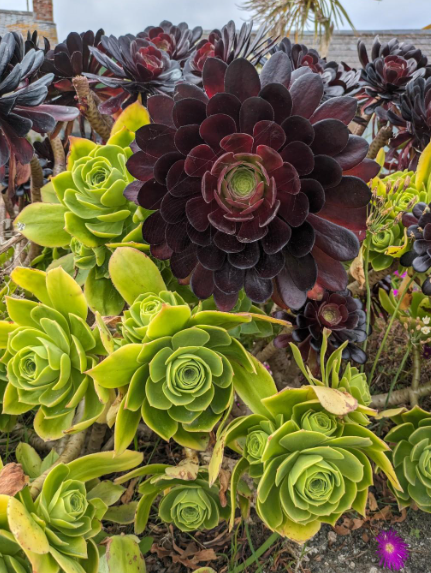
With rosettes that resemble oversized flowers, branching stems that create tree-like silhouettes, and foliage ranging from fresh green to cream, pink, burgundy, and almost black, Aeonium has become one of the most visually expressive groups in contemporary succulent design.
Aeonium can appear elegant in a minimalist ceramic pot, dramatic in a dark architectural planter, or playful in a colorful Mediterranean-style garden. Its form connects naturally with fashion, furniture, product design, photography, hospitality, and modern landscaping.
At the same time, new growing technologies are changing how Aeonium can be produced, monitored, marketed, and enjoyed. Soil-moisture sensors, controlled LED lighting, computer vision, artificial intelligence, automated irrigation, digital plant passports, and online visualization tools are making succulent cultivation more precise and interactive.
Aeonium is no longer simply a collectible succulent.
It is living architecture, seasonal color, and botanical technology in one distinctive plant category.
What Is Aeonium?
Aeonium is a genus of succulent plants in the Crassulaceae family. According to Kew’s Plants of the World Online, its native range is centered in Macaronesia and extends into southwestern Morocco. Many of the species most familiar in cultivation are strongly associated with the Canary Islands.
The name Aeonium is commonly associated with the idea of being enduring or “ageless,” an appropriate image for plants that can survive dry conditions through water-storing leaves and seasonal growth strategies.
Most ornamental Aeoniums produce leaves in compact or open rosettes. Depending on the species or cultivar, these rosettes may grow:
- Close to the soil
- At the ends of short branches
- On tall, woody stems
- In dense clusters
- As a single architectural rosette
- As a spreading shrub-like plant
Unlike many desert succulents with hard spines or strongly reduced leaves, Aeoniums often have broad, relatively thin, spoon-shaped leaves. This gives them a softer, flower-like appearance while retaining the geometry associated with succulents.
Their mature size can vary greatly. Some remain small enough for a tabletop container, while others develop into branching specimens that create the visual effect of miniature trees covered with rosettes.
Why Aeonium Looks Different From Other Succulents
Aeonium is frequently displayed beside Echeveria, Sempervivum, Sedum, Aloe, and Crassula, but it has a visual identity of its own.
Elevated Rosettes
Many Aeoniums carry their rosettes at the ends of visible stems. As older leaves fall, the stems become more exposed and tree-like.
This creates a strong vertical silhouette that works particularly well in architectural interiors and modern gardens.
Flower-Like Geometry
The leaves radiate from a central growing point, forming circular patterns that resemble roses, dahlias, lotus flowers, or graphic spirals.
The shape remains attractive even when the plant is not flowering.
Seasonal Movement
Aeonium is not visually static.
Rosettes may become tighter during hot or dry conditions and open more widely during active growth. Lower leaves may be shed as the plant adjusts to heat, water availability, and seasonal conditions.
Many commonly cultivated Aeoniums are associated with cool-season growth and reduced activity during hot, dry summer weather, although their exact behavior depends on species, climate, container conditions, and cultivation environment.
Dramatic Color
Aeonium foliage can include:
- Bright green
- Lime
- Blue-green
- Olive
- Cream
- Yellow
- Pink
- Copper
- Burgundy
- Purple
- Near-black tones
- Multicolored variegation
Light, temperature, genetics, nutrition, and seasonal growth can all influence the final appearance.
Popular Aeonium Types and Design Personalities
Names in the commercial succulent market are not always used consistently. Cultivars may be relabeled, translated, or sold under regional trade names, so buyers should verify nursery labeling and compare mature plant characteristics.
Nevertheless, several Aeonium types are especially important in ornamental design.
Aeonium arboreum
Aeonium arboreum is one of the best-known tree-form Aeoniums.
It develops branching stems topped with green rosettes and can eventually become a substantial container or landscape specimen in suitable climates.
Its strong structure makes it useful as:
- A patio focal point
- An entrance plant
- A height element in succulent gardens
- A sculptural background plant
- A Mediterranean-style container specimen
Aeonium arboreum ‘Zwartkop’
Often called black rose Aeonium, ‘Zwartkop’ is valued for its dark purple to nearly black foliage.
The color creates strong contrast against pale walls, gravel, concrete, cream ceramics, and bright green plants. The Royal Horticultural Society specifically highlights large specimens such as Aeonium ‘Zwartkop’ as impressive sculptural plants for sunny patios or doorsteps during suitable weather.
Its visual personality is dramatic, sophisticated, and fashion-oriented.
Aeonium ‘Sunburst’
‘Sunburst’ is known for broad variegated rosettes combining green, cream, yellow, and sometimes pink-edged foliage.
It is especially attractive in:
- Coastal gardens
- Bright contemporary interiors
- Pastel container collections
- Wedding displays
- Summer retail presentations
- Light-colored architectural spaces
Because variegated tissue contains less chlorophyll than fully green foliage, variegated plants may require more careful management of light and heat.
Aeonium ‘Kiwi’
Plants sold as ‘Kiwi’ generally form smaller branching rosettes with combinations of green, yellow, cream, and pink or red leaf margins.
Its compact form and colorful appearance make it popular for gift plants, mixed containers, windowsill collections, and lifestyle photography.
Aeonium tabuliforme
Aeonium tabuliforme is known for its unusually flat, plate-like rosette.
Its tightly arranged leaves can create the appearance of a living geometric tile. Rather than growing into a tall branching form, it is often appreciated as a low architectural specimen.
It works particularly well in:
- Shallow containers
- Rock gardens
- Botanical displays
- Minimalist collections
- Close-up photography
- Educational exhibits about plant geometry
The low rosette should be protected from water collecting around the center and from prolonged wet conditions.
Aeonium canariense
Aeonium canariense is known for large green rosettes that can have a soft, substantial presence.
It suits naturalistic Mediterranean gardens, terracotta containers, rock landscapes, and mixed succulent displays.
Aeonium haworthii
Aeonium haworthii generally produces branching growth with smaller rosettes than some tree-like forms.
Its scale makes it useful for container design, mixed succulent gardens, and spaces where a very large Aeonium would be unsuitable.
Crested and Variegated Aeoniums
Crested Aeoniums develop unusual fan-like or distorted growth when the normal growing point changes its pattern.
Variegated forms introduce cream, yellow, pink, or pale-green tissue into the leaves.
These plants are highly attractive to collectors because each specimen can have an individual appearance. They are also valuable for fashion photography, limited-edition product collections, and premium plant merchandising.
However, unusual growth forms may be less vigorous or more sensitive than standard green plants.
Aeonium as Living Fashion
Fashion is not limited to clothing.
It influences the colors, materials, shapes, and visual stories people use in homes, gardens, offices, hotels, retail spaces, and events. Aeonium fits naturally into this wider design world because it looks like both a plant and a sculptural object.
Quiet Luxury
Quiet luxury emphasizes excellent materials, refined proportions, and subtle visual details.
Dark or deep-green Aeoniums can be paired with:
- Natural stone
- Matte ceramic
- Dark wood
- Brushed metal
- Linen
- Leather
- Travertine
- Concrete
- Neutral architectural surfaces
A large ‘Zwartkop’ in a simple stone-colored container can create a stronger impression than a complicated arrangement containing many unrelated plants.
The container should remain visually controlled so that the rosette structure becomes the main feature.
Botanical Gothic
Dark Aeonium cultivars fit the botanical Gothic aesthetic particularly well.
Combine near-black rosettes with:
- Aged metal
- Charcoal containers
- Dark glass
- Burgundy textiles
- Antique mirrors
- Deep-green foliage
- Candlelight
- Sculptural branches
This style works for fashion editorials, dramatic retail windows, restaurants, event installations, and seasonal autumn displays.
Mediterranean Modern
Aeonium’s island origins and architectural form make it suitable for Mediterranean-inspired gardens.
Use it with:
- Terracotta
- White walls
- Natural gravel
- Olive tones
- Weathered stone
- Blue ceramic details
- Agave
- Aloe
- Rosemary
- Drought-tolerant grasses
The result can feel both traditional and contemporary.
Dopamine Décor
Colorful variegated Aeoniums can participate in the bright, playful world of dopamine décor.
Pink-edged and cream-variegated plants can be paired with:
- Cobalt-blue pots
- Orange accessories
- Yellow furniture
- Glossy ceramics
- Patterned textiles
- Color-blocked shelves
Rather than imitating a natural desert, this approach treats the plant as part of an expressive color collection.
Futuristic Botanical Design
Aeonium’s repeating geometry also fits futuristic spaces.
Dark rosettes can be combined with:
- Chrome planters
- Translucent acrylic
- Integrated LED lighting
- Mirrored platforms
- Metallic surfaces
- Sensor-equipped displays
- Digital screens
- Geometric furniture
The plant becomes a biological contrast to the technology surrounding it.
Wabi-Sabi and Sculptural Aging
As Aeonium grows, older leaves are shed and stems become exposed.
Rather than hiding this process, designers can appreciate it as part of the plant’s character. The changing silhouette reflects time, adaptation, and natural imperfection.
A mature, branching Aeonium can resemble a miniature weathered tree.
Styling Aeonium in Different Spaces
Modern Living Rooms
Use one mature specimen rather than many small plants.
Place it near a bright window in a planter that coordinates with the room’s materials. A dark cultivar can provide contrast in a pale interior, while a variegated plant can soften a darker space.
Home Offices
A compact Aeonium can add structure and color to a desk or shelf.
However, the position should be selected according to light, not appearance alone. A decorative location far from a window may be unsuitable for long-term growth.
Patios and Balconies
Container cultivation allows Aeonium to be moved according to season, temperature, rainfall, and light.
Create a coordinated collection using plants with different heights:
- Tall branching Aeonium
- Medium rosette succulent
- Low trailing Sedum
- Upright Aloe or Agave
- Fine-textured ornamental grass
Hotel and Restaurant Entrances
Large Aeoniums can create a strong first impression in climates where outdoor conditions are suitable.
Commercial designers should plan for:
- Drainage
- Irrigation access
- Seasonal maintenance
- Wind
- pedestrian movement
- Container weight
- Replacement plants
- Lighting conditions
Retail Displays
Aeonium can support fashion, cosmetics, jewelry, home, and lifestyle presentations.
The foliage color can be coordinated with:
- Product packaging
- Seasonal campaigns
- Clothing collections
- Store fixtures
- Display lighting
- Brand colors
Plants should not be placed under hot display lighting or in dark windows merely for short-term visual effect without a maintenance plan.
Weddings and Events
Aeoniums can contribute to modern, desert, bohemian, botanical, and architectural event themes.
They may be used in:
- Container centerpieces
- Ceremony entrances
- Table displays
- Living backdrops
- Reception styling
- Gift plants
- Photography installations
For temporary events, potted plants can often be reused afterward, unlike cut botanical materials.
Understanding Aeonium’s Seasonal Rhythm
One of the most important aspects of Aeonium care is understanding that its growth pattern may differ from that of many commonly cultivated summer-growing succulents.
Many Aeoniums respond positively to cooler, milder growing conditions and reduce their activity during intense summer heat. During hot or dry periods, rosettes may partially close, leaf loss may increase, and water demand may fall.
This does not necessarily mean the plant is dying.
It may be protecting its growing point and reducing water loss.
During Active Growth
The plant may show:
- More open rosettes
- Fresh central leaves
- Increased stem growth
- New branches
- Stronger root activity
- Greater water use
During Heat or Dormancy
The plant may show:
- Tighter rosettes
- Reduced growth
- Dry lower leaves
- More compact foliage
- Lower water use
- Temporary color changes
The watering schedule should follow the plant’s actual condition rather than a fixed calendar.
Essential Aeonium Care
Light
Aeonium generally needs bright light to maintain compact growth and strong coloration.
Depending on the cultivar and climate, this may include direct morning sun, filtered midday light, or several hours of suitable outdoor sunlight.
Dark cultivars often develop their deepest color under stronger light. However, sudden exposure to intense sun can scorch foliage, especially when a plant has been grown indoors, under shade cloth, or in a greenhouse.
Introduce stronger light gradually.
Signs of Insufficient Light
- Long spaces between leaves
- Weak stems
- Leaning growth
- Pale foliage
- Loose rosettes
- Reduced dark pigmentation
- Growth toward a window
Signs of Excessive Heat or Sun Stress
- Bleached patches
- Dry brown areas
- Leaf-edge damage
- Rapid rosette closure
- Severe leaf drop
- Hot containers and damaged roots
Light intensity and heat should be considered separately. A plant may tolerate bright light in a cool climate but suffer in the same position during extreme summer temperatures.
Water
Watering is one of the most important and most misunderstood parts of Aeonium care.
Water thoroughly enough to moisten the root zone, and then allow the growing medium to lose much of its moisture before watering again.
Do not maintain continuously wet soil.
During cooler active growth, an Aeonium may use water more regularly. During hot dormancy or low-light indoor conditions, it may require much less.
Avoid Watering by Calendar Alone
Statements such as “water once every seven days” ignore:
- Pot size
- Root volume
- Temperature
- Humidity
- Airflow
- Light
- Season
- Growing medium
- Container material
- Plant size
Check the plant and substrate before watering.
Soil and Growing Medium
Aeonium needs a well-draining growing medium that still allows the roots to access water during active growth.
A suitable mix may contain combinations of:
- Succulent potting mix
- Pumice
- Perlite
- Lava rock
- Coarse mineral particles
- Fine bark
- Grit
- Limited moisture-retaining organic material
The correct ratio depends on climate and cultivation system.
A highly mineral mix may work well in a cool, wet region but dry too quickly in a hot, windy environment. A rich, moisture-retaining mix may work in a warm greenhouse with carefully controlled irrigation but remain dangerously wet in a cool home.
Containers
A container should have functional drainage holes.
Terracotta can allow faster moisture loss, while glazed ceramic and plastic may retain moisture longer.
Choose a pot that is proportionate to the root system. An excessively large container can hold wet soil around a relatively small root ball.
For tall specimens, the container should also provide enough weight and width to resist tipping.
Temperature
Aeonium generally prefers mild conditions and should be protected from freezing.
Many specimens can spend warm seasons outdoors but require winter protection in climates with frost. The RHS notes that dramatic potted Aeoniums can be displayed outdoors in summer but that most require protection during winter.
Avoid placing indoor plants directly against freezing windows or beside heating vents.
Humidity and Air Circulation
Aeonium does not normally require tropical humidity.
Good airflow helps the growing medium dry and reduces the length of time moisture remains around leaves and stems.
Crowded plants in cool, damp, poorly ventilated conditions may be more vulnerable to rot and fungal problems.
Fertilization
Aeonium generally requires less fertilizer than fast-growing foliage plants.
A diluted, balanced fertilizer may be used during active growth when the plant is healthy and receiving adequate light.
Avoid fertilizing:
- Severely stressed plants
- Recently repotted plants
- Plants with damaged roots
- Dormant plants
- Plants in excessively dry soil
- Plants suffering from possible disease
Excess fertilizer may contribute to weak growth, salt accumulation, or root damage.
Pruning and Shaping Aeonium
Aeonium responds well to thoughtful pruning.
Pruning may be used to:
- Shorten leggy stems
- Create branching
- Remove damaged growth
- Rebalance a container
- Produce propagation material
- Restore a compact silhouette
- Create a bonsai-like form
When a tall stem becomes unattractive, the rosette can often be removed with a section of stem and rooted as a cutting.
The remaining stem may produce new branches, depending on its health, season, and growing conditions.
Use clean tools and allow cut surfaces appropriate time to dry before exposing them to excessive moisture.
Propagating Aeonium
Stem Cuttings
Stem cuttings are the most practical propagation method for many branching Aeoniums.
A basic process includes:
- Select a healthy rosette with a section of stem.
- Cut with a clean blade.
- Remove damaged or unnecessary lower leaves.
- Allow the cut surface to dry.
- Place the cutting into a clean, well-draining medium.
- Keep it in bright, protected light.
- Water cautiously until roots develop.
Cooler active-growth periods are often more favorable than extreme summer heat.
Branch Cuttings
A larger branch may be divided into several sections, provided each cutting includes healthy stem tissue and suitable growing points.
Offsets
Some Aeoniums produce basal offsets or multiple branches that can be separated.
Seeds
Seed propagation is useful for species conservation, breeding, and producing genetic variation.
Seedlings will not necessarily reproduce the appearance of a named hybrid or variegated cultivar.
Leaf Propagation
Aeonium is generally propagated more reliably from stems, offsets, or seeds than from individual detached leaves.
A fallen leaf should not automatically be expected to produce a new plant in the way that leaves from some other succulents can.
Flowering and the Aeonium Life Cycle
Aeonium flowers are commonly produced in clusters that rise above the foliage.
Flower colors may include yellow, white, pinkish, or other pale tones, depending on the species.
A critical feature is that a rosette that flowers may die after completing its flowering cycle.
In a branching Aeonium, this does not always mean the entire plant will die. Other branches and rosettes may continue growing.
In a single-rosette or strictly monocarpic form, flowering can represent the end of that individual plant’s life cycle.
This natural process can be treated as part of the design experience rather than a failure. The flower structure creates a temporary transformation, and the plant may already have produced offsets, branches, seeds, or propagation material.
Common Aeonium Problems
Leggy Growth
Possible causes
- Insufficient light
- Natural stem development
- Crowded conditions
- Excess fertilizer
- Seasonal growth pattern
Response
Increase light gradually and prune when appropriate.
Lower Leaves Drying
A limited amount of lower-leaf loss is normal as the plant ages or responds to heat and dormancy.
Investigate further when leaf loss is rapid, combined with soft stems, or associated with wet soil.
Soft or Blackened Stems
This may indicate rot associated with excess moisture, damaged roots, low temperature, or poor airflow.
Remove affected tissue, inspect the roots, and correct the growing conditions.
Sunburn
Sunburn may appear as pale, tan, brown, or permanently scarred patches.
Move the plant to protected light and acclimate it more gradually.
Pale Color
Possible causes include:
- Insufficient light
- Natural seasonal change
- New growth
- cultivar characteristics
- Nutrient imbalance
- Root stress
Closed Rosettes
Rosettes may close during hot, dry, or dormant conditions.
Do not respond automatically with heavy watering. Check the stem, roots, soil moisture, and seasonal conditions first.
Pests
Aeoniums may be affected by pests such as mealybugs, scale insects, or aphids.
Inspect:
- Rosette centers
- Leaf bases
- Stem joints
- Root area
- Flower stalks
- Undersides of leaves
Isolate affected plants and select a treatment appropriate to the pest, plant size, cultivation environment, and local product regulations.
How New Technology Is Transforming Aeonium Cultivation
Technology does not change Aeonium’s biological needs. It helps growers understand and manage those needs more accurately.
1. Smart Soil-Moisture Sensors
Soil or substrate sensors can help identify how quickly a container is drying.
This is particularly useful for nurseries managing many pot sizes, cultivars, and greenhouse zones.
A smart system may record:
- Moisture
- Temperature
- Electrical conductivity
- Light exposure
- Humidity
- Watering history
- Drying speed
Modern smart-irrigation systems can combine substrate-moisture readings with climate and plant-stress information to determine more appropriate watering schedules. However, sensor performance depends strongly on substrate composition, calibration, installation, and contact with the growing medium.
This limitation is important for Aeonium.
A sensor calibrated for ordinary potting soil may provide misleading readings in a highly porous mix containing pumice, perlite, bark, or lava rock.
The technology should be calibrated to the actual substrate rather than treated as an automatic replacement for observation.
2. Automated Irrigation
Commercial growers can use automated drip systems to deliver controlled amounts of water to different production zones.
A nursery might separate:
- Newly rooted cuttings
- Established green cultivars
- Variegated plants
- Large landscape specimens
- Plants entering summer dormancy
- Plants under propagation lighting
Each group can receive a different irrigation strategy.
Automation is most useful when combined with drainage testing, sensor data, weather information, and physical inspection.
3. Smart Weather Monitoring
Outdoor Aeonium collections can benefit from local sensors that monitor:
- Temperature
- Rainfall
- Solar radiation
- Wind
- Humidity
- Frost risk
A connected system could send an alert when plants need to be:
- Moved under cover
- Protected from frost
- Shaded during a heat event
- Checked after heavy rain
- Secured before strong wind
This is especially useful for collectors, garden centers, hotels, and commercial landscapes.
4. LED Grow Lighting
Modern LED systems can support Aeonium cultivation in greenhouses, retail environments, homes, and regions with limited winter daylight.
The objective is not merely to make the plant visible. The light must provide adequate intensity and an appropriate schedule for photosynthesis and compact growth.
A controlled lighting system can manage:
- Daily light duration
- Light intensity
- Spectrum
- Distance from the canopy
- Energy use
- Seasonal scheduling
Different Aeonium cultivars may respond differently to the same lighting conditions. Dark pigmentation, variegation, leaf thickness, and rosette density can influence the plant’s performance.
LED lighting should also be managed with temperature. A bright environment that becomes excessively hot may create stress rather than stronger growth.
5. Artificial Intelligence and Computer Vision
Computer vision can analyze plant photographs and video to measure changes that may be difficult to track manually.
Research in plant phenotyping shows that AI systems can use segmentation, object detection, classification, and three-dimensional reconstruction to analyze plant structure and development.
For Aeonium production, future or specialized systems could potentially measure:
- Rosette diameter
- Leaf number
- Plant height
- Branch count
- Color intensity
- Variegation percentage
- Symmetry
- Growth rate
- Leaf loss
- Flower development
- Signs of pest damage
- Readiness for sale
A camera system could compare current images with previous images and alert a grower when a batch begins to stretch, lose color, or develop uneven growth.
6. AI Plant Identification
Aeonium cultivars can be difficult to distinguish, particularly when commercial names are inconsistent.
Multimodal AI systems are being developed to combine images with additional information for plant identification.
A future Aeonium identification application might combine:
- Rosette photographs
- Leaf shape
- Color pattern
- Stem form
- mature plant size
- Flower characteristics
- Geographic source
- Nursery records
AI identification should remain a support tool rather than a guarantee. Hybridization, seasonal color changes, environmental stress, and incorrect training labels can all create errors.
7. Three-Dimensional Plant Scanning
Multi-view photography and 3D reconstruction can produce digital models of plants.
A three-dimensional Aeonium model could be used for:
- Growth measurement
- Online product previews
- Landscape planning
- Retail visualization
- Breeding records
- Architectural design
- Education
- Digital collections
Research into stereo imaging and point-cloud alignment demonstrates how plant volume, height, structure, and other traits can be extracted from reconstructed models.
8. Automated Nursery Quality Control
Computer vision could help commercial growers classify plants according to:
- Pot size
- Plant width
- Rosette count
- Color
- Uniformity
- Branching
- Damage
- Shipping readiness
A nursery could automatically route plants into different grades:
- Retail standard
- Premium specimen
- Landscape size
- Propagation stock
- Recovery area
Human inspection would still be important for unusual cultivars and naturally variable specimens.
9. Digital Plant Passports
A QR code or NFC tag can connect each Aeonium with a digital record.
The plant passport could include:
- Species or cultivar name
- Nursery batch
- Propagation method
- Production location
- Pot size
- Mature size
- Light recommendation
- Seasonal growth information
- Watering guidance
- Repotting instructions
- Propagation videos
- Product photography
- Pest-monitoring advice
For collectors, the digital record could also include purchase date, parent plant information, previous photographs, and flowering history.
10. Augmented-Reality Plant Shopping
Online buyers often struggle to understand the actual scale of a plant.
Augmented reality could allow a customer to preview a digital Aeonium in:
- A living room
- A patio container
- A hotel entrance
- A garden bed
- A retail window
- A tabletop arrangement
The model could show both current shipping size and estimated mature size.
This would help prevent customers from choosing plants that are too large or too small for the intended location.
11. Digital Collection Management
Collectors and professional growers can use databases to record:
- Cultivar names
- Supplier information
- Propagation dates
- Parent plants
- Photographs
- Soil mixes
- Watering history
- Fertilization
- Pest treatments
- Flowering
- Losses
- Sales
This is particularly important when maintaining rare, variegated, crested, or historically significant plants.
12. Controlled Propagation Environments
Propagation chambers can manage:
- Temperature
- Humidity
- Airflow
- Light
- Irrigation
- Sanitation
Cuttings can be grouped according to rooting stage and monitored more consistently.
The goal is not to keep cuttings permanently wet. It is to maintain stable environmental conditions while reducing extreme drying, overheating, or moisture accumulation.
Aeonium and Sustainable Design
Aeonium is often associated with water-wise gardening, but sustainability should be discussed carefully.
A drought-tolerant plant still requires resources for propagation, pots, substrate, heating, lighting, transportation, and retail presentation.
Long-Lived Container Design
A mature Aeonium can remain in a designed container for years when managed properly.
Selecting a durable container reduces the need for frequent replacement.
Propagation From Existing Plants
Many branching Aeoniums can be multiplied through cuttings, allowing a healthy parent plant to produce new specimens without depending exclusively on seed production.
Water According to Need
Sensor-supported irrigation and careful observation can reduce unnecessary watering.
The objective is not to withhold all water. It is to deliver water when the root zone and growth stage justify it.
Reusable Nursery Pots
Growers can introduce reusable transport trays, returnable pots, or recycling programs where local infrastructure supports them.
Peat-Reduced Growing Media
Nurseries may explore growing media with reduced reliance on environmentally sensitive ingredients while maintaining appropriate drainage, stability, and root performance.
Any new mix should be tested before large-scale adoption.
Local Production
Regional propagation can reduce transportation distances and allow plants to be acclimated to local conditions.
However, total sustainability still depends on energy, materials, production efficiency, and delivery methods.
Longer Product Life Through Education
A plant that dies because the buyer receives incorrect watering advice represents wasted materials, transport, labor, and energy.
Clear seasonal care information can be part of responsible product design.
How to Choose a Healthy Aeonium
Inspect the Growing Point
The center should be intact, appropriately firm, and free from obvious pest clusters or rot.
Check the Stem
A healthy stem should not be black, collapsing, translucent, or unusually soft.
Older stems may naturally appear woody and marked by previous leaves.
Look at the Rosette
The rosette should be appropriate for the season.
A tightly closed summer rosette is not automatically unhealthy, but the plant should not have severe stem damage or continuously wet soil.
Inspect for Pests
Look closely at leaf joints, the center, the stem, and the soil surface.
Check the Potting Medium
Avoid plants sitting in waterlogged, foul-smelling, or severely compacted soil.
Confirm the Name
For collectors, request:
- Botanical or cultivar name
- Nursery source
- Mature size
- Current pot size
- Propagation method
- Variegation stability
- Care recommendations
Trade names may not always correspond to formally registered cultivars.
Ask About Acclimation
A plant grown under shade cloth or greenhouse conditions may need gradual adjustment before placement in strong outdoor sun.
Merchandising Aeonium as a Modern Plant Category
Aeonium can be sold more effectively when it is presented as a design collection rather than a generic succulent.
Organize by Color
Possible collections include:
- Black and Burgundy
- Green Architecture
- Cream and Pink Variegation
- Mediterranean Sun
- Botanical Gothic
- Soft Pastels
Organize by Form
Possible groups include:
- Tree-Form Aeoniums
- Compact Rosettes
- Flat Architectural Rosettes
- Variegated Collectibles
- Crested Forms
- Landscape Specimens
Organize by Application
Possible categories include:
- Patio Statement Plants
- Modern Desk Plants
- Coastal Garden Plants
- Collector Aeoniums
- Event and Wedding Plants
- Architectural Succulents
Offer Coordinated Containers
The plant and pot should be styled as one product.
Recommended container directions include:
- Matte black
- Textured cream
- Terracotta
- Stone gray
- Metallic accents
- Cobalt blue
- Minimal white
- Recycled-material composites
Add Digital Care Support
A QR code can direct buyers to a cultivar-specific page instead of a generic succulent guide.
This is particularly valuable because Aeonium’s seasonal rhythm differs from that of many other succulents.
The Future of Aeonium
The future of Aeonium will be shaped by the meeting of horticulture, design, conservation, and digital technology.
Potential developments include:
- New dark-leaved cultivars
- More stable variegated forms
- Compact varieties for smaller spaces
- Improved heat tolerance
- Greater resistance to transport damage
- Digitally documented breeding lines
- AI-assisted nursery grading
- Automated photography
- Smart irrigation by growth stage
- Three-dimensional online plant models
- Augmented-reality garden planning
- QR and NFC plant passports
- Sensor-equipped decorative planters
- Collector databases
- Local propagation networks
- Reusable plant packaging
- Fashion and interior-design collaborations
Aeonium will continue to be valued for botanical realism, but designers may also explore more imaginative ways to present it.
A dark Aeonium could become the center of a futuristic display. A variegated collection could function like a seasonal fashion palette. A mature branching specimen could be treated as living furniture or natural sculpture.
최종 생각
Aeonium is one of the clearest examples of how a plant can connect nature with contemporary design.
Its rosettes provide the visual impact of flowers, while its stems create architectural height and movement. Green, variegated, burgundy, and near-black foliage allows Aeonium to participate in styles ranging from Mediterranean minimalism to botanical Gothic and futuristic luxury.
Its seasonal rhythm also makes it more dynamic than a static decorative object. Rosettes open, close, change color, produce branches, shed leaves, and eventually flower.
New technology is expanding the ways Aeonium can be grown and experienced. Soil sensors can support more precise irrigation. LED systems can improve cultivation where daylight is limited. Computer vision can measure rosette growth and quality. AI can assist with identification and production monitoring. Three-dimensional models, augmented reality, and digital plant passports can connect physical plants to online information and design tools.
However, technology is most successful when it respects the plant’s biology.
Aeonium still needs appropriate light, drainage, seasonal watering, airflow, temperature management, and careful observation. Sensors and algorithms should support those fundamentals rather than replace them.
Aeonium is more than an ornamental succulent.
It is a living rosette, a changing color palette, an architectural form, and a technology-ready plant for the gardens and interiors of the future.
 English
  Arabic
  Dutch
Dutch  German
  French
  Portuguese
  Spanish
  Russian
  Japanese
  Korean