

- The Psychological Component: Why Most Artificial Arrangements Feel "Off"
- The Materials Revolution: What's Really Changed
- The Lighting Secret: How to Make Artificial Plants Look Real
- The Hierarchy of Needs: What to Prioritize in Your Budget
- The Maintenance Truth: What No One Tells You
- The Ethical Line: When NOT to Use Artificial
Let me tell you a story about my biggest failure as a designer. Ten years ago, I specified $25,000 worth of what I thought were “premium artificial plants” for a luxury hotel renovation. They looked great in the catalog. When they arrived? Plastic soldiers standing stiff and silent. The client took one look and said, “This feels like a waiting room.” We had to replace everything. That painful lesson cost me money and reputation, but it taught me everything I now know about what makes 人工植物 work or fail.
The Psychological Component: Why Most Artificial Arrangements Feel “Off”
People don’t just see plants. They feel them. Real plants have what I call “biological presence”—tiny movements from air currents, slight imperfections, that living energy you sense even from across a room. When artificial plants fail, it’s usually because they ignore this psychology.
The Movement Problem:
Every interior has air movement—from HVAC systems to people walking. Real plants respond. Quality artificial plants now address this with flexible materials and intelligent weighting. The stems should have enough give to tremble slightly when someone walks by. I’ve started using silk plants with weighted stems for this very reason—they capture that subtle movement better than rigid plastic ever could.
The Imperfection Imperative:
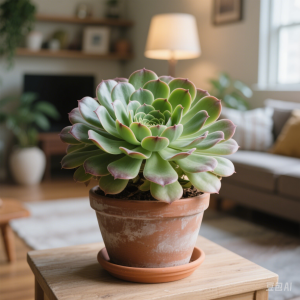
Nature is messy. Look at any real plant and you’ll find a slightly torn leaf, color variation, or asymmetrical growth. Manufacturers who understand this build in what I call “designed imperfections.” One of my suppliers actually has a “randomization algorithm” for their assembly line to ensure no two 人工多肉植物 are identical. When you’re shopping, look for these natural variations. If every leaf is perfect, the plant isn’t.
The Materials Revolution: What’s Really Changed
The conversation has moved beyond “silk versus plastic.” Today’s advanced materials create entirely new possibilities.
Memory Foam Botanicals:
A company in Italy has developed what they call “botanical memory foam”—a proprietary blend that mimics the exact density and rebound of different plant tissues. Their artificial olive trees don’t just look real; they feel real when you brush against them. The branches have the same gentle resistance as living wood. This isn’t available at big-box stores, but it represents where high-end artificial foliage is heading.
Thermochromic Pigments:
I’m working with a lab in Japan that’s developing pigments that change color with temperature. Imagine artificial maple leaves that subtly shift toward redder tones in warmer rooms, then back toward green when it’s cooler. We’re still in prototype stage, but the potential for creating plants that respond to their environment is revolutionary.
Sustainable Synthetics:
The old critique about artificial plants being “bad for the environment” is being challenged. I now source from manufacturers using recycled ocean plastics and biodegradable bases. One of my favorites creates stunning artificial ferns from recycled fishing nets. The material has a natural matte finish that looks more authentic than traditional plastics.
The Lighting Secret: How to Make Artificial Plants Look Real
Lighting is the make-or-break factor that most amateurs miss. I’ve developed a three-light system that works every time:
-
Backlighting (The “Halo” Effect): Place a warm LED strip behind and slightly above the plant. This creates depth and separates the plant from the wall, mimicking natural backlighting from windows.
-
Side Lighting (The Texture Revealer): Use a directional spotlight from the side at about 45 degrees. This casts shadows that reveal the plant’s texture and structure, making even modest-quality 人工植物 look more dimensional.
-
Uplighting (The “Magic Hour” Glow): A subtle upward-facing light at the base creates what photographers call “magic hour” lighting—that warm, golden quality that happens at sunrise and sunset.
I recently used this system in a corporate headquarters where the CEO insisted, “I hate fake plants.” After installation, he complimented the “beautiful live plants” in the atrium. The lighting did 80% of the work.
The Hierarchy of Needs: What to Prioritize in Your Budget
Not all plants need to be museum-quality. I teach my clients this simple hierarchy:
Level 1: Touch-Point Plants
These are plants people will interact with directly—on desks, in reception areas, where hands might brush against them. Here, you need the highest quality materials with realistic textures. This is where you splurge on real-touch technology and hand-finished details. Budget: 40-50% of your total.
Level 2: View-Point Plants
These are seen from 3-10 feet away—on shelves, in corners, as background elements. Good quality polyethylene plants with decent coloring work perfectly here. The focus is on shape and color accuracy rather than tactile realism. Budget: 30-40% of your total.
Level 3: Vista Plants
These are viewed from 10+ feet away or above eye level—high shelves, top of bookcases, distant corners. This is where you can use more economical options. From a distance, basic construction matters less than overall form and color. Budget: 10-20% of your total.
The Maintenance Truth: What No One Tells You
Artificial plants aren’t maintenance-free. They’re maintenance-different. Here’s my professional maintenance schedule:
Monthly:
Soft dusting with a feather duster. For silk flowers, I use a hairdryer on the cool setting—the air flow removes dust without damaging delicate petals.
Quarterly:
Deep cleaning. I mix one part fabric softener with three parts water in a spray bottle. Lightly mist the plant (avoiding electronics in motorized units), then let air dry. This removes static that attracts dust and keeps leaves looking supple.
Annually:
“Rehabilitation” day. This is when I trim any frayed edges, reshape bent stems with low heat from a hairdryer, and sometimes repot with fresh moss or stones at the base. It’s like giving your plants a spa day.
The Ethical Line: When NOT to Use Artificial
With all these advances, there are still places I won’t specify artificial:
-
Children’s hands-on learning environments – The tactile experience of real soil and living plants is irreplaceable for development.
-
Therapeutic and hospice settings – The life force of real plants has documented healing properties that synthetics can’t replicate.
-
High-end restaurant dining areas – At certain price points, guests expect and deserve the real thing.
The future isn’t about artificial replacing real. It’s about having more tools in our design toolkit. The best spaces will always blend both—using artificial plants to solve specific problems while celebrating real plants where their living presence matters most. The key is knowing the difference, and now, you do.
 English
  Arabic
  Dutch
Dutch  German
  French
  Portuguese
  Spanish
  Russian
  Japanese
  Korean