

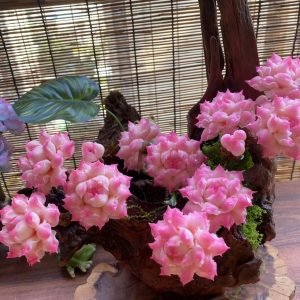
For true suculento lovers, these fascinating plants are more than just trendy home decor—they’re living sculptures that tell stories of survival, adaptation, and beauty. Whether you’re a seasoned collector with a greenhouse full of rare hybrids or a beginner starting your first succulent arrangement, there’s always something new to discover in the world of these drought-resistant wonders.
plantas suculentas
Why Succulents Captivate Us
What makes succulent plants so special? It’s their incredible diversity—from the geometric perfection of Echeveria ‘Lola’ to the alien-like textures of Corpuscularia lehmannii (Ice Plant). Unlike ordinary houseplants, succulents evolve dramatically under different conditions. A Sedum rubrotinctum (Jelly Bean Plant) might blush deep red under strong sunlight, while a Haworthia cooperi turns translucent like sea glass when perfectly hydrated.
For collectors, the thrill comes from:
– Hunting rare cultivars like variegated String of Pearls or the ultra-rare Conophytum burgeri
– Mastering propagation techniques to grow your collection exponentially
– Creating artistic displays in handmade ceramic pots or vintage terrariums
Advanced Care for Discerning Growers
While basic succulent care is simple, expert growers know these subtle tricks:
1. Light: Beyond “Bright Indirect Sun”
– Stress Coloring: 12-14 hours of morning sun enhances pigments in Graptopetalum and Pachyphytum
– UV Protection: Use 30% shade cloth to prevent summer scorch on delicate Aeoniums
– Grow Light Setup: For red varieties like Echeveria ‘Black Prince’, combine 6500K and 3000K LEDs
2. Watering Like a Pro
– The Taco Test: Gently squeeze a Graptoveria leaf—if it folds easily, it’s thirsty
– Seasonal Dormancy: Reduce watering to monthly for Lithops in summer (their dormant period)
– Bottom Watering: Encourages deeper roots in mature Aloe specimens
3. Soil Science for Collectors
A premium mix for prized specimens:
– 50% pumice (not perlite—it floats!)
– 30% akadama (Japanese bonsai clay)
– 20% coconut coir (holds moisture without compaction)
Rare Varieties Worth the Hunt
1. The Unicorn: Monanthes pallens
This Canary Islands native forms tiny, moss-like mounds. Nearly impossible to find in nurseries—try specialty succulent auctions.
2. The Shape-Shifter: Crassula ‘Buddha’s Temple’
Stacked columns that spiral upward like a pagoda. Grows painfully slow but worth the wait.
3. The Living Fossil: Tylecodon schaeferianus
A caudiciform (fat-trunked) oddity with translucent leaves. Water only when the trunk wrinkles.
Troubleshooting for Connoisseurs
Problem: Your Lithops split but the new leaves are etiolated
Solution: They’re starved for light—acclimate gradually to desert-level intensity
Problem: White crust on Adromischus leaves
Diagnosis: Hard water stains—switch to rainwater or distilled
Problem: Conophytum refusing to flower
Secret Trigger: Mimic native South African seasons with 10°C nighttime drops
Propagating the Impossible
Some succulents defy traditional propagation:
– Dudleya: Requires precise stem cuttings with a sterile blade
– Frithia pulchra: Only from seed (takes 3+ years to mature)
– Othonna capensis (Ruby Necklace): Root semi-woody stems in perlite
Displaying Your Collection with Flair
Move beyond basic pots with these ideas:
– Kokedama: Japanese moss balls for trailing Senecio rowleyanus
– Vertical Gardens: Frame-mounted for Sedum dasyphyllum cascades
– Antique Wardrobe: Convert drawers into a lighted succulent cabinet
The Ethical Collector’s Guide
With poaching threatening wild populations:
✔ Always buy from nurseries practicing sustainable propagation
✔ Avoid suspiciously cheap “field collected” plants
✔ Join the CSSA (Cactus and Succulent Society of America) for ethical trading
Final Thought: The Never-Ending Journey
What starts with a grocery store Echeveria often spirals into:
– Learning to pollinate Ariocarpus flowers
– Building a custom cold frame for Sempervivum
– Traveling to see Dudleya clinging to coastal cliffs
That’s the magic of succulents—they turn growers into botanists, artists, and conservationists. So what’s your next holy grail plant? A crested Euphorbia? A century-old Welwitschia? The hunt is half the fun.
Pro Tip: Follow succulentsunday on Instagram to see jaw-dropping collections worldwide!
 English
  Arabic
  Dutch
Dutch  German
  French
  Portuguese
  Spanish
  Russian
  Japanese
  Korean