

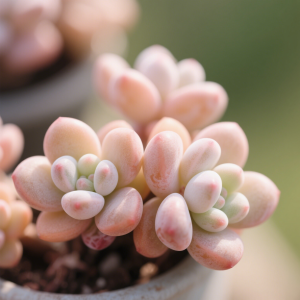
In the diverse world of succulent plants, one botanical feature stands out as both unique and definitive: the areoles. These specialized structures serve as the absolute distinguishing characteristic that separates members of the Cactaceae family from all other succulents. While many plants have developed fleshy water-storing tissues to survive arid conditions, only cacti possess these remarkable growth centers that function like miniature factories for producing spines, flowers, and new stems.
Areoles appear as small, cushion-like bumps on the surface of cacti, ranging from barely visible dots on some species to prominent fuzzy patches on others. What makes them extraordinary is their multifunctional nature – they serve as the exclusive growth points for everything that emerges from a cactus stem. Unlike the diffuse growth patterns seen in other succulents like Crassulaceae members such as نبات اليشم (كراسولا أوفاتا) or إيشيفيريا, cacti concentrate their growth activity entirely through these specialized structures.
The commercial cactus trade relies heavily on understanding areole biology for successful propagation. Large-scale مصنع العصارة operations, particularly those in regions known for succulent china production, have mastered the art of cultivating cacti from areole cuttings. During seasonal succulent on sale events, it’s common to see Mammillaria و Opuntia species whose value depends directly on the health and arrangement of their areoles. These facilities supply العصارة بالجملة markets with everything from common Prickly Pear to rare Golden Barrel Cactus specimens.
Spine production represents the most visible function of areoles. These modified leaves serve multiple purposes: protection from herbivores, shade from intense sunlight, and condensation collection in desert environments. The arrangement and type of spines emerging from areoles provide key identification features for cactus enthusiasts. For instance, the radial symmetry of Mammillaria spines differs dramatically from the formidable armor of Echinocactus grusonii, yet both originate from the same type of areolar structure.
Flower production constitutes another critical areole function. In the cactus family, blooms always emerge directly from areoles, never from other stem areas. This distinguishes them from other flowering succulents like صبار الكريسماس (Schlumbergera) or Crown of Thorns (Euphorbia milii), which produce flowers differently. The commercial appeal of flowering cacti makes areole health particularly important for growers supplying the السائبة النضرة market, where floral display significantly impacts customer appeal.
Vegetative reproduction in cacti depends entirely on areoles. When growers propagate cacti from cuttings, new roots and stems emerge specifically from these structures. This biological reality shapes commercial propagation practices in nurseries worldwide. Specialized succulent supplier businesses understand that successful cuttings require viable areoles with undamaged meristematic tissue capable of generating new growth.
The miniaturization trend in succulent cultivation presents particular challenges for areole-bearing plants. While عصارة صغيرة varieties of هاوورثيا or كراسولا maintain their proportions through reduced leaf size, miniature cacti must maintain functional areoles regardless of scale. This explains why truly miniature cacti remain relatively uncommon compared to other نبات عصاري سهل النمو types that adapt more readily to constrained spaces.
Understanding areoles becomes crucial when distinguishing cacti from similar-looking succulents. Many beginners mistake Euphorbia species for cacti due to their spiny appearance, but close inspection reveals that Euphorbias lack true areoles. Their spines emerge directly from the stem without the specialized cushion structure that defines the Cactaceae family. This distinction matters for proper care, as these different plant families have varying requirements for soil, water, and light.
The global trade in cacti faces unique challenges due to their areole-dependent biology. Shipping السائبة النضرة quantities of cacti requires careful handling to prevent areole damage that could compromise future growth. Reputable succulent company operations use specialized packaging to protect these delicate growth centers during transit, recognizing that damaged areoles can render plants unsalable.
For collectors of عصارة نادرة specimens, areole characteristics often determine value. Unusual areole arrangements, unique spine formations, or exceptional flowering capacity all contribute to a cactus’s desirability. Specialty growers focused on rare cacti pay meticulous attention to areole development, knowing these structures ultimately determine their plants’ aesthetic and commercial worth.
The evolutionary advantage of areoles lies in their concentrated functionality. By localizing growth points, cacti can protect their meristematic tissue within spine clusters while efficiently allocating resources. This adaptation proves more efficient than the distributed growth patterns of other succulents like سانسيفيريا or الأغاف, particularly in environments where herbivore pressure is high.
In horticultural practice, understanding areole biology informs everything from pruning to pest management. Knowledgeable growers target treatments to protect these vital growth centers from mealybugs and other pests that specifically attack areolar tissue. This specialized care requirement differentiates cactus cultivation from growing other succulent families like Aizoaceae (ليثوبس) or Asphodelaceae (الصبار).
The continued scientific study of areoles reveals their complexity as modular developmental units. Recent research shows they contain multiple stem cells capable of producing different organ types depending on environmental cues and hormonal signals. This biological sophistication underscores why cacti remain a distinct family despite superficial resemblances to other succulents.
For commercial growers and home enthusiasts alike, appreciating the central role of areoles transforms how one approaches cactus cultivation. These aren’t merely spine-producing structures but the very essence of what makes a cactus unique in the succulent world. From the massive العصارة بالجملة nurseries supplying garden centers to the windowsill gardener nurturing a single specimen, success with cacti begins with understanding and respecting these remarkable botanical features.
 English
  Arabic
  Dutch
Dutch  German
  French
  Portuguese
  Spanish
  Russian
  Japanese
  Korean