

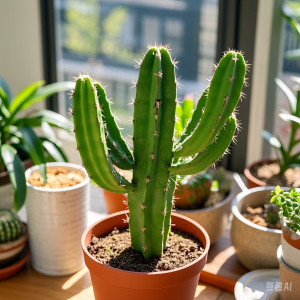
Alright let’s get into the really cool stuff – how succulents actually store water because it’s not just about being thirsty plants there’s some serious science happening in those fleshy leaves and stems that makes these plants so incredibly drought-tolerant. Understanding this stuff will actually make you a better succulent grower because you’ll know what’s happening inside your plants and why they need the care they do.
So first off let’s talk about those thick fleshy leaves that make succulents so recognizable. That thickness isn’t just for show – it’s actually specialized tissue designed specifically for water storage. The scientific term is parenchyma tissue, and it’s made up of cells that can expand to hold water like little biological water balloons. When these cells are full, the plant looks plump and happy. When they’re empty during drought, the plant might look wrinkled or deflated, but it’s still very much alive, just waiting for the next drink.
But it’s not just about storage – succulents have also developed some incredible adaptations to prevent water loss. Take that waxy coating on many succulents, called the cuticle. This isn’t just for making plants look pretty – it’s a waterproof barrier that significantly reduces water loss through evaporation. Some succulents take this even further with a powdery coating called farina that provides additional protection from sun and helps conserve moisture.
Then there are the stomata – those tiny pores on leaves where gas exchange happens. In most plants, stomata open during the day to take in carbon dioxide for photosynthesis. But many succulents have adapted to open their stomata at night instead, when temperatures are cooler and humidity is higher, which means much less water loss during the exchange process. This special adaptation is called CAM photosynthesis, and it’s one of the key reasons succulents can thrive in dry conditions that would kill other plants.
Now where do we see these adaptations in action? Well everywhere in the succulent world really. Those massive growing operations in China – when people search terms like succulent china or succulents china, they’re often looking at these large-scale producers – have to understand this science to grow plants efficiently on a commercial scale. They’ve learned to manipulate water conditions to produce plants that are optimized for shipping and retail sales.
This scientific understanding affects the entire supply chain too. succulent wholesale companies need to know how to handle plants to prevent damage to those water storage tissues during transit. A good succulent supplier understands that rough handling can rupture cells and cause problems that might not be immediately visible but can affect plant health later on.
Even the retail side benefits from understanding succulent water storage. When you see plants at a succulent on sale event, sometimes they’re plants that need a little extra care – maybe they’ve been slightly underwatered and need some TLC to plump back up. Understanding the science helps you recognize which plants are good buys and which might have more serious issues.
The variety of water storage strategies among succulents is fascinating too. Some rare succulent varieties have developed incredibly specialized adaptations. Take lithops, for example – these “living stones” have reduced their above-ground presence to almost nothing, with most of the plant body underground where it’s protected from heat and water loss. What we see above ground is basically just windowed leaves that allow light into the underground part of the plant while minimizing exposure.
Mini succulent varieties face particular challenges with water storage due to their small size. They have less capacity for water storage relative to their surface area, which means they can dry out faster than larger plants but are also more susceptible to rot if overwatered. This is why many people find mini succulents trickier to grow than their larger counterparts.
The business of succulents actually relies heavily on understanding these scientific principles. Those massive succulent factory operations have to create growing conditions that balance water storage development with overall plant health. They want plants that look plump and healthy for sale but aren’t so water-logged that they’ll rot during shipping.
Even non-living products like lego succulent sets reflect our fascination with succulent water storage adaptations. The designers have to understand the forms and structures that make succulents unique to create convincing artificial versions that capture the essence of these amazing plants.
For growers, understanding water storage science is key to proper succulent care. It explains why overwatering is so dangerous – those water storage cells can only hold so much, and excess water in the soil can lead to root rot and other problems. It also explains why signs of thirst like wrinkled leaves aren’t necessarily emergencies – the plant is designed to handle drought conditions.
The global succulent trade, from wholesale succulent suppliers to local garden centers, depends on this scientific understanding to keep plants healthy through the chain from grower to consumer. Everyone involved needs to understand how these plants work to ensure they arrive in good condition and thrive in their new homes.
Whether you’re growing easy to grow succulent varieties or rare specimens, understanding the science behind water storage will make you a better plant parent. You’ll know why your plants need the care they do, how to recognize problems early, and how to create conditions that help your succulents thrive rather than just survive.
 English
  Arabic
  Dutch
Dutch  German
  French
  Portuguese
  Spanish
  Russian
  Japanese
  Korean