

- What Are Artificial Green Walls?
- Why Choose Artificial Green Walls Over Living Walls?
- Types of Artificial Green Wall Panels
- How to Choose the Right Artificial Green Wall
- Design Ideas for Every Space
- Installation: Step-by-Step Guide
- Care and Maintenance
- Frequently Asked Questions
- Conclusion: Transform Your Space with Artificial Green Walls
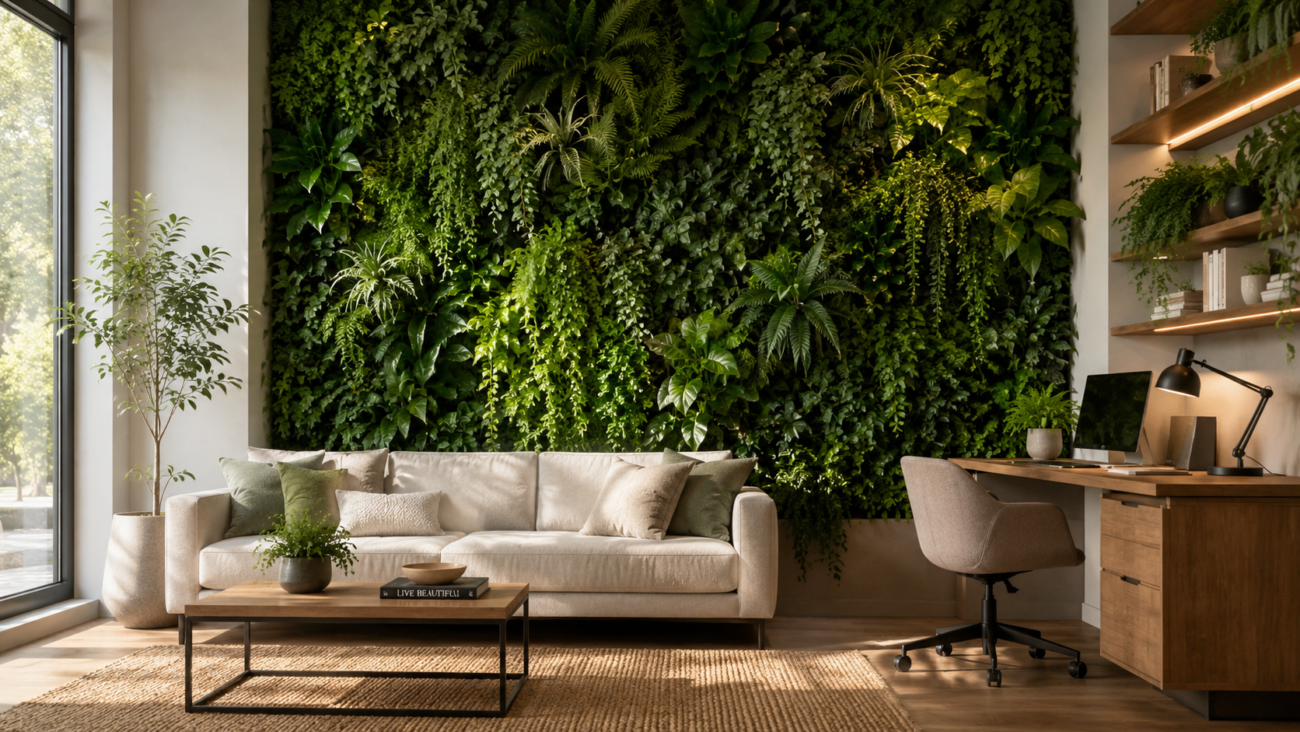
Imagine walking into your living room or office lobby and being greeted by a lush, vibrant wall of greenery that never fades, never wilts, and never demands a drop of water. Artificial green walls have transformed from a niche decor trend into a mainstream design solution, and in 2026, they are more realistic, durable, and versatile than ever before. Whether you are a homeowner looking to add a stunning focal point to your living space or a business owner aiming to create an inviting atmosphere for customers and employees, this comprehensive guide will walk you through everything you need to know about choosing, installing, and styling artificial green walls.
In this guide, we will explore the benefits of artificial green walls, how they compare to living plant walls, the different types available, installation tips, design ideas for every space, and answers to the most frequently asked questions. By the end, you will have all the knowledge you need to make an informed decision and transform your walls into breathtaking vertical gardens.
What Are Artificial Green Walls?
An artificial green wall — also known as a faux living wall, synthetic vertical garden, or fake plant wall — is a vertical installation of artificial foliage panels designed to mimic the appearance of a natural green wall. These panels are typically made from high-quality polyethylene (PE), silk, or fabric materials that are UV-stabilized and engineered to replicate the texture, color variation, and three-dimensional depth of real plants.
Unlike living green walls, which require complex irrigation systems, specialized lighting, soil or hydroponic growing media, and ongoing horticultural maintenance, artificial green walls are a set-it-and-forget-it solution. They arrive pre-assembled in modular panels that can be mounted on virtually any vertical surface — from drywall and concrete to fences and glass partitions. The modular design allows for easy customization: you can cover an entire wall from floor to ceiling, create a partial accent section, or even build freestanding dividers that double as privacy screens.
The technology behind artificial greenery has advanced dramatically in recent years. Today’s premium panels feature layered leaf structures with varied textures, realistic color gradients, and even micro-vein details that fool the eye from as close as three feet away. According to market research from Business Research Insights, the global modular green wall systems market is valued at approximately $1.81 billion in 2026 and is projected to grow to $3.19 billion by 2035, with a compound annual growth rate (CAGR) of 6.8%. This growth reflects the increasing adoption of artificial green walls across residential, commercial, and hospitality sectors worldwide.
Why Choose Artificial Green Walls Over Living Walls?
When considering a vertical garden, one of the first decisions is whether to go with living plants or artificial alternatives. While both have their place, artificial green walls offer distinct advantages that make them the superior choice for most homes and businesses in 2026.
1. Zero Maintenance, Maximum Impact
Living green walls demand constant attention: daily watering, monthly fertilizing, seasonal pruning, pest control, and regular replacement of dead or diseased plants. A single blocked irrigation dripper can destroy an entire section of plants within days during summer. In contrast, artificial green walls require nothing more than occasional dusting with a microfiber cloth or a gentle wipe with a damp cloth. Research indicates that artificial green walls reduce maintenance costs by over 85% compared to living plant walls, and eliminate the need for any water, fertilizer, or pesticide use entirely.
2. Year-Round Consistency
Living plants are subject to seasonal changes, light conditions, and environmental stress. A living wall that looks spectacular in June may appear sparse and discolored by December. Artificial green walls, on the other hand, maintain their vibrant, lush appearance 365 days a year — regardless of the season, lighting conditions, or climate. This consistency is especially valuable for businesses, where a wilting plant wall can send the wrong message to customers.
3. No Structural or Environmental Limitations
Living walls impose significant constraints: they need adequate natural or artificial light, they add substantial weight to walls due to saturated growing media, and they create humidity that can lead to mold and structural damage. Artificial panels are lightweight, soil-free, and insect-free, making them suitable for basements, windowless rooms, bathrooms, and even exterior facades. They perform reliably in temperatures ranging from -30°C to 60°C when UV-protected, and can be installed on walls that would never support the weight of a living system.
4. Superior Long-Term Cost Efficiency
While the upfront cost of premium artificial green wall panels may be higher than basic living wall components, the long-term savings are dramatic. A 300-square-meter commercial space, for example, might spend approximately $25,000 per year on watering, fertilizing, pest control, and plant replacement for a living wall. An artificial installation requires only a one-time investment plus minimal cleaning costs of a few hundred dollars annually. Over three to five years, the artificial option often pays for itself several times over.
5. Allergen-Free and Pet-Safe
For homes and offices where allergies are a concern, artificial green walls eliminate pollen, mold spores, and other allergens associated with live plants and moist soil. Many high-quality artificial panels are also made from non-toxic, pet-safe materials, ensuring that curious cats and dogs face no risk from chewing on the foliage.
Types of Artificial Green Wall Panels
Not all artificial green wall panels are created equal. Understanding the different types available will help you choose the right product for your specific needs and budget.
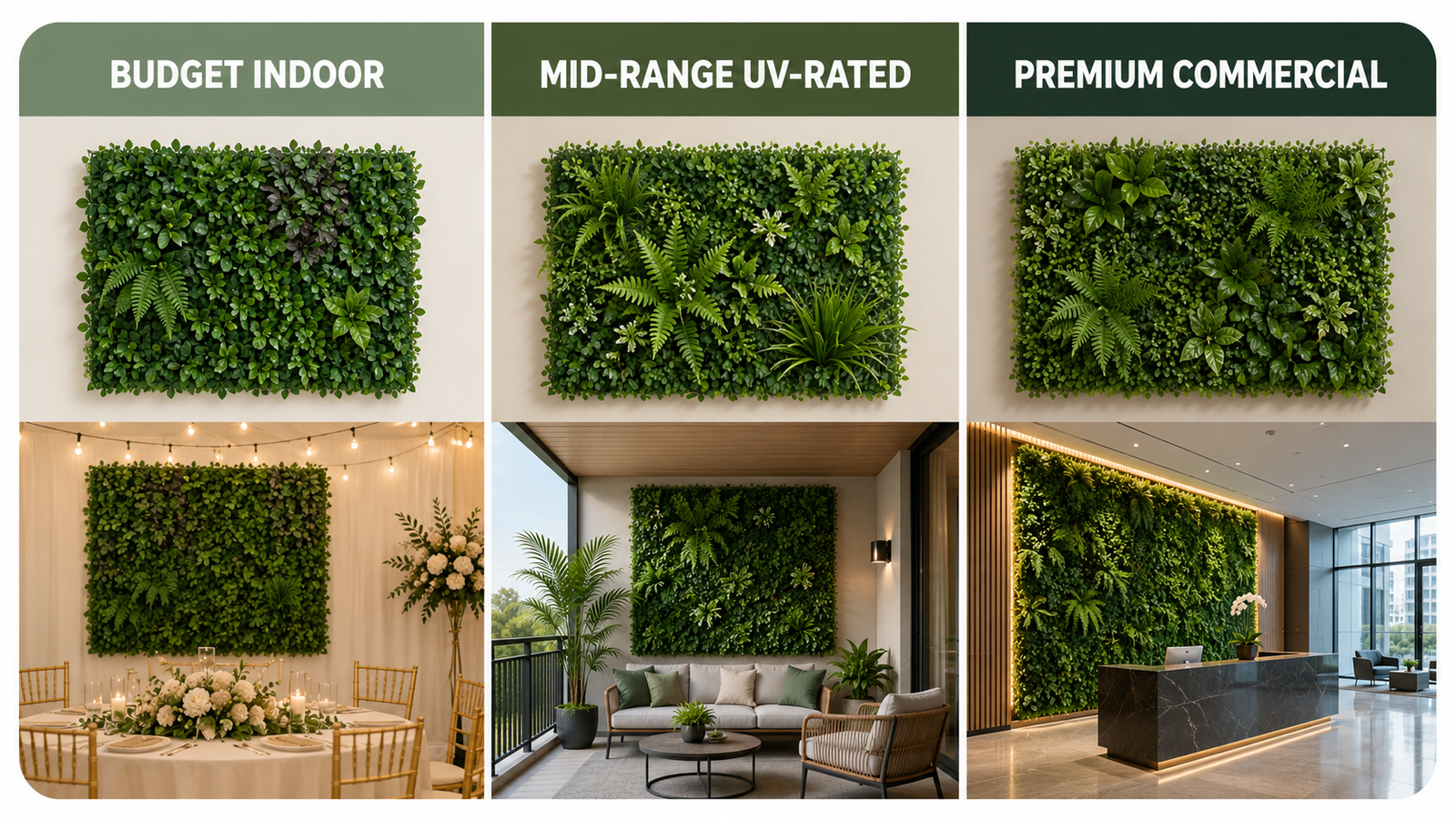
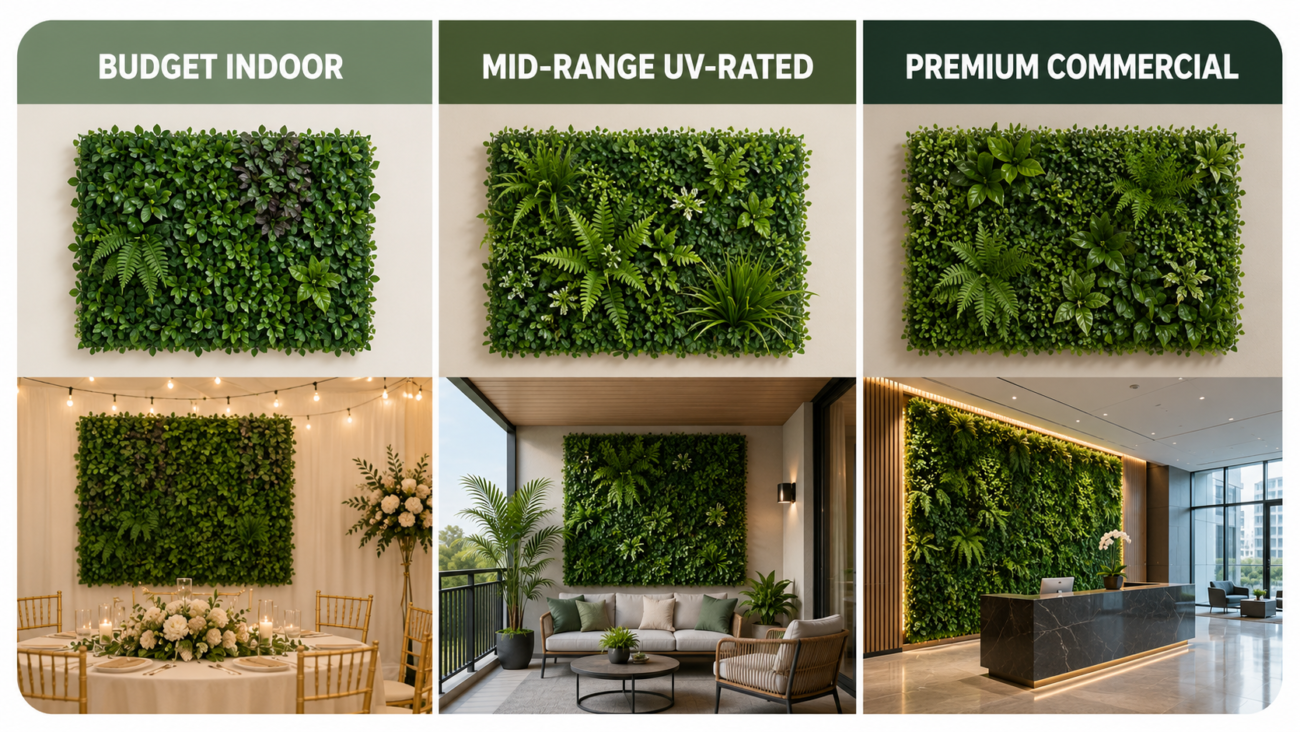
Budget Panels (Indoor Use)
Budget artificial green wall panels typically cost between $20 and $50 per square meter. They are best suited for indoor applications where they will not be exposed to direct sunlight or harsh weather conditions. These panels often use basic polyethylene materials with limited UV protection and may have a more uniform, less realistic appearance. They are a good choice for temporary installations, event backdrops, or areas where the panels will be viewed from a distance.
Mid-Range UV-Rated Panels
Mid-range panels, priced at $80 to $180 per square meter, offer significantly better realism and durability. They feature engineered UV stabilization that protects against fading for five to ten years, even in sunny locations. These panels typically have layered leaf structures, varied textures, and more natural color gradients. They are suitable for indoor feature walls, covered outdoor areas like patios, and commercial spaces with moderate traffic.
Premium Commercial-Grade Panels
Premium panels command $200 to $400 or more per square meter and are designed for demanding commercial environments. They feature advanced UV protection with warranties of up to 15 years, fire-retardant treatments that meet commercial building codes, and interlocking systems that create seamless, gap-free installations. The foliage is often made from multiple materials — including silk, PE, and fabric — to achieve the highest level of realism. These panels are ideal for hotel lobbies, corporate headquarters, high-end retail stores, and outdoor installations in harsh climates.
Specialty Options: Moss Walls and Mixed Media
Beyond traditional foliage panels, many designers are incorporating preserved moss walls and mixed-media installations that combine artificial greenery with natural elements like wood, stone, and metal accents. Preserved moss panels — which use real moss that has been treated to maintain its softness and color without water — offer a unique texture and are particularly popular in corporate branding walls and wellness spaces. The global moss wall panel market was valued at $1.2 billion in 2025 and is projected to reach $2.4 billion by 2034.
How to Choose the Right Artificial Green Wall
Selecting the perfect artificial green wall for your space involves more than just picking a panel that looks nice. Here are the key factors to evaluate before making your purchase.
1. Indoor vs. Outdoor Use
This is the single most important decision. For any outdoor installation — even a covered balcony or patio — you must choose panels with explicit UV protection. Without UV stabilization, even high-quality artificial foliage will fade within one to two seasons of sun exposure. Look for panels labeled as “UV-resistant,” “UV-stabilized,” or “fade-resistant,” and ask for warranty documentation. Indoor panels do not need UV protection, giving you more flexibility in materials and price points.
2. Fire Safety Compliance
For commercial spaces — including offices, restaurants, retail stores, hotels, and healthcare facilities — fire safety is non-negotiable. Many building codes require decorative wall materials to meet specific fire resistance standards. Always verify that your chosen panels come with fire safety documentation if they will be installed in a commercial setting. Premium panels often include fire-retardant treatments that meet both North American and European safety standards.
3. Realism and Visual Quality
The realism of an artificial green wall depends on several factors: the variety of leaf shapes and sizes within a panel, the number of color tones used, the three-dimensional depth of the foliage, and the quality of the backing material. High-quality panels feature multiple plant varieties — ferns, ivies, broad-leaf plants, and grasses — layered together to create a natural, organic look. When evaluating panels, look for those with at least three to five different foliage types per panel and visible color variation, not a flat, uniform green.
4. Panel Size and Modularity
Standard artificial green wall panels come in sizes like 20″×20″ (50cm×50cm) or 40″×40″ (100cm×100cm). Measure your wall carefully and calculate how many panels you will need, adding approximately 10% extra for trimming and overlap. Modular interlocking systems are ideal because they create seamless joints between panels, while individual panels may leave visible gaps. Some manufacturers offer custom sizing for large-scale commercial projects.
5. Installation Method
Consider how you will mount the panels. Common installation methods include:
- Timber batten frames: Best for solid walls (brick, concrete, drywall); battens are screwed into the wall and panels are fixed to the battens with screws and washers or cable ties.
- Direct fence mounting: Ideal for wooden fences and trellises; panels are attached with UV-resistant cable ties threaded through the panel backing.
- Freestanding frames: Perfect for renters or temporary installations; panels are mounted on a portable frame that requires no drilling.
- Adhesive mounting: Suitable for small indoor panels on smooth surfaces, using heavy-duty adhesive strips or construction adhesive.
Design Ideas for Every Space
One of the greatest strengths of artificial green walls is their versatility. Here are inspiring ways to incorporate them into different environments.
Home Living Rooms and Bedrooms
A full-coverage green accent wall behind a sofa or bed creates an instant focal point that brings warmth and texture to the room. For a more subtle approach, consider a partial installation — perhaps a vertical strip flanking a television or a panel above a headboard. Pair the green wall with natural materials like wooden furniture, linen textiles, and ceramic planters to enhance the organic feel. For small spaces, a single 40″×40″ panel framed like artwork can deliver the same biophilic effect without overwhelming the room.
Home Offices and Study Areas
With remote work remaining prevalent in 2026, creating an inspiring home office has never been more important. An artificial green wall behind your desk serves as a calming backdrop for video calls while reducing visual fatigue during long workdays. Studies have shown that exposure to greenery — even simulated greenery — can reduce stress and improve focus. Position your green wall within your camera frame to create a professional, design-forward background that sparks conversation.
Commercial Lobbies and Reception Areas
First impressions matter, and nothing transforms a corporate lobby faster than a striking green wall. A floor-to-ceiling installation behind the reception desk immediately communicates values of sustainability, wellness, and attention to design. According to market data, 66% of commercial real estate developers in North America now incorporate vertical greenery into their office projects, and 58% of property owners report improved tenant retention linked to eco-friendly building designs. For added branding impact, consider integrating your company logo into the green wall design using contrasting foliage or moss colors.
Restaurants, Cafes, and Retail Spaces
In the competitive hospitality industry, Instagram-worthy interiors drive foot traffic and customer engagement. A well-designed artificial green wall provides the perfect photo backdrop that encourages customers to share their experience on social media. Research indicates that stores with distinctive green wall features see an 18% increase in average customer dwell time and a potential boost in spending. For restaurants, green walls also help absorb sound, reducing the echo and noise levels common in spaces with hard surfaces like concrete and glass.
Outdoor Patios, Balconies, and Rooftop Terraces
Artificial green walls are an excellent solution for urban outdoor spaces where growing real plants is challenging. Use UV-rated panels to create privacy screens on balconies, cover unattractive fences, or transform a blank exterior wall into a lush garden feature. Unlike living vines that take years to establish, artificial panels provide instant, full coverage. The green wall also acts as an insulating layer, with studies showing that green walls can contribute to a nearly 20% reduction in cooling energy usage in urban buildings.
Event Backdrops and Photo Booths
For weddings, corporate events, trade shows, and parties, artificial green walls are the go-to backdrop solution. They are lightweight, portable, and reusable — making them far more cost-effective than fresh floral arrangements for recurring events. Popular configurations include full-wall photo backdrops, freestanding dividers with integrated lighting, and smaller accent panels framing signage or dessert tables.
Installation: Step-by-Step Guide
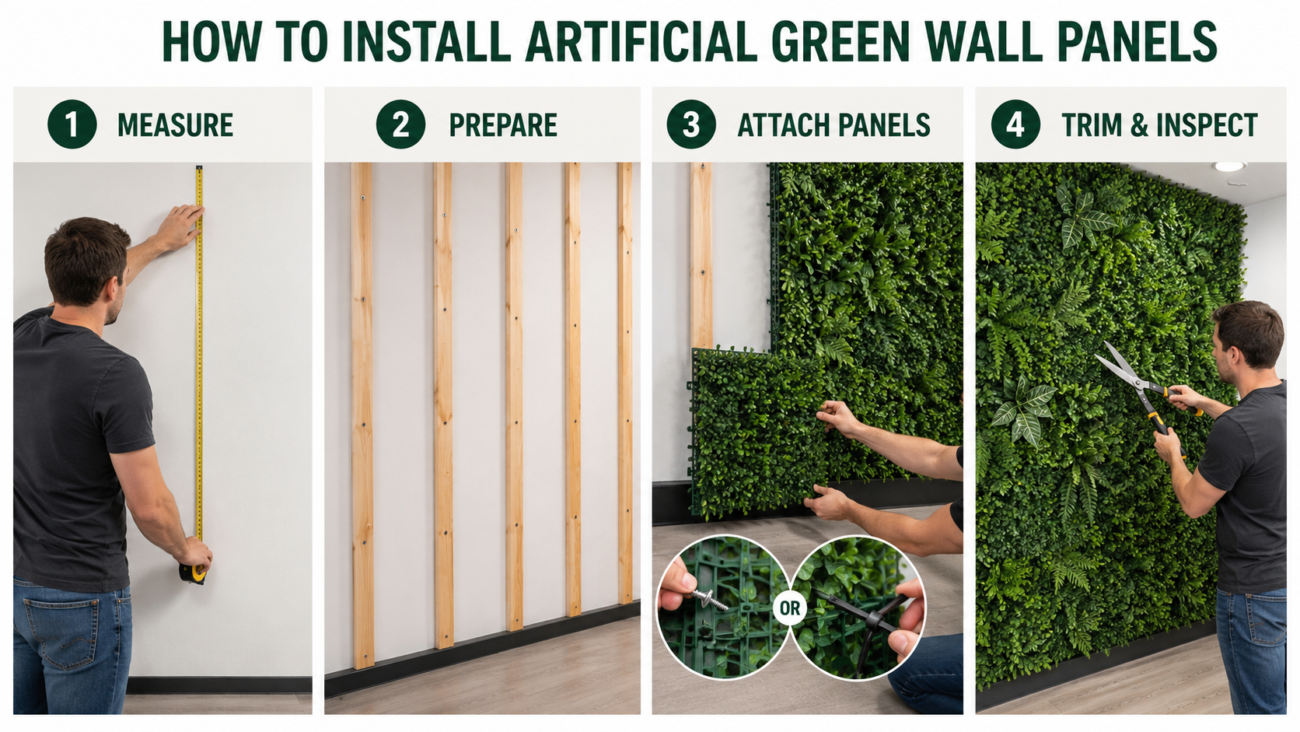
Installing artificial green wall panels is a manageable DIY project for most homeowners, though large commercial installations may benefit from professional help. Here is a step-by-step guide to ensure a flawless result.
Step 1: Measure and Plan. Measure the wall area you want to cover in square meters, then divide by the coverage area of a single panel. Add 10% extra for trimming, overlaps, and future replacements. Sketch your layout on paper, noting any obstacles like outlets, light switches, or vents that will need to be worked around.
Step 2: Prepare the Surface. Ensure the wall is clean, dry, and structurally sound. For solid walls, install timber battens spaced according to your panel size — this creates a secure fixing point and leaves an air gap that prevents moisture buildup. For fences, check that posts and panels are sturdy enough to support the additional weight, especially in windy conditions.
Step 3: Start from the Bottom Corner. Begin installation at the bottom corner of your wall and work upward and outward. This ensures that each row is level and that panels align properly. Position the first panel, check that it is level using a spirit level, and secure it in place.
Step 4: Secure Each Panel. On timber battens, use exterior-grade screws with washers at each corner and along the edges. On fences, thread UV-stable cable ties through the panel backing and around fence rails. For the most natural look, slightly overlap adjacent panels so that the foliage intermingles and hides the seams.
Step 5: Trim and Shape. Once all panels are mounted, use sharp secateurs or scissors to trim any excess foliage at the edges. Gently bend and shape individual leaves and stems to create a more organic, three-dimensional appearance. Spend extra time on this step — it makes a significant difference in the final look.
Step 6: Final Inspection. Step back and inspect the wall from multiple angles. Fill in any visible gaps with small offcuts of foliage. If desired, weave in accent elements like artificial flowers, trailing vines, or LED strip lighting to add depth and visual interest.
Care and Maintenance
While artificial green walls are remarkably low-maintenance, a small amount of care will keep them looking their best for years to come.
- Dusting: Use a microfiber cloth, feather duster, or a vacuum cleaner with a soft brush attachment to remove dust every two to three months. For larger installations, a leaf blower on a low setting can quickly clear dust from outdoor panels.
- Deep cleaning: Once or twice a year, gently wipe down the foliage with a damp cloth and mild soap solution. Avoid harsh chemicals or abrasive cleaners, which can damage the leaf coatings. For fabric-based panels, test any cleaning solution on a small, inconspicuous area first.
- Reshaping: Over time, some leaves may flatten or become compressed, especially in high-traffic areas. Simply use your hands to gently reshape and fluff the foliage, restoring its three-dimensional volume.
- UV protection renewal: For outdoor panels, consider applying a UV-protective spray every two to three years to extend the life of the foliage. This is especially important in regions with intense sunlight.
- Inspection: Periodically check the mounting hardware and panel backing for signs of wear. Tighten any loose screws, replace worn cable ties, and ensure that panels remain securely attached to the wall.
Frequently Asked Questions
Are artificial green walls safe for pets?
Most high-quality artificial green wall panels are made from non-toxic polyethylene and are safe for homes with pets. However, it is always wise to check the manufacturer’s specifications. To be extra cautious, keep panels out of reach of pets that are prone to chewing, and periodically inspect the installation for any loose pieces that could become a choking hazard.
Can artificial green walls be used outdoors?
Yes, but only if the panels are specifically rated for outdoor use with UV protection. Outdoor-rated panels are designed to withstand sun exposure, rain, wind, and temperature fluctuations without fading or degrading. Indoor panels placed outdoors will typically fade within one to two seasons. Premium outdoor panels with proper UV stabilization can last 8 to 15 years with good care.
Do artificial green walls require any special lighting?
No, artificial green walls do not require any lighting for the plants themselves — unlike living walls, which need specific light spectrums for photosynthesis. However, strategic lighting can dramatically enhance the visual impact of your green wall. LED strip lights, spotlights, or backlighting can create beautiful shadows and highlight the texture of the foliage, especially in evening settings.
How long do artificial green walls last?
The lifespan of an artificial green wall depends on the quality of the panels and the conditions they are exposed to. Indoor budget panels typically last 3 to 5 years before showing signs of wear. Mid-range UV-rated panels last 5 to 10 years, and premium commercial-grade panels can last 10 to 15 years or more. Outdoor panels in direct sunlight will have shorter lifespans, but UV protection significantly extends their durability.
Can I mix artificial green walls with real plants?
Absolutely. Mixing artificial and real plants is a popular design strategy that offers the best of both worlds. Use artificial green walls as a lush, consistent backdrop, and place real potted plants — such as those from the Fake Plants Collection ou Succulent Collection — in front of or adjacent to the wall. This layered approach creates depth and makes the overall display feel more organic and dynamic.
Are artificial green walls eco-friendly?
While artificial plants do not provide the same ecological benefits as living plants (such as air purification or carbon sequestration), they offer indirect environmental advantages. Their long lifespan reduces the need for frequent replacement, minimizing material waste. Premium panels are increasingly made from recyclable materials, and they eliminate the water consumption, fertilizer runoff, and pesticide use associated with living walls. For water-conscious regions, artificial green walls are a sustainable alternative that conserves thousands of gallons of water annually compared to irrigated living walls.
Conclusion: Transform Your Space with Artificial Green Walls
Artificial green walls represent one of the most impactful and accessible design trends of 2026. They bring the beauty of nature indoors without the demands of living plants, offering a perfect blend of aesthetics, practicality, and long-term value. Whether you are looking to create a stunning feature wall in your living room, enhance your brand image with a lobby installation, or add privacy and greenery to an urban balcony, there is an artificial green wall solution for every space and budget.
The global market for modular green wall systems is growing at an impressive 6.8% CAGR, driven by the increasing adoption of biophilic design principles in both residential and commercial settings. With innovations in UV-stabilized polymers, fire-retardant treatments, and hyper-realistic 3D texturing, today’s artificial green walls are more convincing and durable than ever before.
Ready to bring the timeless beauty of vertical greenery into your home or office? Explore our curated collections of artificial plants, fleurs artificielles, and plant pots and decor at CNGarden to find the perfect complement to your new green wall. For more inspiration, check out our Fake Plant Styling Guide and our Complete Guide to Buying Realistic Artificial Plants.
Your walls are a blank canvas — it is time to paint them green.
 English
  Arabic
  Dutch
Dutch  German
  French
  Portuguese
  Spanish
  Russian
  Japanese
  Korean