

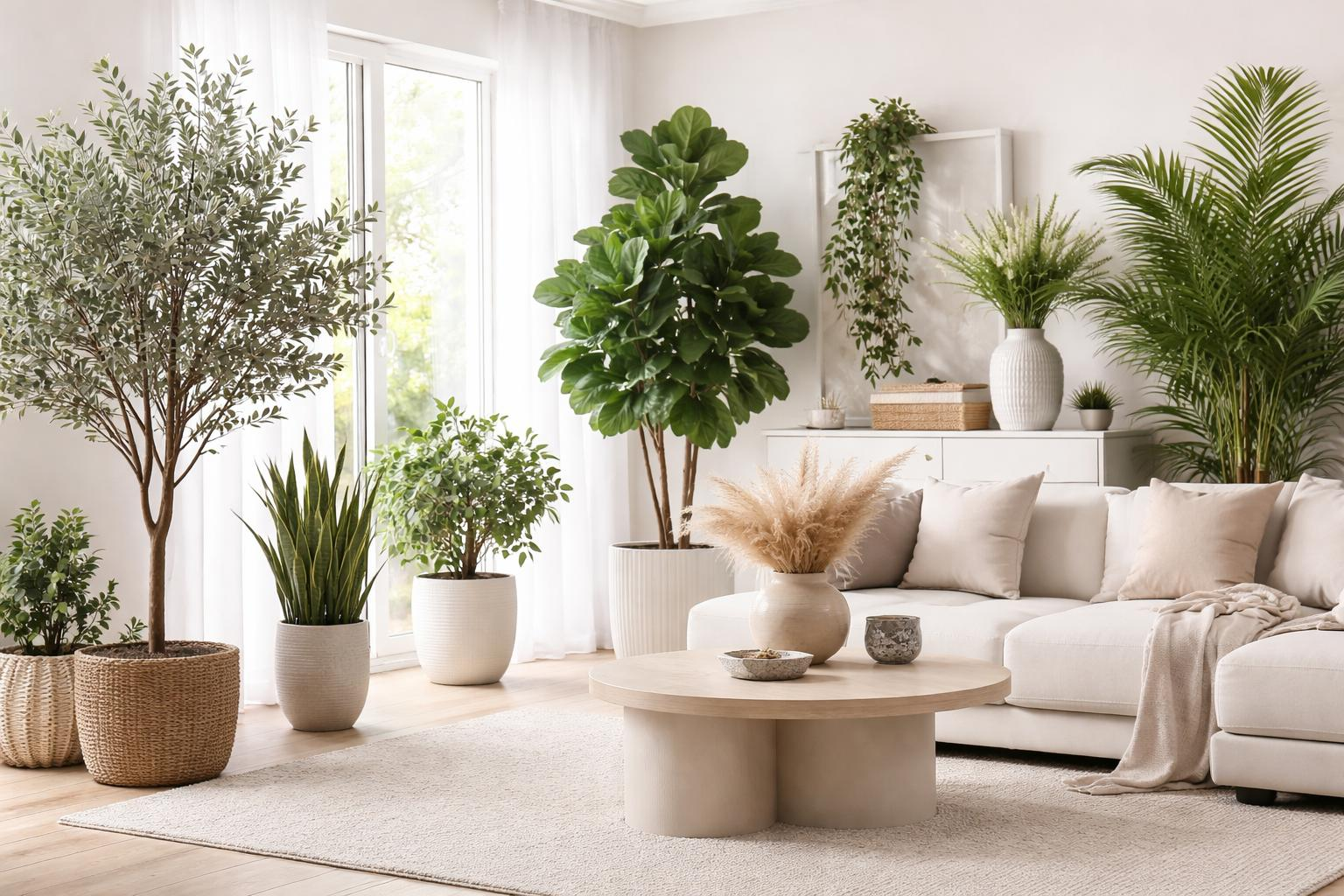
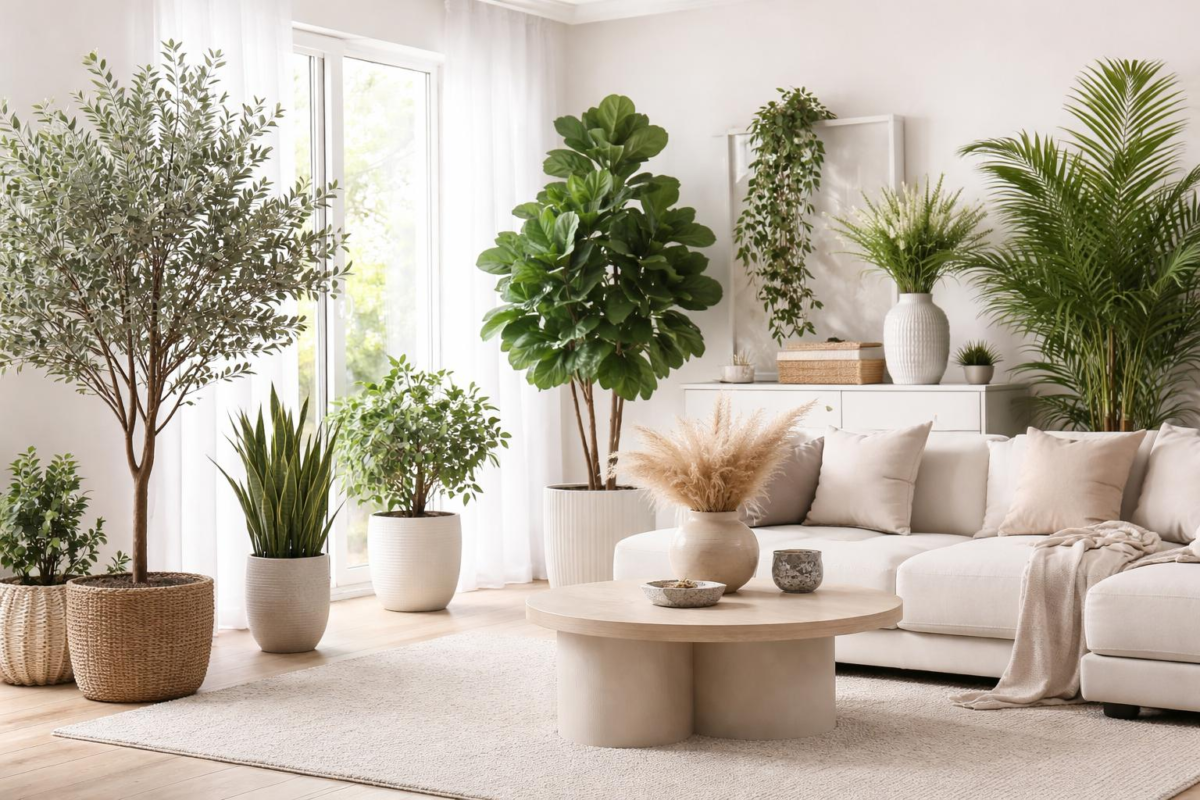
Artificial greenery has changed dramatically from the stiff, glossy plastic plants once associated with waiting rooms and dated commercial interiors. Today, high-quality fake plants are used in homes, hotels, restaurants, offices, retail stores, event spaces, balconies, and large-scale commercial projects.
But buying a realistic artificial plant is only half the job. How you shape, place, pot, light, and combine it with the surrounding interior often determines whether it looks convincing or obviously artificial.
This fake plant styling guide explains how to choose and style artificial greenery, how to avoid the most common decorating mistakes, where fake plants work best, what to consider for outdoor and commercial spaces, and how new materials and design technology are changing artificial plants in 2026.
For homeowners, interior designers, retailers, hospitality buyers, and commercial project managers, the goal is no longer simply to “add something green.” The goal is to make artificial greenery feel intentional, believable, and appropriate for the space.
جدول المحتويات
- Why Fake Plants Are Still Relevant in 2026
- What Makes a Fake Plant Look Real?
- How to Choose the Right Fake Plant
- How to Shape Artificial Plants Correctly
- Choosing the Right Planter
- Where to Place Fake Plants
- How Lighting Changes Artificial Greenery
- Mixing Fake Plants With Real Materials
- Styling Fake Plants by Interior Style
- Fake Plants for Offices and Commercial Spaces
- Outdoor Artificial Plants
- Fire Safety and Commercial Specifications
- Sustainability and Long-Term Value
- Common Fake Plant Styling Mistakes
- New Technology in Artificial Greenery
- How to Maintain Fake Plants
- Final Buying and Styling Checklist
- الأسئلة الشائعة
Why Fake Plants Are Still Relevant in 2026
The strongest interior trends of 2026 are not focused on sterile minimalism. Instead, designers are emphasizing warmer, more personal spaces with natural textures, greenery, organic shapes, layered materials, and stronger connections to nature.
The 2026 Home Design Trends report from Engel & Völkers describes nature-integrated interiors using greens, warm neutrals, clay tones, botanical patterns, organic textures, and indoor greenery as part of wellness-focused design.
Artificial plants fit into this direction when they are used carefully.
They are particularly practical in locations where maintaining live plants is difficult, including:
- Rooms with inconsistent natural light
- Hotels with frequently changing layouts
- Retail displays
- Restaurants
- Office reception areas
- Apartments occupied by frequent travelers
- High shelves
- Windowless interior spaces
- Event installations
- Vacation homes
- Commercial spaces requiring predictable appearance
Artificial greenery is therefore best viewed as a design material, rather than simply as a replacement for a living plant.
A fake olive tree, for example, can provide height and softness beside a sofa whether or not the room receives enough sunlight to support a real olive tree.
What Makes a Fake Plant Look Real?
Realism depends on several details working together.
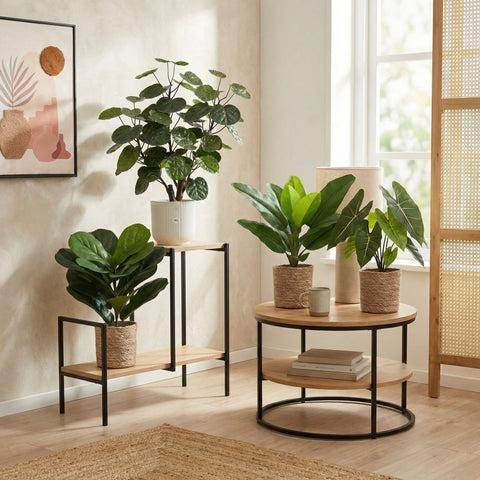
Leaf Variation
Natural plants rarely have identical leaves.
Realistic artificial foliage usually includes subtle differences in:
- Leaf size
- Angle
- Shape
- Color
- Veining
- Curvature
- Surface texture
If every leaf is perfectly flat, identical, and positioned at exactly the same angle, the plant is more likely to look manufactured.
Surface Finish
One of the most obvious signs of a low-quality fake plant is excessive shine.
Real foliage may be naturally glossy, but it rarely reflects light like polished plastic.
Better artificial plants often use matte or semi-matte surfaces, textured molds, irregular color gradients, and multiple shades of green.
Branch Structure
Look beyond the leaves.
Branches, stems, trunks, and attachment points contribute significantly to realism.
A convincing artificial tree should not have a perfectly straight trunk with branches spaced at identical intervals.
Natural irregularity generally looks better.
Color
Bright fluorescent green may work for some young tropical foliage, but most realistic artificial greenery combines several tones.
Dark mature leaves, lighter new growth, muted undersides, brown stems, and subtle imperfections help create visual depth.
How to Choose the Right Fake Plant
Before purchasing, consider where the plant will be used.
A detailed buying guide is available in our Fake Plants Buying Guide, but several principles are especially important when styling.
Match the Plant to the Space
Choose a plant that would logically look comfortable in the environment.
For example:
Large living room:
Artificial olive tree, ficus, fiddle-leaf fig, palm, or bird-of-paradise style plant.
Small shelf:
Artificial succulent, pothos, fern, trailing plant, or compact potted greenery.
Bathroom:
Ferns, tropical foliage, eucalyptus, or trailing greenery often feel visually appropriate.
Restaurant:
Olive trees, palms, artificial green walls, hanging greenery, or structured planter arrangements.
Modern office:
Ficus trees, snake plants, palms, grasses, or simple architectural foliage.
The plant does not have to be biologically capable of surviving in the exact location, but choosing something visually believable helps the entire design feel more natural.
How to Shape Artificial Plants Correctly
Many artificial plants look disappointing immediately after they come out of the box because branches and leaves have been compressed during shipping.
Do not judge the final appearance before shaping them.
House Beautiful recently highlighted several professional styling techniques for making artificial greenery look more convincing, including varying stem heights, bending stems rather than keeping them perfectly straight, and hiding visibly artificial bases.
Bend the Branches
Spread branches outward rather than leaving them close to the main stem.
Avoid perfect symmetry.
Some branches should extend farther than others.
Curve the Leaves
Leaves should not all face directly upward.
Rotate individual leaves so some face outward, downward, sideways, and toward the light source.
Create Imperfection
Real plants are rarely perfectly balanced.
One side may grow farther toward a window. Older branches may droop slightly. Younger foliage may stand more upright.
Controlled imperfection often creates better realism than perfect symmetry.
Step Back Frequently
Do not shape the plant only from close range.
Stand several feet away and evaluate its overall silhouette.
This is especially important for artificial trees.
Choosing the Right Planter
A high-quality artificial tree can look inexpensive when left inside a small black plastic nursery pot.
One of the simplest upgrades is transferring or concealing it inside a more substantial decorative planter.
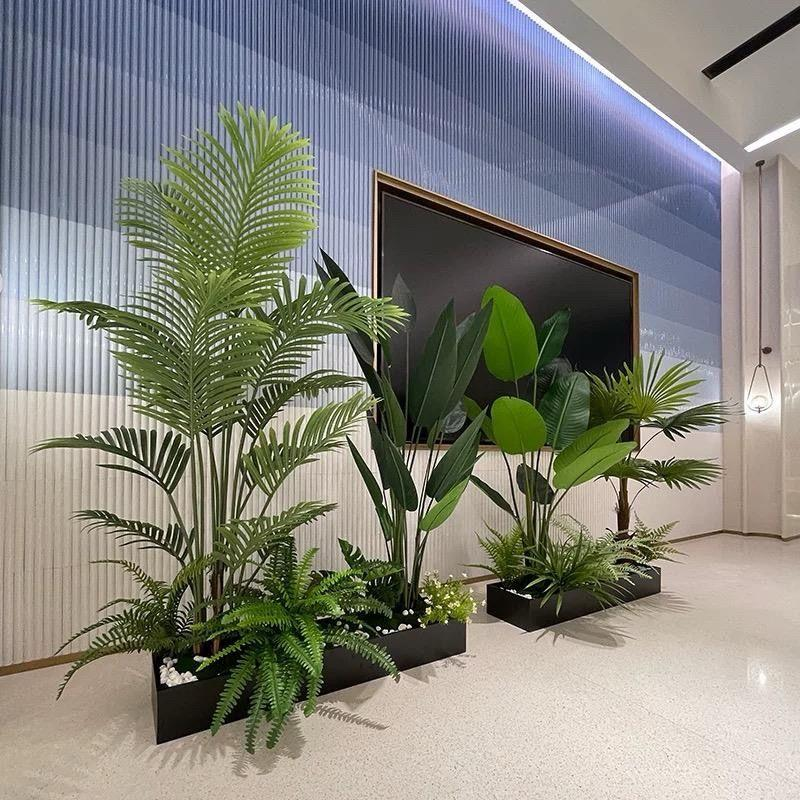
Good options include:
- Terracotta
- Ceramic
- Concrete-style planters
- Stone
- Woven baskets
- Fiberglass
- Metal
- Wood
- Textured composite containers
Choose a planter that is proportionate to the plant.
A 7-foot artificial olive tree placed in a tiny container can look unstable and unrealistic.
Hide the Base
Cover visible foam or molded plastic using materials such as:
- Preserved moss
- Decorative stone
- Bark
- Pebbles
- Coconut fiber
- Artificial soil
- Gravel
This small detail can dramatically improve the finished appearance.
Where to Place Fake Plants
Placement should feel intentional.
Rather than filling every empty corner, use greenery to solve a visual problem.
Empty Corners
Tall artificial trees can soften difficult corners and provide height.
Beside Furniture
A medium or large plant can visually connect a sofa, console, chair, or cabinet to the rest of the room.
On Shelves
Small artificial plants work well when combined with books, ceramics, photographs, and decorative objects.
Avoid filling every shelf with greenery.
Above Eye Level
Trailing fake plants can work on high cabinets or shelving, but consider dust accumulation and accessibility.
Very large amounts of trailing greenery above kitchen cabinets can quickly feel dated rather than contemporary.
Entryways
One sculptural plant beside a console can make an entrance feel warmer without creating clutter.
How Lighting Changes Artificial Greenery
Lighting has a surprisingly large impact on how realistic artificial plants appear.
Strong cool-white lighting can exaggerate plastic shine and expose molded details.
Softer natural light or warm architectural lighting often produces a more convincing result.
Near Windows
Artificial plants can look particularly realistic beside windows because viewers naturally associate plants with sunlight.
However, prolonged direct sunlight can fade some artificial materials unless they are designed for UV exposure.
Directional Lighting
A floor lamp, wall washer, or ceiling spotlight can create natural shadow patterns through artificial foliage.
This adds depth.
Avoid Over-Lighting
Artificial greenery does not need to be illuminated like a museum object.
Extremely bright directional lighting may highlight seams, plastic texture, and repeated leaf patterns.
Mixing Fake Plants With Real Materials
One of the most effective styling techniques is surrounding artificial foliage with genuinely natural materials.
Pair fake plants with:
- Real wood
- Natural stone
- Linen
- Cotton
- Wool
- Rattan
- Clay
- Ceramic
- Cork
- Jute
These textures reduce the visual contrast between manufactured foliage and the surrounding environment.
A fake olive tree in a woven basket beside a linen sofa generally feels more natural than the same plant inside a glossy plastic planter surrounded by synthetic finishes.
Fake Plant Styling by Interior Style
Modern Minimalist
Use fewer plants, but choose larger and more sculptural specimens.
Good choices include:
- Artificial olive trees
- Rubber plants
- Snake plants
- Large tropical foliage
Combine them with stone, pale wood, textured walls, and simple containers.
Japandi
Choose restrained greenery with visible branch structure.
Olive trees, small ficus forms, and delicate foliage work well with light timber, neutral ceramics, and woven materials.
Mediterranean
Combine olive trees, citrus-style artificial trees, herbs, and climbing greenery with terracotta, limestone, warm plaster, and aged wood.
Contemporary Luxury
Use fewer but higher-quality pieces.
Large trees, architectural palms, or custom artificial green walls can be integrated with metal, stone, glass, and statement lighting.
Maximalist
Artificial greenery can be layered with patterns, color, artwork, and decorative objects.
The challenge is avoiding visual chaos.
Use variation in height rather than simply adding more plants.
Fake Plants for Offices and Commercial Spaces
Commercial artificial plants require different considerations from residential decor.
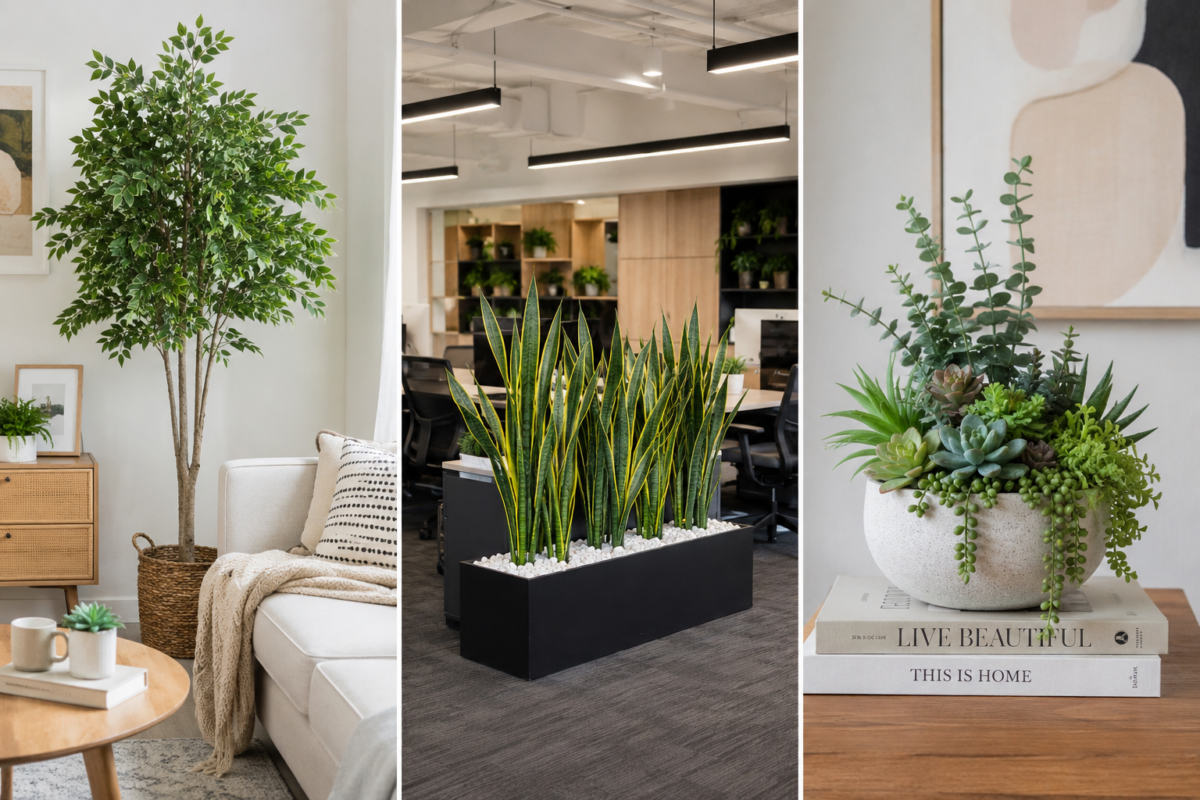
Appearance matters, but procurement teams may also need to evaluate:
- Durability
- Cleaning requirements
- Installation method
- Replacement components
- Fire performance
- UV resistance
- Stability
- Project-specific certification
- Accessibility
- Long-term maintenance costs
Hotels and restaurants may use artificial greenery in reception areas, dining spaces, walls, ceilings, dividers, atriums, and exterior terraces.
Offices frequently use greenery to soften hard architectural surfaces and visually separate work zones.
For large projects, modular designs can simplify transportation, installation, cleaning, and replacement.
Outdoor Artificial Plants
Not every fake plant is suitable for outdoor use.
Indoor artificial plants exposed to strong sunlight may fade, discolor, crack, or become brittle.
For balconies, patios, restaurants, pool areas, and commercial landscapes, look for products specifically designed for outdoor exposure.
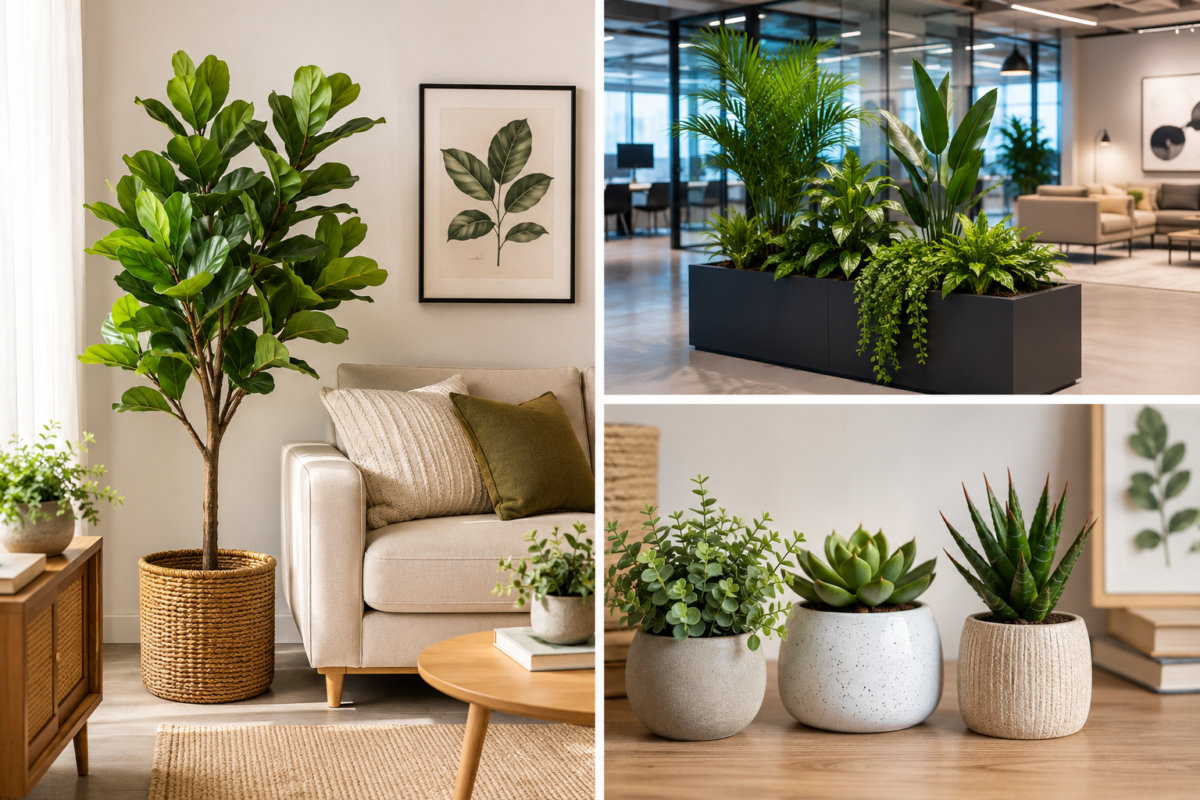
Important factors include:
- UV resistance
- Drainage
- Wind resistance
- Secure anchoring
- Color stability
- Temperature exposure
- Water-resistant construction
Outdoor artificial greenery can be especially useful in places where irrigation, soil, maintenance access, or natural growing conditions are difficult.
For a deeper comparison, see our guide to Outdoor Artificial Plants and Weatherproof Greenery.
Fire Safety and Commercial Specifications
Fire safety becomes much more important when artificial greenery is installed in hotels, restaurants, malls, offices, event venues, and other public spaces.
Artificial foliage should never automatically be described as “fireproof.”
Commercial buyers should distinguish between standard products and products designed or treated to achieve specified flame-performance requirements.
NFPA’s ongoing work on NFPA 701 specifically recognizes artificial decorative vegetation as a category relevant to flame-propagation testing and building-code considerations.
Requirements differ between jurisdictions and project types.
Before purchasing for a commercial project, ask:
- What exact product was tested?
- Which testing standard was used?
- Is the test report current?
- Does the report match the supplied material?
- Is fire retardancy inherent in the material or applied afterward?
- What classification was achieved?
- Does the local authority accept that standard?
Always confirm requirements with the project architect, fire consultant, building authority, or other qualified professional.
Sustainability and Long-Term Value
Artificial plants create an interesting sustainability question.
They require manufactured materials and eventually become waste, yet a durable artificial plant may remain in use for many years without irrigation, fertilizer, pesticides, soil replacement, or repeated live-plant replacement.
There is therefore no universal answer to whether fake plants are environmentally friendly.
The outcome depends on factors such as:
- Material composition
- Manufacturing process
- Transportation
- Product lifespan
- Frequency of replacement
- Repairability
- Reusability
- Recycling options
- Packaging
- How the alternative living plant would be maintained
The most practical sustainability strategy is usually simple:
buy fewer, better products and keep them longer.
Avoid replacing artificial plants every season simply because decorative trends change.
For more detail, see our guide: Are Fake Plants Environmentally Friendly? A Closer Look at Sustainability.
Common Fake Plant Styling Mistakes
Buying Plants That Are Too Small
A tiny plant in a large room rarely creates enough visual impact.
Measure the intended location before purchasing.
Keeping Factory-Perfect Branches
Artificial plants should be shaped after unpacking.
Perfectly symmetrical leaves immediately reveal manufacturing.
Using Cheap-Looking Planters
Upgrade the pot or basket before replacing the plant itself.
Using Too Many Different Species
A room containing ten unrelated artificial plant styles can feel more like a showroom than a home.
Repeat similar foliage or maintain a consistent visual theme.
Ignoring Dust
Dust creates a gray film that removes color depth and immediately makes artificial plants look old.
Placing Tropical Plants Everywhere
Think about context.
A giant artificial palm may look natural in a bright hotel atrium but strange in a tiny traditional office.
Expecting Fake Plants to Replace Every Real Plant
Artificial and live greenery do not need to compete.
A hybrid approach often works best.
Use real plants where conditions are suitable and maintenance is practical. Use artificial greenery where light, access, safety, or maintenance makes live planting difficult.
New Technology in Artificial Greenery
Artificial plant manufacturing continues to improve through better molding, printing, surface finishing, material engineering, and production consistency.
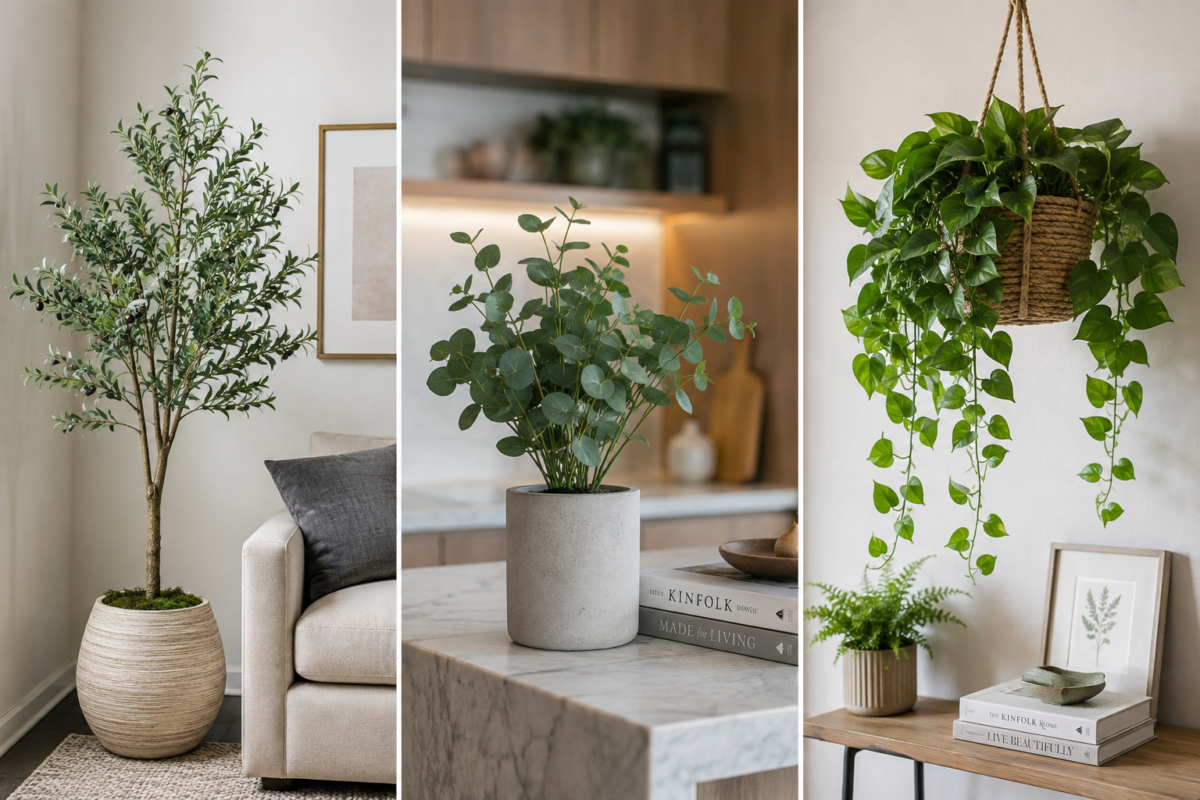
More Detailed Leaf Molding
Modern molds can reproduce:
- Veins
- Wrinkles
- Serrated edges
- Surface texture
- Leaf curvature
These details reduce the flat appearance traditionally associated with artificial foliage.
Multi-Tone Color Processes
Leaves can be produced with multiple shades rather than one uniform green.
Subtle color variation around veins, edges, stems, and new-growth areas improves realism.
Improved Flexible Materials
More flexible leaves and stems allow installers to shape plants more naturally.
This is especially useful for artificial trees and large commercial installations.
Fire-Retardant Materials
Commercial artificial greenery increasingly includes products engineered with flame-performance requirements in mind rather than relying only on decorative appearance.
For project buyers, documented testing is more important than marketing terms such as “fire resistant.”
Modular Green Walls
Artificial green walls are increasingly designed as modular panels.
Modules simplify installation and make it easier to replace damaged sections without rebuilding the entire wall.
Digital Visualization
Interior designers can now use 3D visualization, AI-assisted rendering, and augmented-reality tools to preview artificial trees, planters, and green walls before installation.
For large commercial projects, this can reduce mistakes related to scale, density, placement, and sightlines.
How to Maintain Fake Plants
Artificial plants require less routine care than living plants, but they are not maintenance-free.
Dust Regularly
Use:
- Microfiber cloth
- Soft brush
- Feather duster
- Low-power air blower
Work from the top downward.
Deep Clean Periodically
Some washable artificial plants can be cleaned using water and mild soap, but always check the manufacturer’s instructions first.
Products containing paper, natural trunks, glued components, special coatings, or electrical elements may require different cleaning methods.
See our complete guide on How to Clean Fake Plants for detailed instructions.
Check Outdoor Plants
Inspect outdoor greenery periodically for:
- Fading
- Cracking
- Loose leaves
- Damaged anchors
- Wind movement
- Water accumulation
Re-Shape the Plant
Branches may gradually move during cleaning or handling.
Re-shaping can make an older artificial plant look significantly better.
Final Fake Plant Buying and Styling Checklist
Before purchasing or installing artificial greenery, check:
- Is the size appropriate for the space?
- Does the plant look realistic from normal viewing distance?
- Are the leaves overly shiny?
- Does the foliage include natural color variation?
- Can branches and leaves be adjusted?
- Does the trunk look believable?
- Is the planter proportional?
- Can the artificial base be hidden?
- Will the plant receive direct sunlight?
- Is outdoor UV resistance required?
- Is fire-performance documentation needed?
- Can the plant be cleaned easily?
- Will replacement parts be available for a commercial project?
- Does the greenery match the surrounding interior style?
- Is artificial greenery genuinely the best solution for this location?
The best fake plant is not necessarily the most expensive one. It is the plant that looks appropriate in its environment and continues to perform well over time.
الأفكار النهائية
The most convincing artificial greenery is rarely successful because of the plant alone.
Realistic results come from combining good product selection, thoughtful shaping, appropriate scale, natural-looking planters, careful lighting, realistic placement, and regular cleaning.
In 2026, interior design continues to emphasize warmer, more personal and nature-connected environments. Artificial plants can participate in that trend, but they work best when they are treated as part of the architecture and styling rather than as random decorative filler.
For residential spaces, that may mean one well-shaped olive tree beside a textured sofa. For a hotel, it could mean a carefully specified artificial green wall. For an office, it may simply mean introducing durable greenery into locations where live plants cannot realistically thrive.
The objective is not to make every fake plant impossible to identify.
It is to create a space where the greenery feels visually natural, intentional, and worth keeping.
الأسئلة الشائعة
Are fake plants still in style in 2026?
Yes, but the styling approach is changing. Instead of filling rooms with generic faux greenery, current interiors favor fewer, better-selected plants combined with natural materials, expressive interiors, and nature-inspired colors.
How do you make cheap fake plants look more expensive?
Shape the branches, bend leaves into irregular positions, replace or conceal the original plastic pot, cover visible foam, remove dust, and position the plant where the scale looks appropriate.
Where should you not put fake plants?
Avoid locations where the plant looks visually unrealistic, obstructs movement, creates cleaning difficulties, or is exposed to outdoor conditions without appropriate UV resistance.
Do fake plants need sunlight?
No. Artificial plants do not require sunlight for growth. However, natural light can make them look more believable. Direct sunlight may also fade products that are not UV-resistant.
Are artificial plants good for offices?
They can be practical for offices because they maintain consistent appearance without watering or daily plant care. Commercial buyers should also consider cleaning, stability, durability, and relevant fire-safety requirements.
How often should fake plants be cleaned?
Light dusting can be performed whenever visible dust develops. Deeper cleaning depends on the environment; kitchens, restaurants, high-traffic spaces, and outdoor installations generally require more frequent maintenance.
 English
  Arabic
  Dutch
Dutch  German
  French
  Portuguese
  Spanish
  Russian
  Japanese
  Korean